
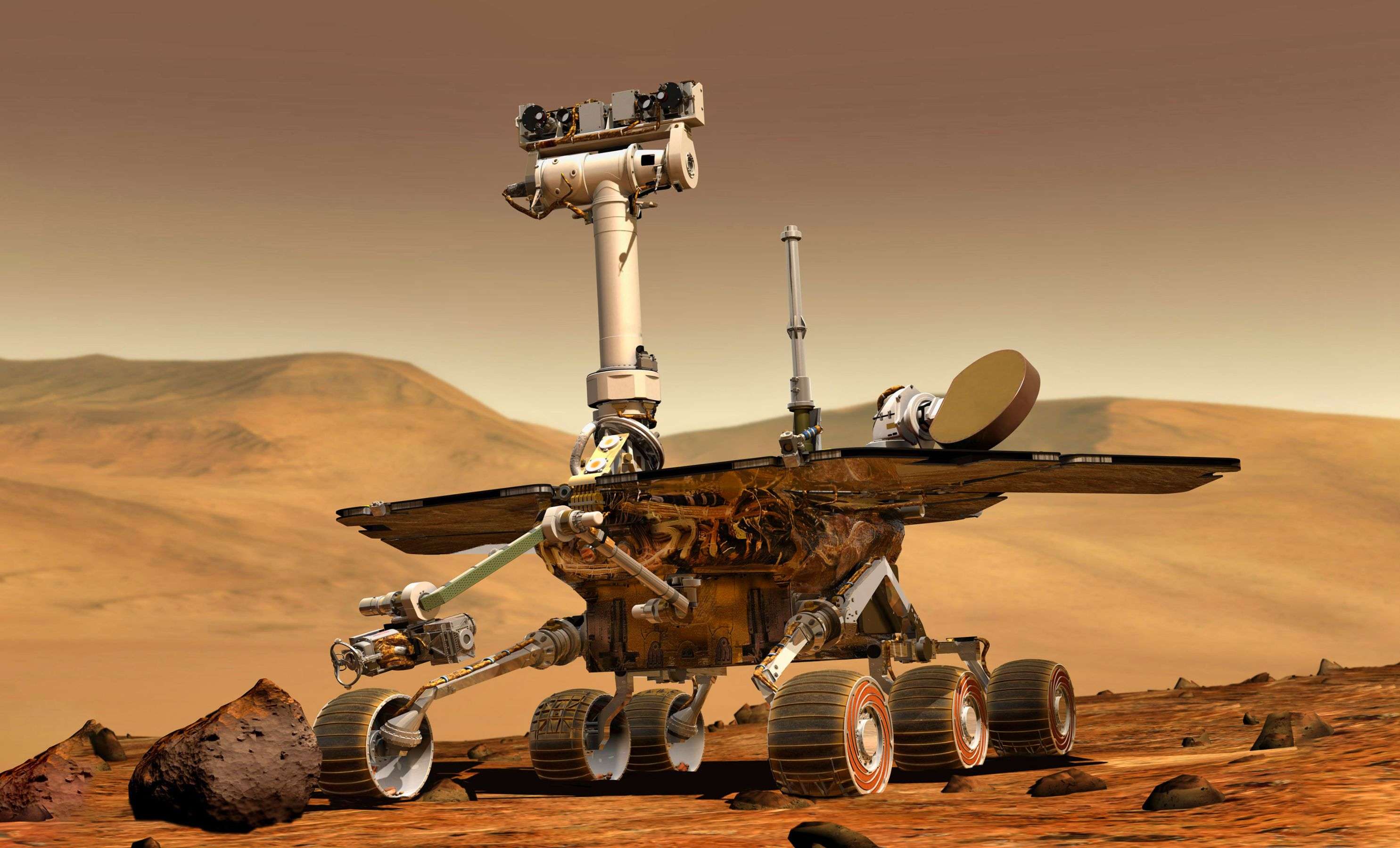
Recent evaluations of NASA’s space exploration efforts have highlighted a potential oversight in the understanding of surface physics on the Moon and Mars. During tests related to NASA’s VIPER mission, researchers identified a major inconsistency in how the soil behavior of lunar and Martian terrains was being simulated. This error might help explain previous mission challenges, including the Spirit rover’s immobilization when its wheels sank into soft Martian sand.
Unraveling the Science Behind the Issue
Successfully landing spacecraft on other planetary bodies requires immense precision, and navigating rovers on places like the Moon or Mars adds even more complexity. To prepare, space agencies commonly conduct Earth-based experiments, using sites such as deserts or JPL’s custom-built “Mars Yard.” These tests have been vital for mission readiness, but a recent analysis indicates that such simulations may have been overly optimistic about rover performance.
Bryan Martin, the flight software and test beds manager at JPL, stressed the comprehensive nature of these trials. “We test a lot of that, figure out what kinds of things to avoid,” he said. Still, the study reveals that current testing protocols do not fully capture the stark differences in soil characteristics between Earth and extraterrestrial surfaces.

Challenges in Soil Mechanics Understanding
A central problem identified involves how NASA and other agencies handle rover testing in reduced gravity contexts. Mars has only about 38% of Earth’s gravity, and the Moon has roughly 17%, creating unique soil interactions. To mimic Mars’ gravity during tests, the mass of the rovers is artificially decreased.
The study points out that NASA’s simulations have primarily focused on adjusting the rover's weight for lower gravity environments, while insufficiently accounting for how the reduced gravity fundamentally alters the properties of soil, sand, and dust on Mars and the Moon. Consequently, soil behavior in tests on Earth-based terrain may not accurately reflect actual conditions, leading to errors in assessing rover mobility.
New Simulations Shed Light on Discrepancies
NASA’s now-canceled VIPER mission underscored this misunderstanding. Utilizing the open-source simulator Project Chrono, a research group at the University of Wisconsin-Madison identified critical flaws in how lunar soil was replicated. Mechanical engineering professor Dan Negrut explained, “We need to consider not only the gravitational pull on the rover but also the effect of gravity on the sand to get a better picture of how the rover will perform on the Moon.”
The simulations demonstrated that prior Earth-based tests may have overestimated rover mobility on lunar and Martian surfaces. Comparing modeled rover activity on Earth and the Moon revealed that soil properties differ greatly due to the Moon’s lower gravitational pull. This implies that adjusting rover mass alone in testing may be insufficient if terrain properties are not simultaneously adapted for gravity variations.
Implications for Future Rover Developments
These findings suggest that NASA must refine its approach to designing rovers and other planetary vehicles. The study proposes the adoption of enhanced physics-driven terramechanics models that accurately simulate gravity’s impact on both the rover and the surface it traverses.
Professor Negrut emphasized the value of advanced simulation technology in space exploration, noting, “There are certain types of applications relevant to NASA and planetary exploration where our simulator can solve problems that no other tool can solve.”
- Categories:
- News








0 comments
Sign in to Comment