
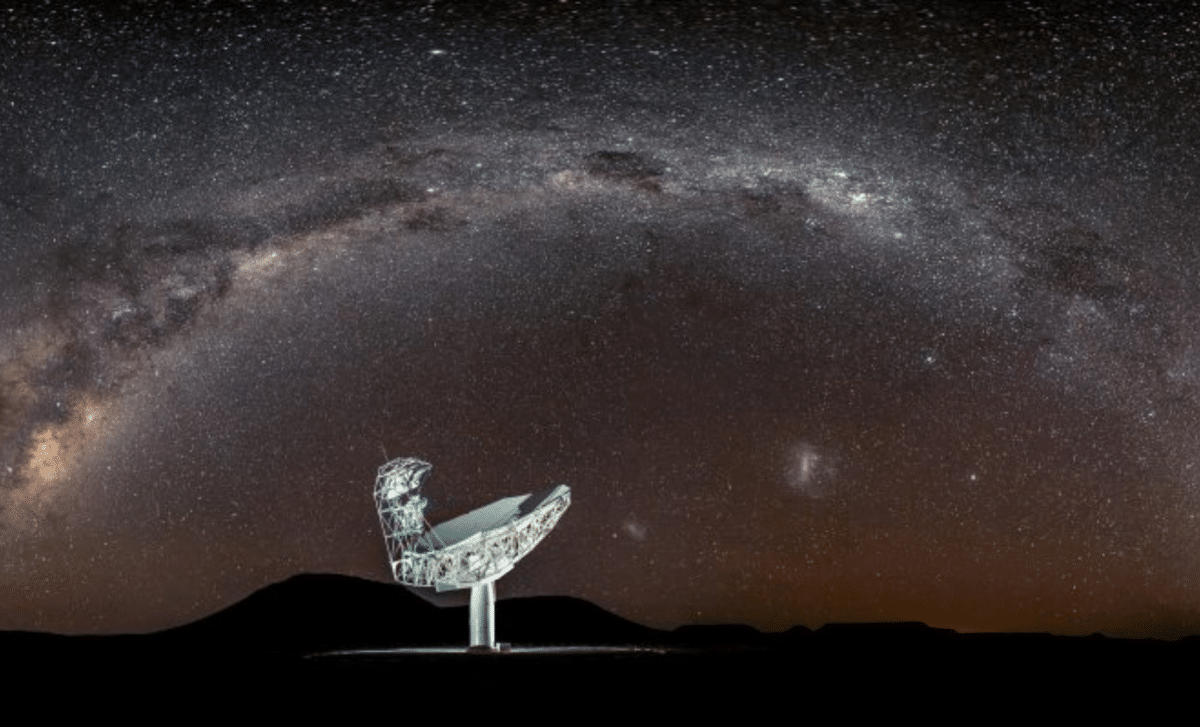
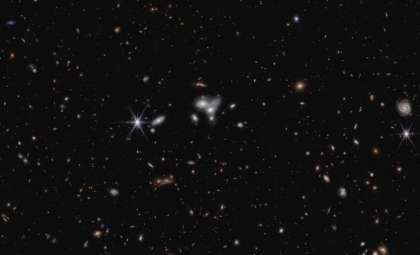
Researchers operating in South Africa have identified a hydroxyl megamaser at an unprecedented distance, opening a novel pathway to study the early stages of the universe. Leveraging the capabilities of the MeerKAT radio telescope, they captured emissions from a natural cosmic laser originating from a galaxy over 8 billion light-years away, shedding light on the turbulent, energetic conditions of primordial galaxies.
Peering Back into the Cosmic Dawn
This distant megamaser provides astronomers a look at a galaxy as it appeared 8 billion years in the past, a period when the universe was less than half its current age. At that early epoch, galaxies were vibrant hubs of activity, frequently merging and undergoing rapid star formation.
As reported by The Conversation, the hydroxyl megamaser functions much like a cosmic beacon, its strong radio waves intensified through gravitational lensing caused by massive objects positioned between the source and Earth. This natural amplification allowed detection within a mere five hours of observation, a feat that would normally take hundreds of hours to achieve.

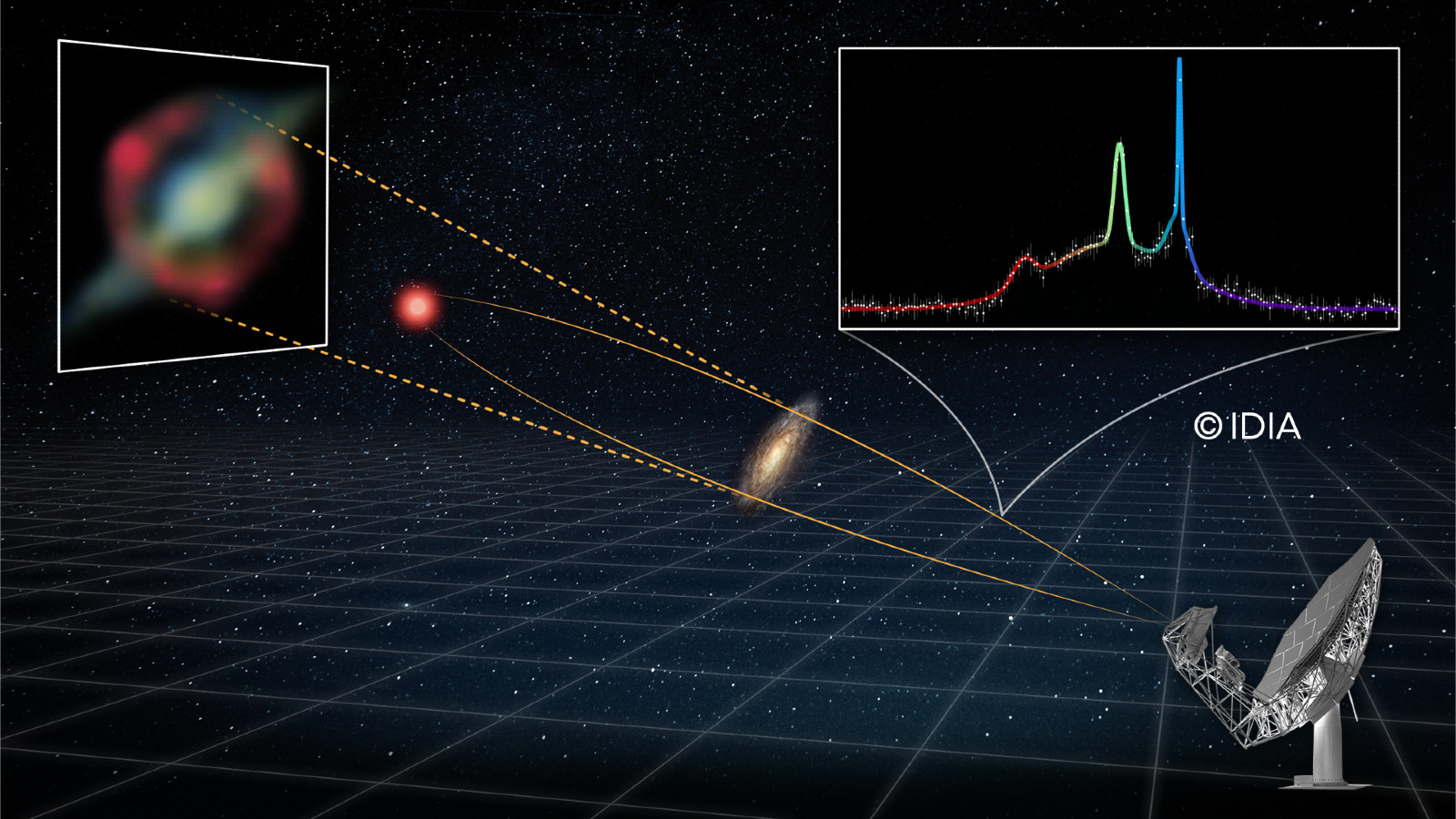
Studying these youthful galaxies offers vital insights into how galaxies form, interact, and evolve. Such observations also provide clues about the environments where the earliest supermassive black hole duos emerged.
Advances in Instrumentation and Data Analysis
The success of this discovery hinges on MeerKAT’s exceptional sensitivity and extensive frequency range, enabling simultaneous detection of the hydroxyl megamaser and neutral hydrogen absorption signals in one go.
This accomplishment depends heavily on sophisticated data processing technology at centers like the Inter-University Institute for Data Intensive Astronomy (IDIA). The telescope’s data stream involves gigabytes per second and requires executing trillions of calculations to isolate faint cosmic signals.
By integrating state-of-the-art computing power with innovative telescope design and the natural advantage provided by gravitational lensing, researchers can now detect phenomena millions of times dimmer than typical radio sources, heralding a new chapter in cosmic exploration.
Relevance to Galaxy Formation and Evolution
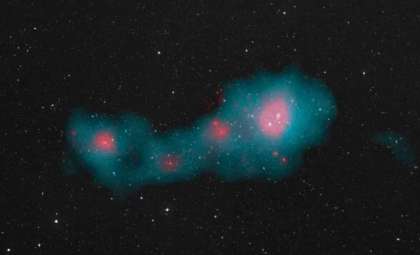
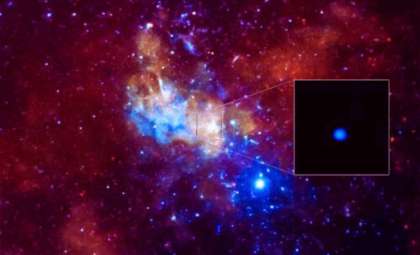
Hydroxyl megamasers generally arise in galaxy merger scenarios, often housing supermassive black hole pairs on converging orbits. Observing these rare systems allows scientists to probe the final phases of galaxy assembly and the intense conditions that generate gravitational waves.
This breakthrough indicates that forthcoming surveys with MeerKAT, along with the future Square Kilometre Array (SKA), will reveal many more distant megamasers, transforming these exceptional detections into routine sites for studying star formation and the cosmic evolution of galaxies.
- Categories:
- Science







0 comments
Sign in to Comment