
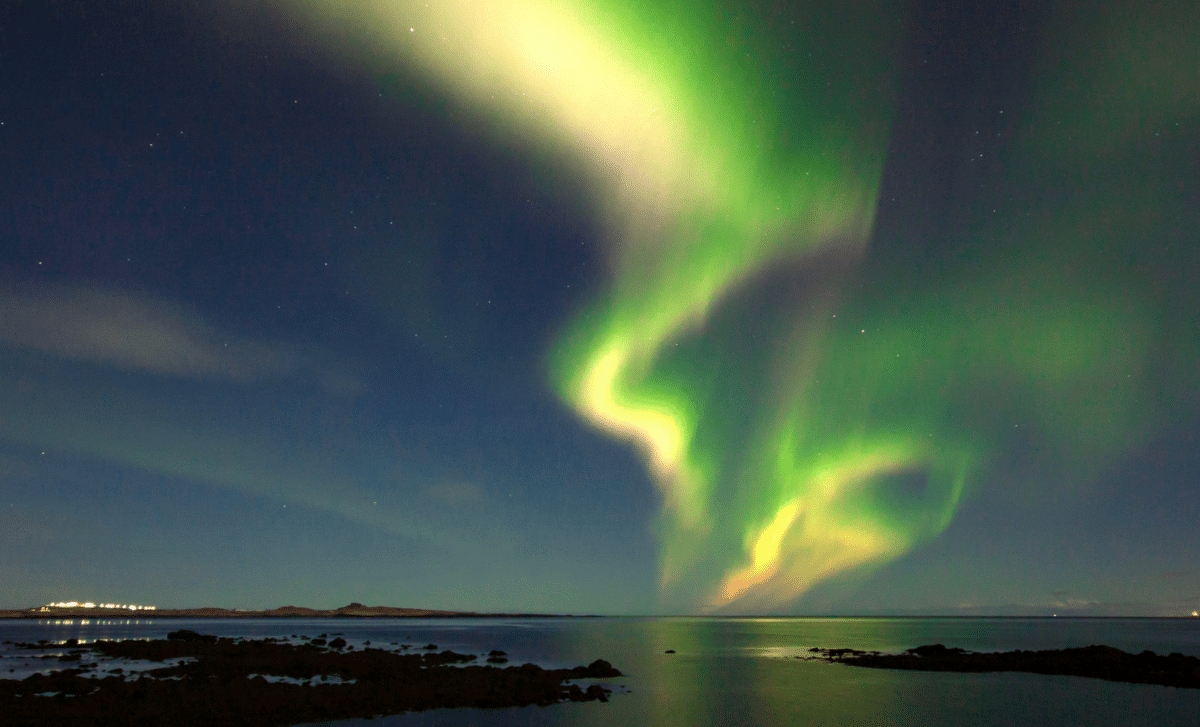
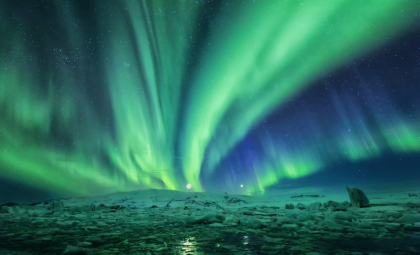
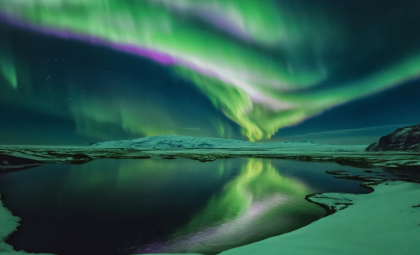
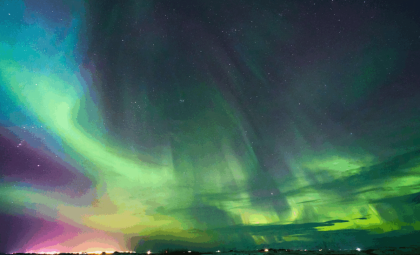
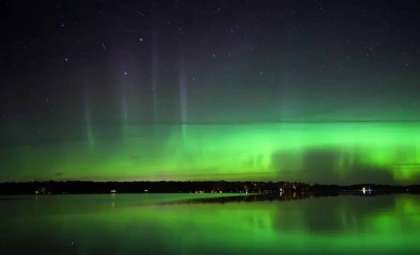
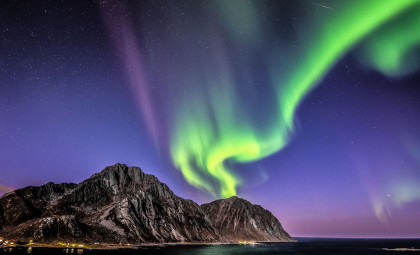
On the evening of April 9, 2026, a rare and vibrant aurora borealis display is anticipated to brighten the night sky. The National Oceanic and Atmospheric Administration (NOAA) forecasts increased geomagnetic activity that may make the northern lights visible well beyond their usual high-latitude ranges. This remarkable event promises to enthrall countless skywatchers with a brilliant natural light display.
Understanding the Northern Lights: The Science Behind the Phenomenon
The aurora borealis occurs when Earth’s magnetic field interacts with solar wind, streams of charged particles from the Sun. These energized particles collide with atmospheric gases, producing the glowing lights typically seen near the polar regions. Recent NOAA research indicates that, due to intensified solar activity, the lights could be visible farther south than is normally expected.
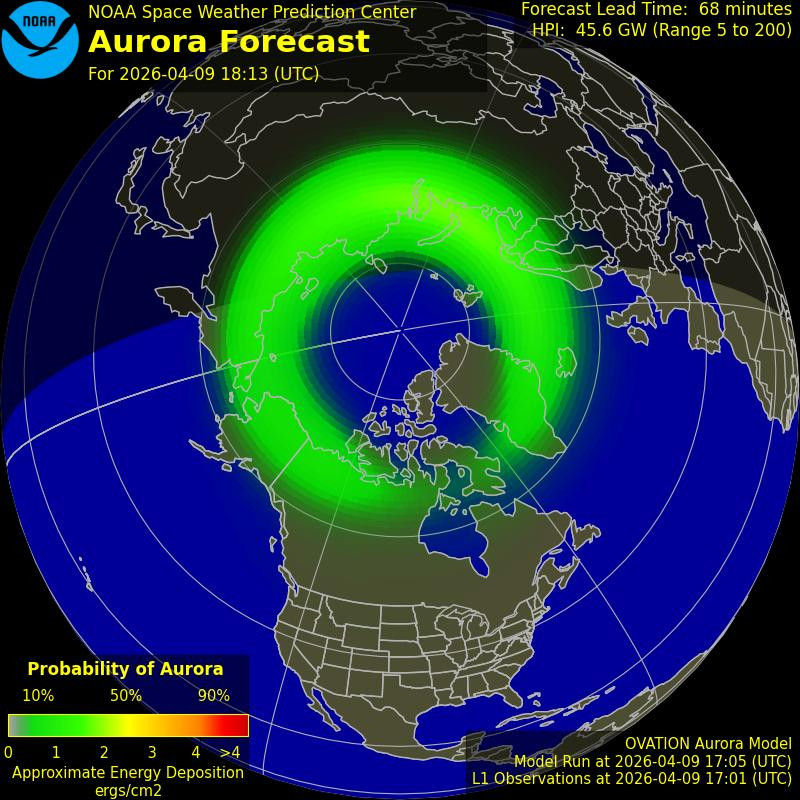
NOAA’s Space Weather Prediction Center reports that solar winds reaching Earth from April 9 into April 10, 2026, are predicted to boost geomagnetic energy, increasing the brightness and geographic reach of auroral displays. Should the solar storm escalate, parts of the northern United States might also witness the auroras.

Optimal Times and Locations for Aurora Viewing
Dark, clear skies will offer the best opportunities to catch the aurora borealis, especially during the late hours of Thursday, April 9, into the early morning of April 10. The predicted geomagnetic activity might reach a G1 (minor) storm level, with a chance of rising to G2 (moderate).
If G2 storm conditions occur, observers in northern U.S. states such as Michigan, New York, and sections of New England could potentially see the glowing lights. Auroral activity will be most vivid in the polar regions, including Alaska, northern Canada, Scandinavia, and Iceland, where residents can expect a breathtaking light spectacle.
How Solar Activity Drives the 2026 Aurora Event
The solar cycle is crucial for generating auroras, and recent heightened solar flare activity has energized this cycle. Increased eruptions from sunspots have sent intense solar wind streams toward Earth.
These charged particles, arriving tonight, are expected to amplify geomagnetic disturbances and enhance the northern lights’ visibility, even in areas not traditionally known for seeing auroras. NOAA researchers describe this convergence of solar wind and geomagnetic conditions as ideal for a spectacular light show.
Advice for Observing and Capturing the Northern Lights
To fully appreciate the auroras, choose locations away from city lights to reduce light pollution. Rural or remote areas with clear skies are ideal, and tools like dark-sky maps can help locate the best spots.
Because auroras can be intermittent and vary in brightness, patience is essential. Monitoring live forecasts and spending extended time outdoors will increase your odds of witnessing the display at its peak.
For photography, long-exposure settings on cameras—professional or smartphone night modes—are recommended. Stabilizing your device to avoid motion blur will produce clearer images of the dynamic auroral waves.
- Categories:
- News


0 comments
Sign in to Comment