
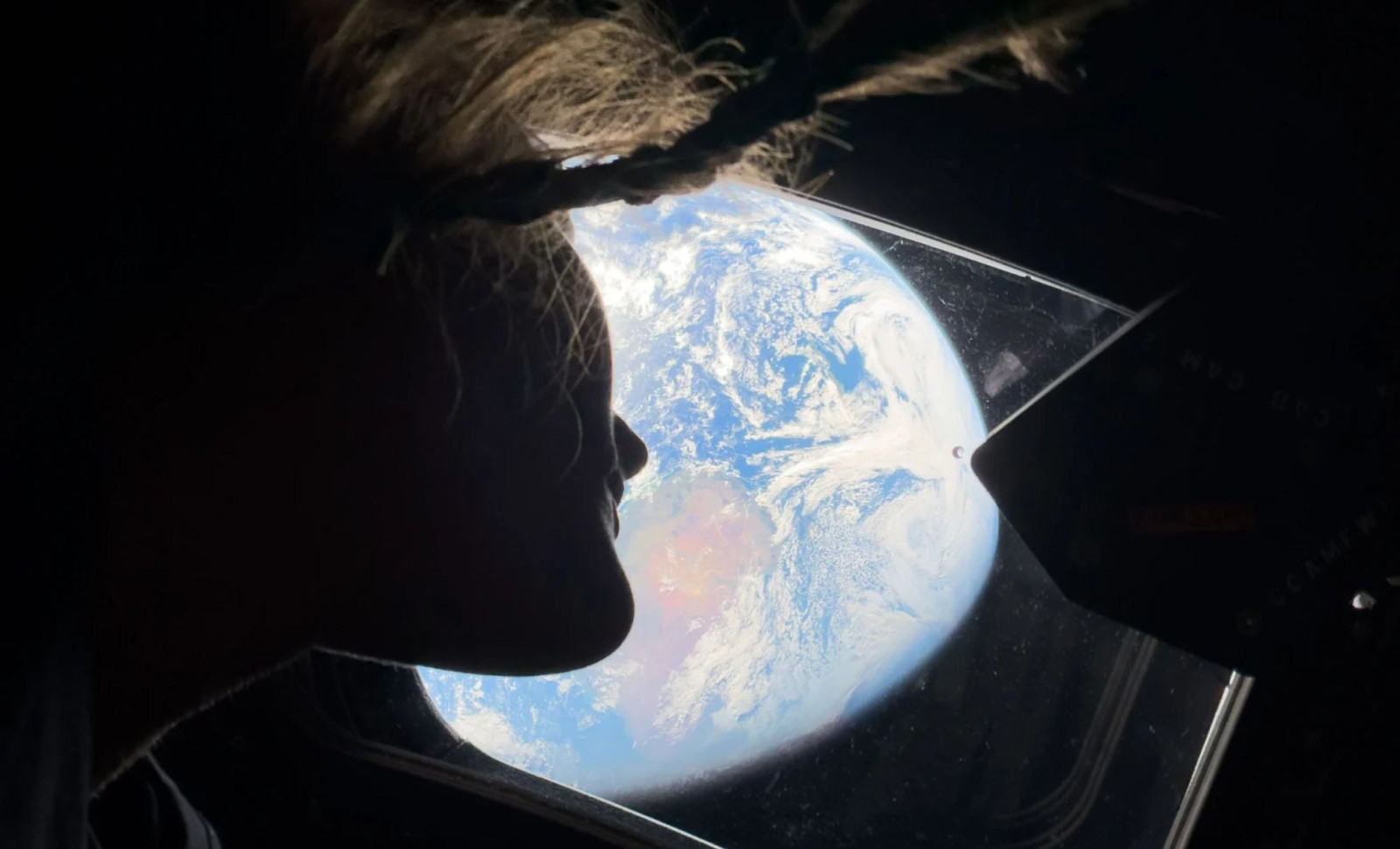
NASA astronaut Reid Wiseman captured a remarkable photograph during the Artemis II mission that offers a unique perspective of Earth as the spacecraft set off toward the Moon. Taken on April 2, just after the Orion spacecraft began its journey, the image at first looks like the famous “Blue Marble” photos but reveals an array of unusual features upon closer examination.
The distinctive aspect of this image is the unusual illumination: although the Artemis II crew was observing Earth’s nighttime hemisphere, the planet is vividly lit. As reported by Live Science, this brightness is due to the full Pink Moon, which peaked just a day before the launch from NASA’s Kennedy Space Center.
Moonlight Illuminates Earth’s Dark Side
Using his Nikon D5, Reid Wiseman snapped images of the planet that relied on moonlight rather than direct sunlight. According to a feature from Live Science, the full Pink Moon brightened Earth’s nightside enough to create this rare visual.

Wiseman’s advanced camera setup allowed him to capture details invisible to the naked eye. The final photograph presents a striking image of our planet bathed in soft lunar light.
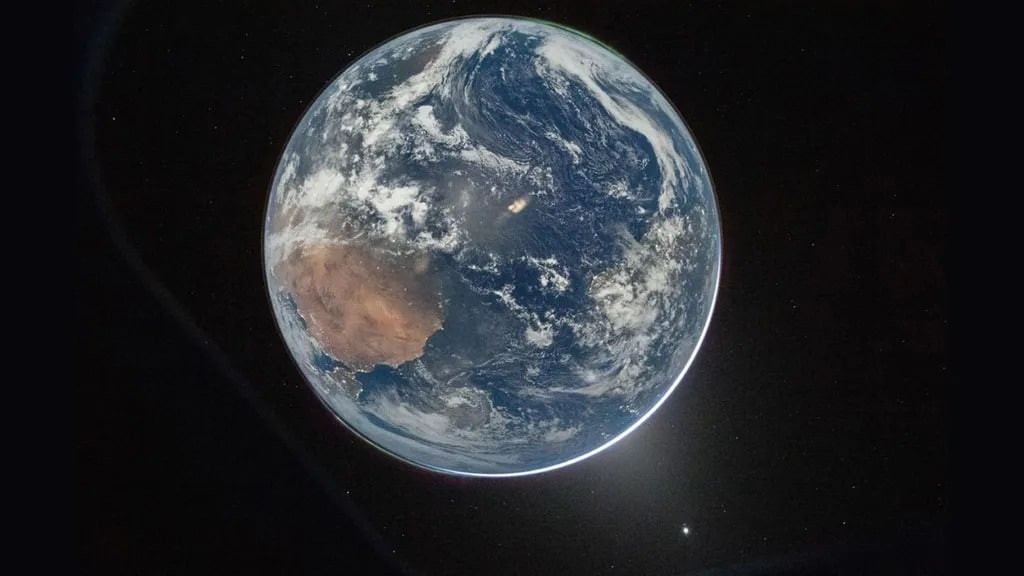
The original pictures, held in the Gateway to Astronaut Photography of Earth archive, highlight the contrast between what the astronauts could visually perceive and the enhanced detail recorded by the cameras. This sensitivity brought out subtle characteristics scattered around the globe.
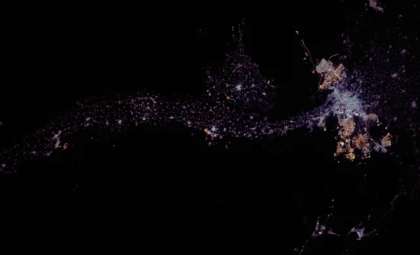
Visible within the image are city lights spread across various regions, including parts of Spain, Portugal, northern and sub-Saharan Africa, and Brazil, all glowing distinctly against Earth’s darker zones.
Auroras Appear Simultaneously at Both Poles
The photograph’s most remarkable feature is the presence of auroras at both poles. The shot captures northern and southern lights together, presenting a rare visual of these phenomena in one frame.
As explicitly described in the source, green auroral arcs are evident near the upper-left and lower-right edges of Earth. These luminous bands form when charged solar wind particles interact with Earth’s magnetic field and collide with atmospheric molecules.
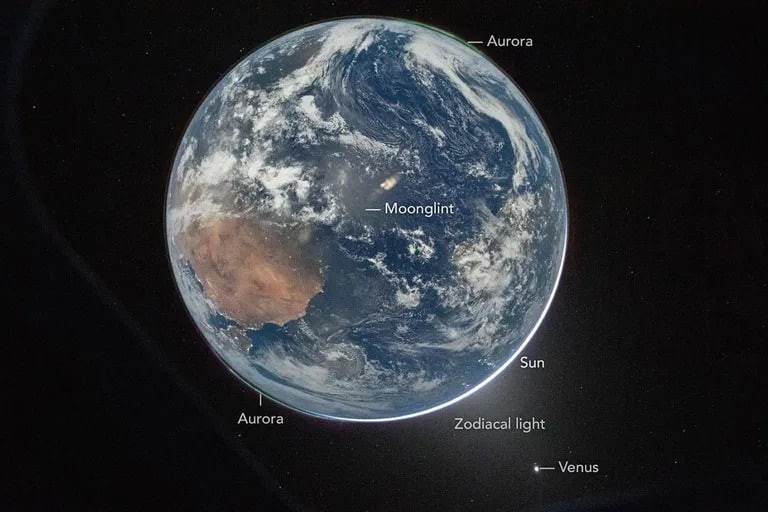
While auroras are frequently photographed from orbit, capturing both poles’ displays simultaneously in a global shot is uncommon. The spacecraft’s trajectory during departure enabled Wiseman to encompass the entire planet and both auroral regions in one image.
Additional Elements: Sunlight, Cosmic Dust, and Venus
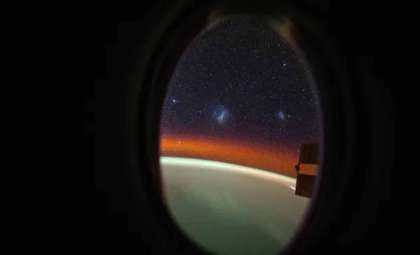
Several other subtle details enrich the photo. Along the bottom-right edge of Earth lies a thin arc of sunlight shining through the atmosphere, demonstrating the timing of the photo just after the full moon.
A faster shutter speed shot reveals this illuminated atmosphere as a narrow blue crescent. Beyond this glow appears a soft illumination, known as zodiacal light, which arises from sunlight scattered by dust particles spread throughout the inner solar system.
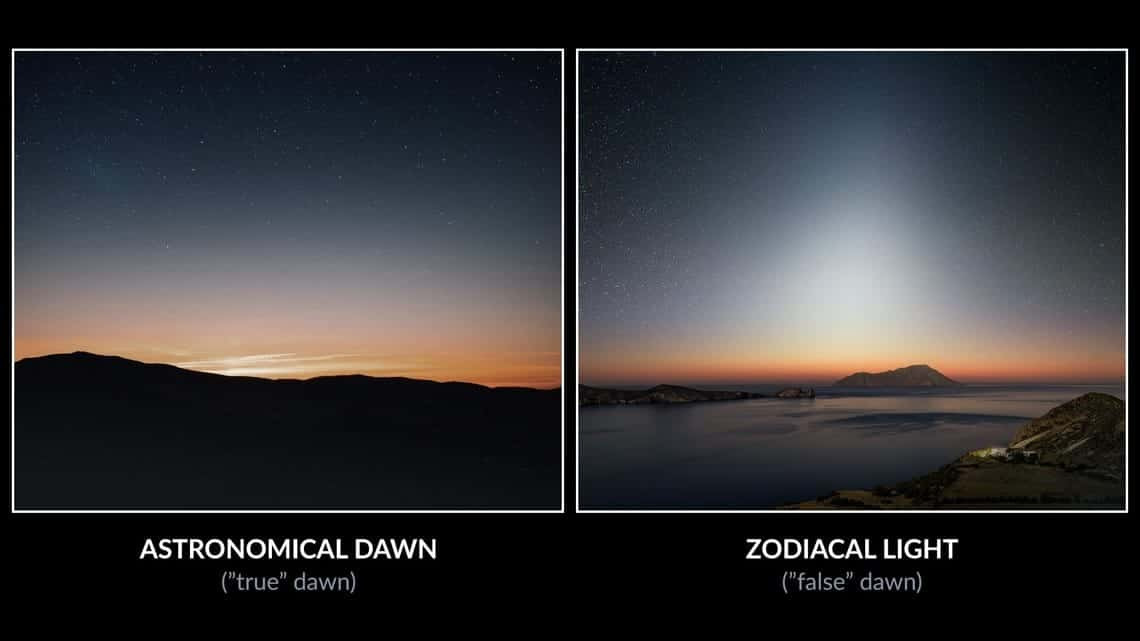
Astronomers sometimes describe this faint glow as a “false dawn” or “false dusk” observable under extremely dark skies on Earth. In Wiseman’s image, it appears as a gentle glow surrounding Earth’s atmospheric edge.
Additionally, Venus is visible near the lower-right corner, complementing Earth, the auroras, and zodiacal light to create a stunning composite view of the inner solar system.
- Categories:
- News



0 comments
Sign in to Comment