
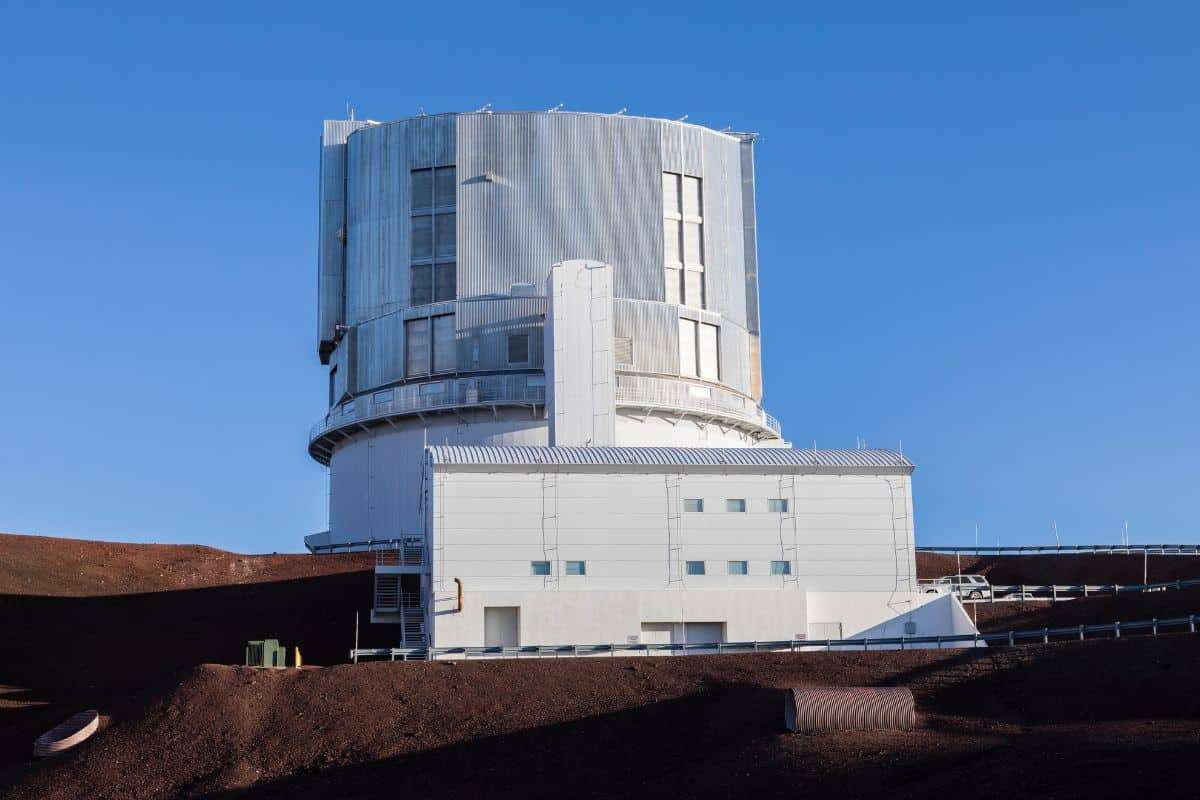
The Subaru Telescope situated at the Mauna Kea Observatory in Hawaii has delivered vital observational data that ensures the asteroid 2024 YR4 poses no collision risk to our planet in the foreseeable horizon.
Initial detections at the end of 2024 raised a minor yet concerning possibility of impact, which led to a concerted global effort to clarify its orbit. The refined measurements now confirm that the asteroid presents no meaningful danger.
Identification and Initial Impact Worries
Discovered on December 27, 2024, by the Asteroid Terrestrial-impact Last Alert System (ATLAS), this near-Earth object (NEO) is part of the Apollo group, a collection of asteroids crossing Earth’s orbital path as they revolve around the Sun.

The discovery followed a close encounter with Earth on December 25, 2024, after which it moved outward. Early orbit projections showed a 1% chance of collision on its next approach estimated for December 2032.
Though the risk was low, it prompted the International Asteroid Warning Network (IAWN) to issue its first impact risk warning specifically for this asteroid.
Enhanced Tracking Lowers Collision Odds
Following the IAWN alert, observatories worldwide intensified their observations of 2024 YR4, refining its trajectory. Updated probabilities throughout February 2025 were as follows:
- Early February: Impact risk estimates rose to 2.3% and then 3.1%
- Mid-February: Risk estimates dropped sharply to 0.28%
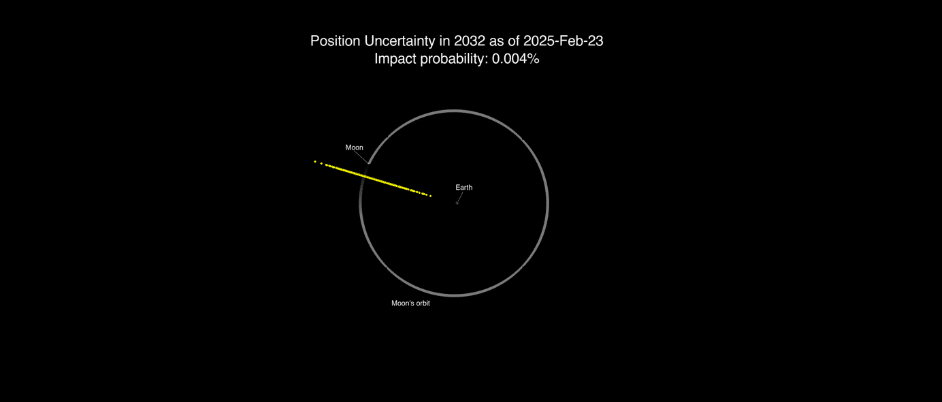
- Late February: Thanks to data from the Subaru Telescope, risk was further cut to an extremely low 0.004%
The Subaru Telescope’s Hyper Suprime-Cam (HSC), a sophisticated wide-field imaging instrument, was instrumental in capturing the precise positional measurements that led to clearing the asteroid of notable threat concerns.
These observations came at the request of the Japan Aerospace Exploration Agency (JAXA) and were supported by NASA’s Center for Near-Earth Object Studies (CNEOS) and the European Space Agency’s Near-Earth Objects Coordination Centre (NEOCC).
Why 2024 YR4 Is Closely Monitored
This asteroid completes its circuit around the Sun roughly every four years, intersecting Earth's orbit on occasion despite mostly residing at a distance.
Scientists pay special attention to asteroids like 2024 YR4 because gravitational tugs from planets, the Moon, or other celestial bodies can alter their course, possibly pushing them onto collision paths.
Small orbital deviations can accumulate over many years, changing impact probabilities. The case of 2024 YR4 emphasizes the critical importance of vigilant, ongoing tracking for planetary defense.
Looking Ahead
Current data indicate that 2024 YR4 will pass Earth at a safe distance, well beyond the orbit of geostationary satellites and possibly even farther than the Moon. The IAWN confirms no meaningful risk of impact from this asteroid for the next century.
The asteroid will continue to be observed until early April 2025, when it will fade below detectability with Earth-bound telescopes, becoming untrackable until it returns near Earth in 2028.
The Value of Global Planetary Defense Efforts
This episode highlights how international collaboration is essential for monitoring asteroids and assessing impact threats. The Subaru Telescope exemplifies how ground-based observatories significantly enhance the precision of asteroid trajectory predictions.
- Categories:
- Space










0 comments
Sign in to Comment