

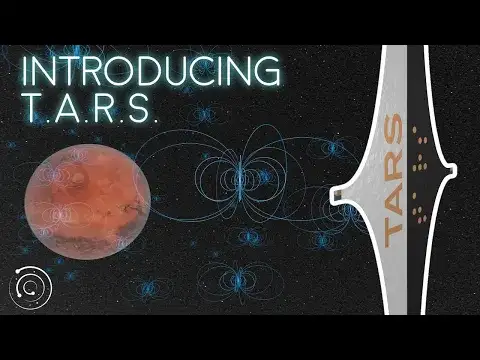
The ambition to journey beyond our solar system is drawing closer to feasibility thanks to innovative concepts like TARS (Torqued Accelerator using Radiation from the Sun). This pioneering approach, conceived by David Kipping and Kathryn Lampo, was recently outlined in their paper published on arXiv.
Introducing TARS: A Novel Mechanism for Solar-Powered Propulsion
TARS diverges sharply from conventional propulsion methods that rely on chemical or nuclear energy. Instead, it capitalizes directly on sunlight to propel a miniature spacecraft toward the depths of interstellar space. The apparatus features two paddles with reflective and absorptive sides linked by a long tether. Solar radiation exerts pressure on the reflective surfaces, initiating a spin that steadily accelerates the craft, ultimately propelling it out of the solar system.
Kipping highlights the uniqueness of TARS's "torqued" design, which continuously harnesses photon pressure. “For a quasite, gravity predominates, pulling it toward the sun, so maintaining orbital motion is essential but slow,” he explained, emphasizing the intricate orbital balance needed to optimize sunlight capture for propulsion.

After achieving sufficient rotational velocity, the system releases a compact probe, roughly the size of a smartphone, at speeds approaching 7.5 miles per second—the threshold required to escape our solar system. While this is sufficient to travel beyond the sun’s influence as documented, it remains inadequate for journeying to distant stars within a human lifetime.
Breaking Speed Limits: Materials and Advanced Techniques in Focus
Although TARS provides a theoretical path for solar system escape, reaching stars like Alpha Centauri presents a monumental challenge. At current model speeds, a probe would require over 30,000 years to arrive. Nonetheless, Kipping’s research suggests potential enhancements could accelerate the mission.
Material choice heavily impacts the craft’s achievable velocity. Kipping’s calculations employ commercially available carbon nanotubes —noted for exceptional strength-to-weight ratio. Yet, emerging materials like graphene could vastly boost durability and efficiency. “While waiting centuries for hypothetical warp drives is tempting, starting now with proven science is crucial,” Kipping remarked.
Additional maneuvers, such as exploiting the “Oberth effect” by passing closer to the sun to gain speed, combined with using modified solar sails known as quasites, might increase launch speeds up to 620 miles per second. Though still slow relativistically, this could reduce journey times to Alpha Centauri from tens of millennia to roughly 1,300 years.
Embracing the Long Haul: Generational Perspectives on Interstellar Missions
Kipping’s vision encompasses more than technology—it challenges how society perceives interstellar exploration’s timescale. “Many dismiss reaching Alpha Centauri in a lifetime as impossible, but valuing immediate results is shortsighted,” he stated. “This endeavor is about benefiting future generations.”
Interstellar exploration is inherently a project spanning centuries or more. The current work lays a foundation for descendants to continue pushing the boundaries, potentially leading to unprecedented discoveries like images or data from other star systems that could reshape humanity’s future.
Kipping also sees TARS as an excellent stepping stone for upcoming engineers. “While launch opportunities remain limited, this could readily become a practical project for engineering students,” he said. This spirit of openness and innovation underlines TARS’s promise as an accessible technology to advance our reach into the cosmos.
- Categories:
- News







0 comments
Sign in to Comment