
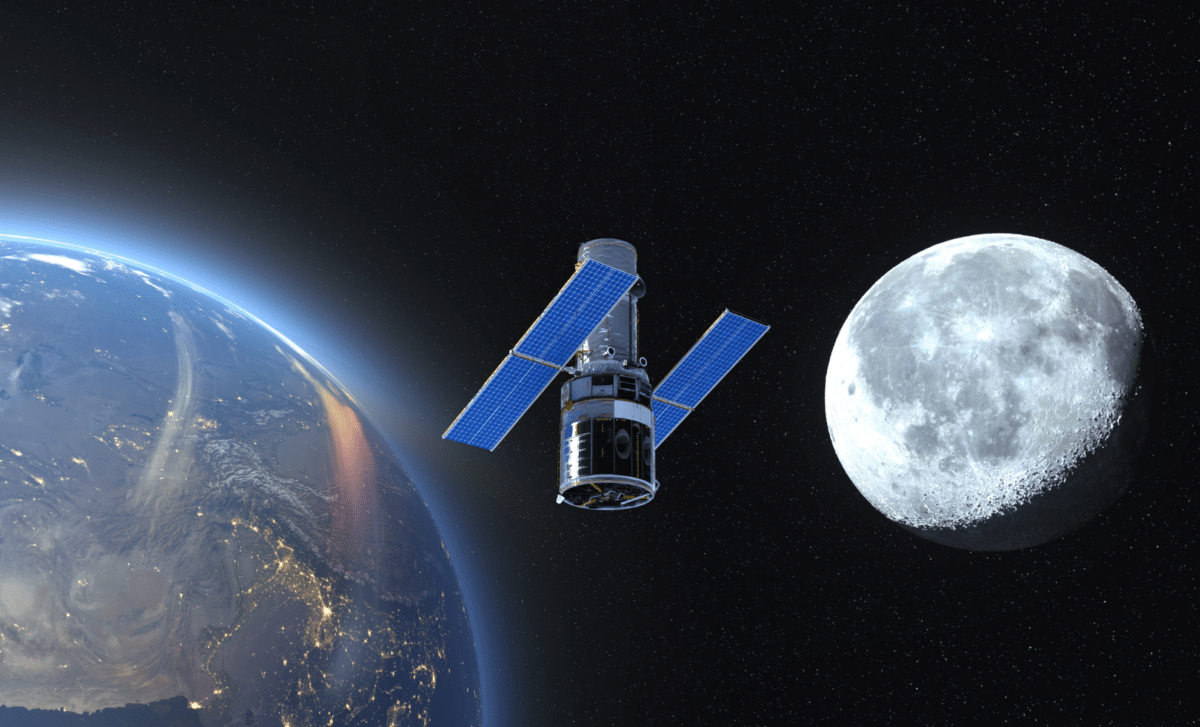
Scientists have developed a compact X-ray telescope that promises to deliver the first full-scale map of the Moon’s elemental makeup, revealing crucial insights into its origin and geological transformation. A recent study featured in Earth, Planets and Space suggests that just one of these small telescopes orbiting the Moon could detect oxygen, iron, magnesium, aluminum, and silicon across its entire surface in as little as two years. This technological leap could significantly deepen our grasp of lunar geology and its ancient past.
Orbiting the Moon to Chart Its Elements
Although the Moon holds vital clues to the early history of the Solar System, its geological narrative remains fragmented. Past missions like Apollo gathered samples from limited locations, while remote sensing initiatives have struggled to provide a global chemical survey. Thus, a comprehensive elemental map has yet to be achieved.
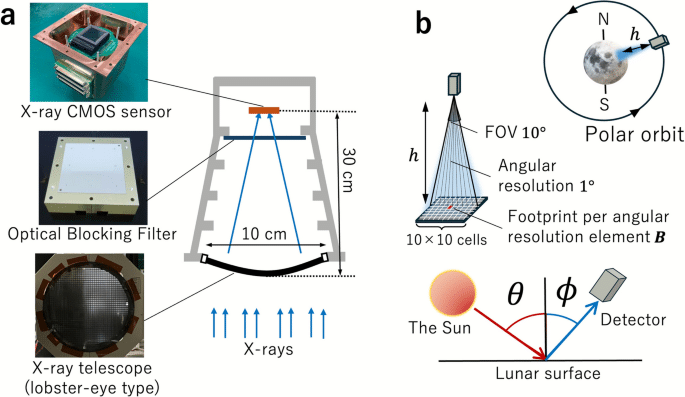
X-ray fluorescence imaging presents an innovative method. When solar X-rays hit the lunar surface, specific elements emit characteristic X-rays, enabling scientists to identify them remotely. Although earlier missions like Apollo and Chandrayaan mapped parts of the Moon, assembling a consistent, high-detail global map remains difficult, primarily due to limited solar illumination near the poles and the gradual degradation of spaceborne detectors.

A Small Telescope with Big Potential
At Tokyo Metropolitan University, led by Airi Toida and Professor Yuichiro Ezoe, researchers have designed a lightweight, compact telescope fit for lunar orbit. Originally created for studying Earth’s magnetosphere, this under-10-kilogram instrument is ideally suited for prolonged lunar observations without the logistical complexities of conventional X-ray telescopes.
Its resilience stands out; durability tests indicate the instrument can endure radiation levels more severe than those expected around the Moon, supporting extended missions. The design also equips it to handle intense solar flare periods, when solar X-ray emissions peak, providing optimal conditions for precise elemental detection during such events.
Building a Lunar Map Through Simulation
Through numerical modeling, the team evaluated the telescope’s performance. Assuming about 300 solar flares occur annually, a single telescope placed on a lunar satellite could map the distribution of oxygen, iron, magnesium, aluminum, and silicon on a 70 x 70 km grid over two years.
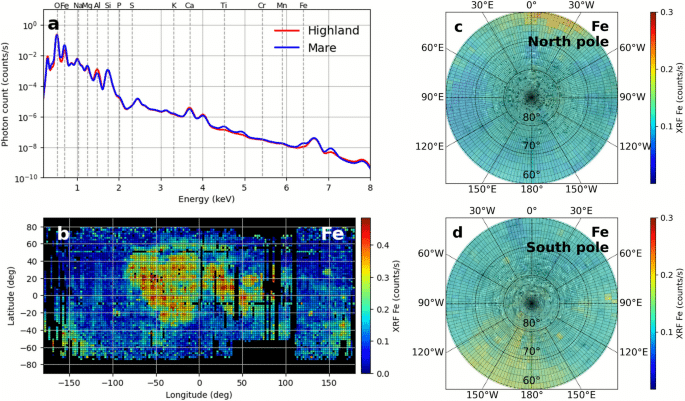
Deploying a constellation of 25 telescopes arranged in a 5x5 grid would enhance resolution to 30 x 30 km and halve the mapping duration to one year. Extending the mission to two years would also enable mapping of sodium. These results indicate that even simple, well-engineered devices can perform thorough chemical surveys of the Moon.
Significance of This Innovation
A detailed, global chemical map of the Moon could dramatically advance our knowledge of its origin, internal differentiation, and geological development. It would provide vital clues about processes shaping the crust, mantle, and surface layers over billions of years. Such a resource could also guide future exploration efforts by pinpointing element-rich regions for scientific investigation or resource utilization.
Published in Earth, Planets and Space, this study presents a cost-effective, achievable approach to an enduring challenge in lunar science. Demonstrating that small, durable instruments can gather high-resolution data sets the stage for a new generation of lunar missions.
Revealing the Moon’s Geological Legacy
If deployed, this telescope system would generate the first comprehensive elemental map of the Moon, revealing its geological history in unprecedented detail. Spanning from iron-rich maria to highlands abundant in aluminum, scientists would gain an integrated understanding of lunar composition. This knowledge could refine hypotheses about the Moon’s formation, including the giant impact theory, and enhance our comprehension of the Earth-Moon system’s evolution.
The mission concept highlights the growing importance of small, specialized space instruments. By emphasizing compactness, robustness, and strategic observation, researchers demonstrate that significant scientific discoveries can be achieved without the expense and complexity of large-scale missions.
- Categories:
- Space




0 comments
Sign in to Comment