
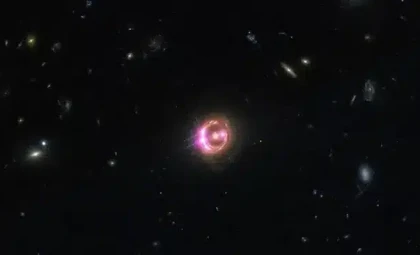
A faint, remote object emitting X-rays is offering fresh clues into the mysterious “little red dots” identified by the James Webb Space Telescope. Joint analysis of data from NASA’s Chandra X-ray Observatory and Webb suggests this source could be a crucial piece in understanding the emergence and growth of early supermassive black holes.
These tiny, red-hued objects, detected at distances exceeding 12 billion light-years, have long baffled scientists. Their characteristics differ from typical black holes, prompting debates about how such enormous entities formed so rapidly after the Big Bang.
Deciphering these objects is vital since they might map the swift buildup of black holes in the infancy of the universe. Confirming their nature could transform existing theories on black hole and galaxy evolution.

An Enigmatic Cluster from the Dawn of Time
Soon after Webb commenced scientific observations, astronomers uncovered hundreds of faint, compact red sources now dubbed little red dots (LRDs). According to a study in The Astrophysical Journal Letters, these LRDs are situated over 12 billion light-years away, placing them in an epoch fundamental to cosmic formation.
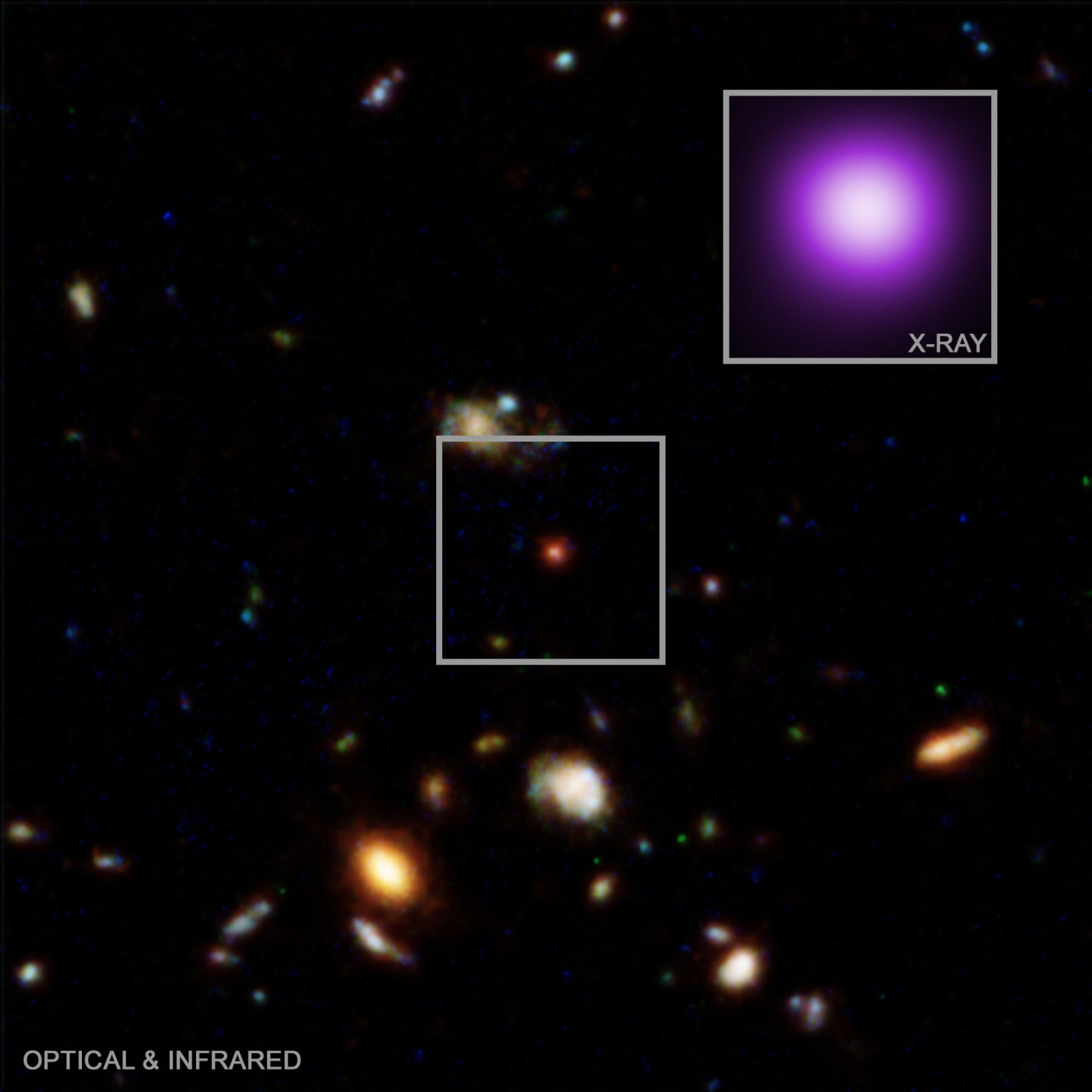
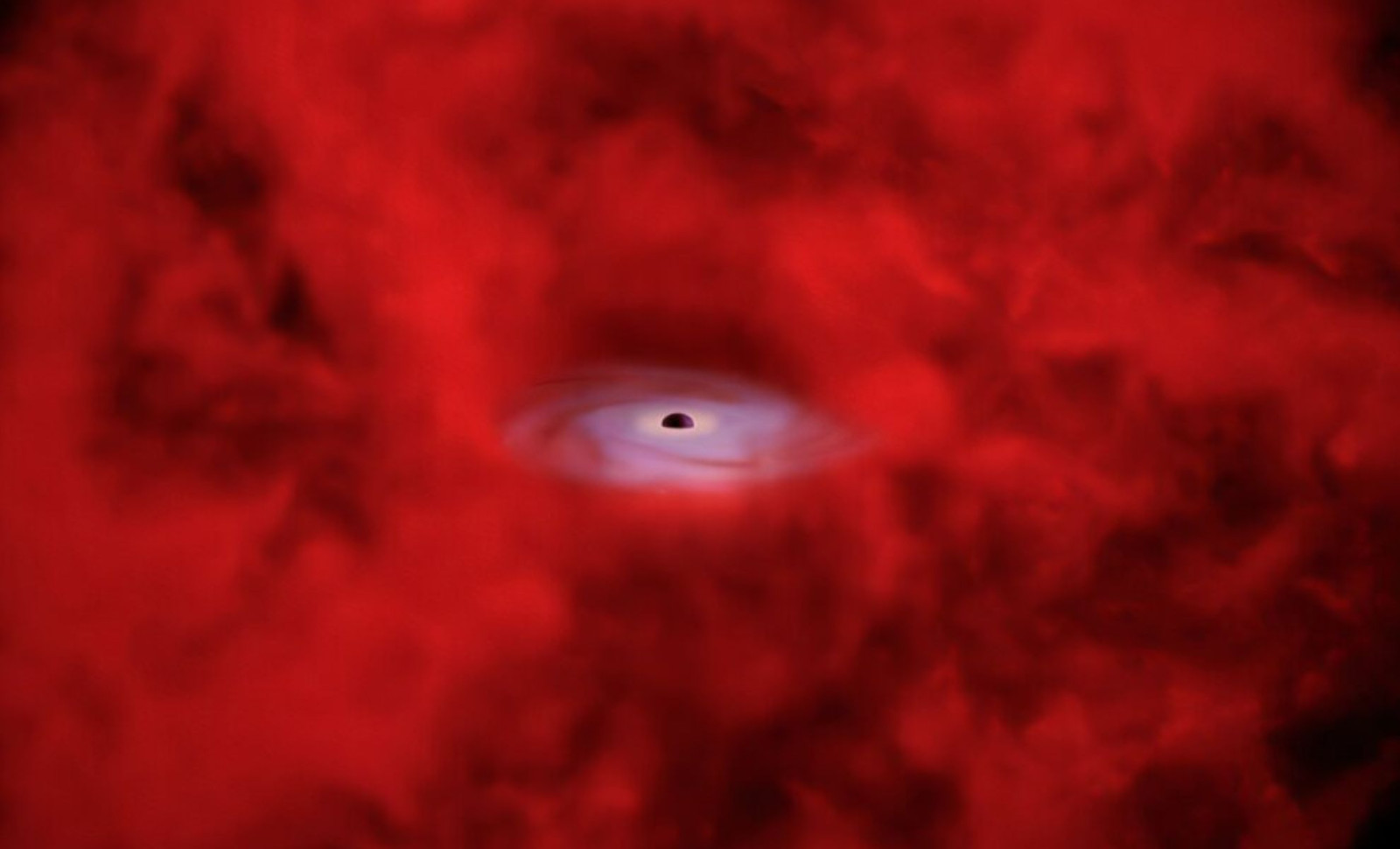
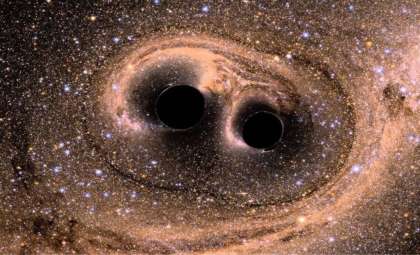
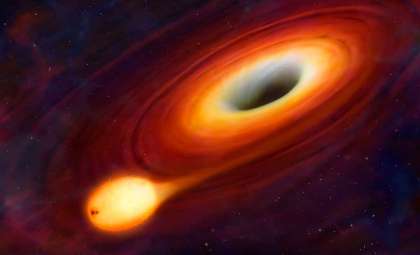
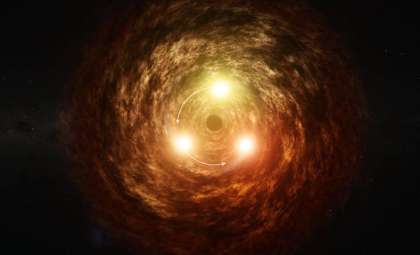
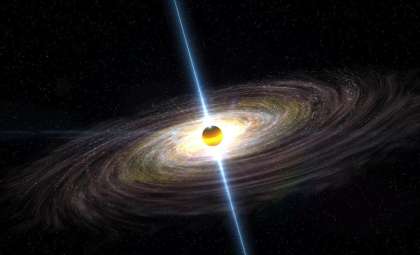
Many experts theorize LRDs are supermassive black holes enveloped by thick gas clouds. These clouds obscure much of the radiation usually used to detect black holes, including X-rays and ultraviolet emissions, making them appear faint and red despite vigorous internal activity.
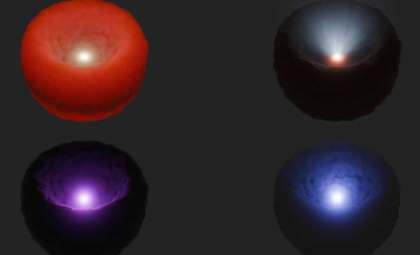
This explanation spawned the “black hole star” concept, suggesting these objects resemble stars externally but hide rapidly accreting black holes at their cores.
An Unusual X-Ray Emission that Stands Out
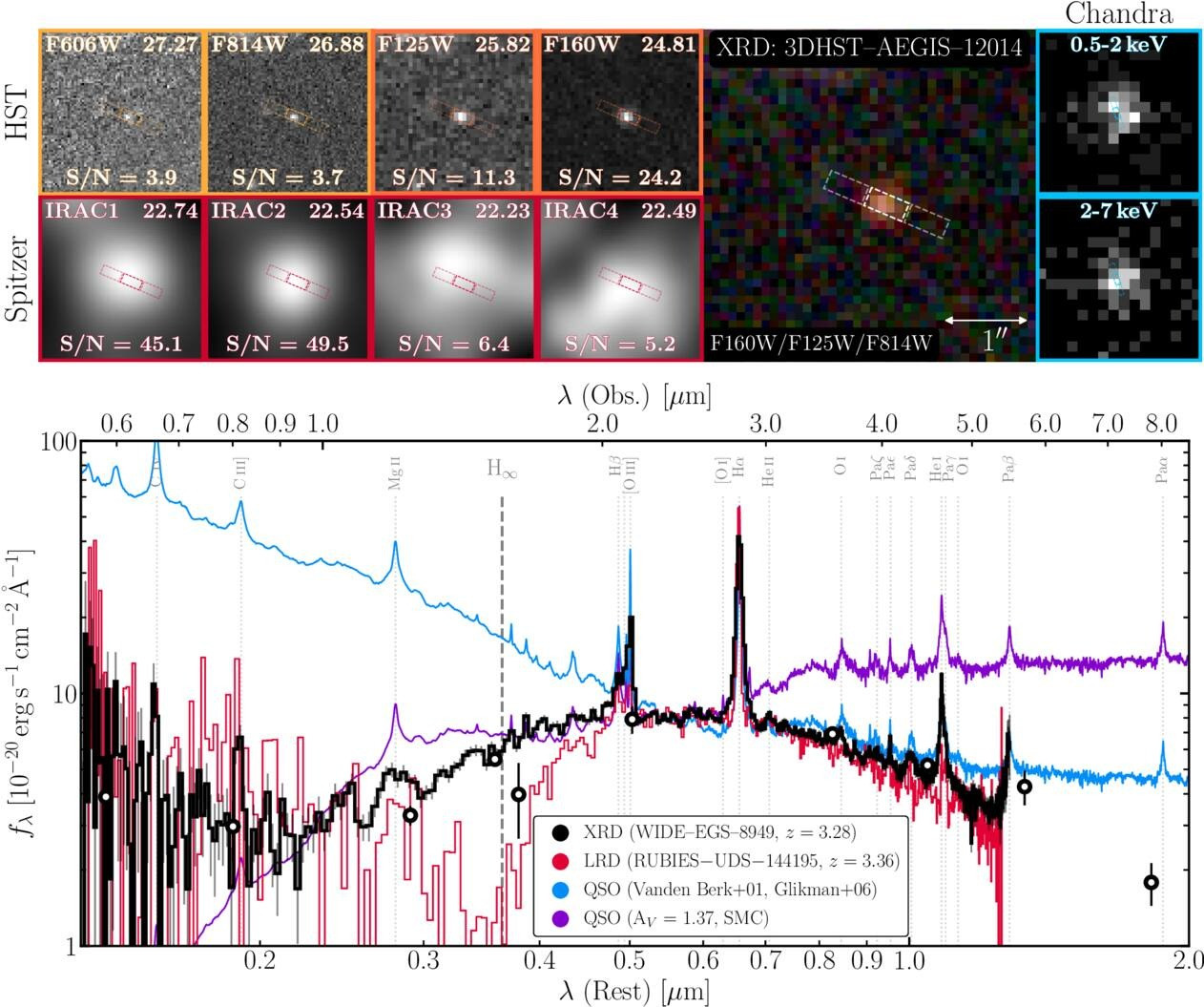
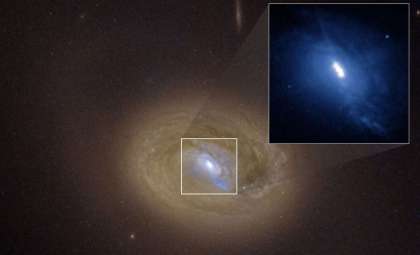
The object 3DHST-AEGIS-12014 differs from other LRDs. Despite sharing their dimensions, color, and a distance of roughly 11.8 billion light-years, it uniquely exhibits clear X-ray emission. Raphael Hviding from the Max Planck Institute for Astronomy described this source as potentially the key that “may be… what lets us connect all of the dots.”
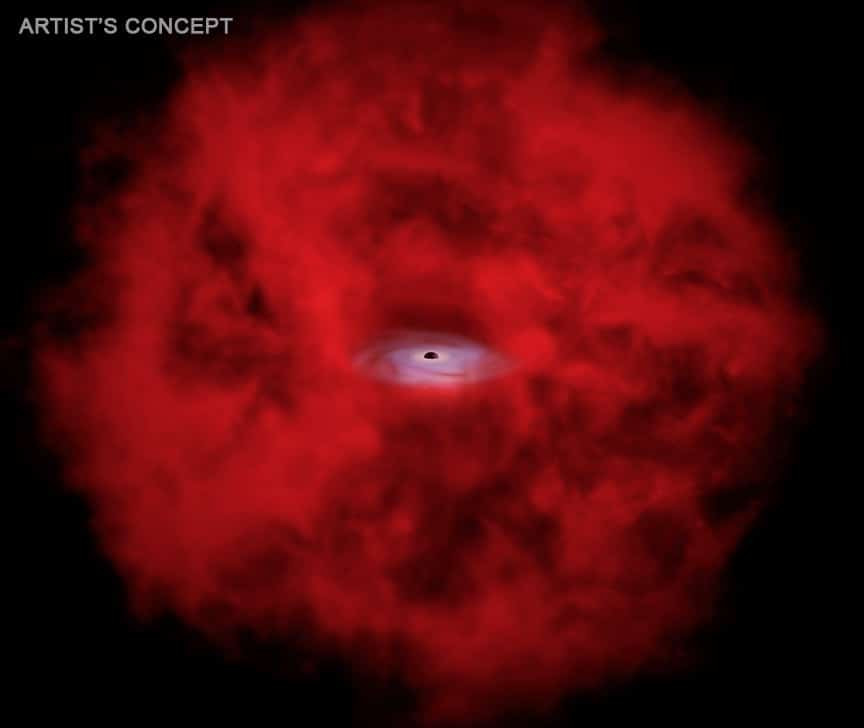
This finding resulted from layering Webb’s observations over older deep-field data from Chandra. For Anna de Graaff of the Center for Astrophysics | Harvard & Smithsonian:
“If little red dots are rapidly growing supermassive black holes, why do they not give off X-rays like other such black holes?” she said, “Finding a little red dot that looks different from the others gives us important new insight into what could power them.”
The detected X-ray brightness also varies subtly, indicating the source is partially concealed by uneven gas clouds drifting across our line of sight.
Indications of a Shift Toward Visible Black Hole Stages
Scientists suggest this “x-ray dot” might represent a phase where a previously obscured black hole starts breaking through its thick gaseous shroud, accreting matter more openly. The research proposes that openings in the gas allow X-rays from incoming material to occasionally escape.
Eventually, the gas would be depleted entirely, unveiling a classical active supermassive black hole without significant obscuration. Hanpu Liu of Princeton University highlighted that confirming this scenario could deliver the strongest evidence yet linking LRDs to black hole formation.
“We would also have the strongest piece of evidence yet that the growth of supermassive black holes is at the center of some, if not all, of the little red dot population.”
Alternatively, the object might be a more typical black hole veiled by a previously unrecognized form of dust. Upcoming observations are expected to shed further light on this mystery.
- Categories:
- Space


0 comments
Sign in to Comment