
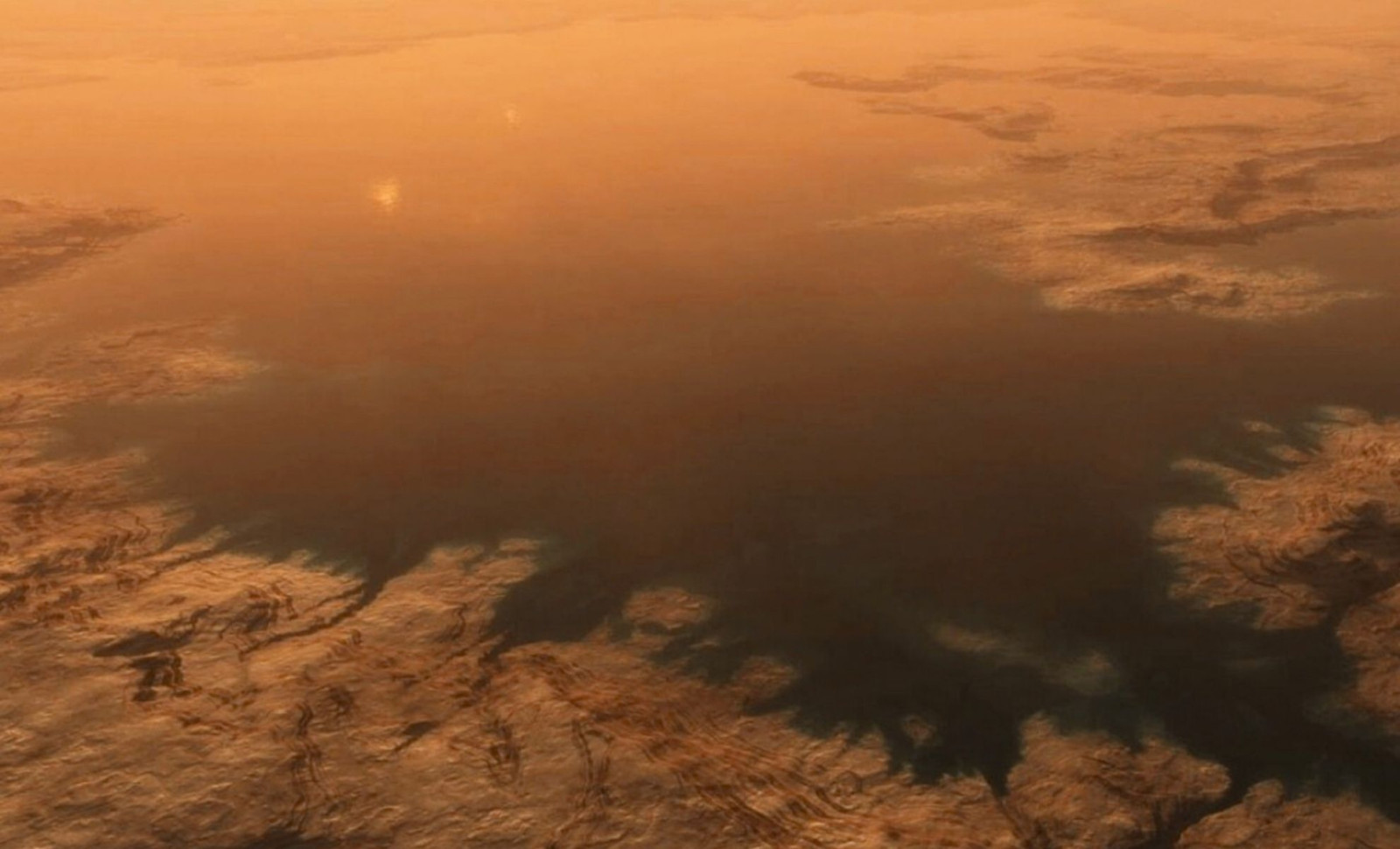
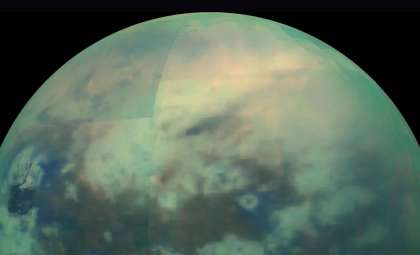
Saturn’s moon Titan continues to captivate scientists due to its thick nitrogen atmosphere, surface bodies of liquid, and climate cycles that intriguingly resemble Earth’s, albeit with hydrocarbons instead of water. Although missions to its northern seas are not yet underway, Titan remains one of the most Earth-like worlds explored in our solar system.
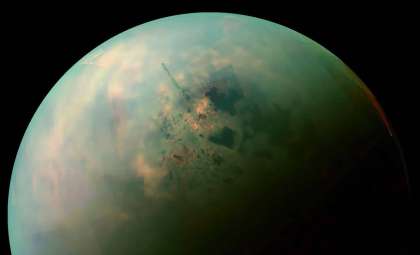
One of Titan’s most prominent features is Kraken Mare, an immense sea located near the moon’s high latitudes. Often compared in size to surpassing all the Great Lakes combined and recognized as the largest extraterrestrial liquid accumulation known, Kraken Mare’s enormity is beyond dispute. However, until recently, the exact depths of this hydrocarbon ocean were not well established.
Initial assessments suggested that Kraken Mare was relatively shallow, just deep enough to be notable. But recent analysis of data from NASA’s Cassini spacecraft has transformed this perspective. Published in the Journal of Geophysical Research: Planets, the research indicates certain regions of Kraken Mare could plunge down to 300 meters, significantly deeper than previously estimated.

New Cassini Observations Redefine Sea Depths
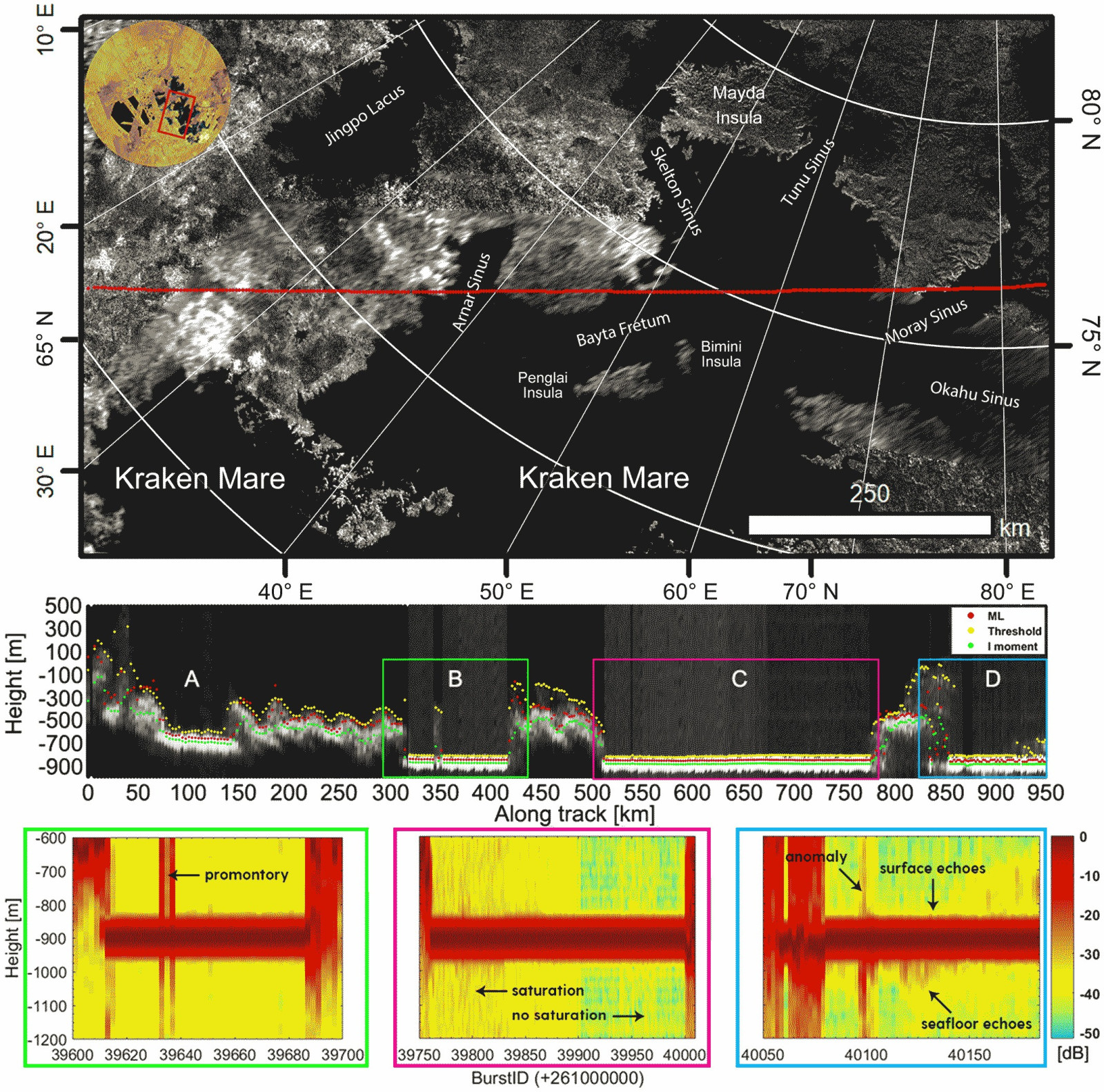
The deeper measurements emerged from data gathered during Cassini’s 104th flyby of Titan on August 21, 2014. The radar instrument scanned a 200-kilometer path along the eastern margin of Kraken Mare. In a 40-kilometer segment, the radar returned a distinct double echo, indicative of reflections from both the liquid surface and its floor below.
NASA’s article, Plumbing Coastal Depths in Titan’s Kraken Mare, details how radar readings revealed depths between 20 and 35 meters in shallower zones. However, in other sections, radar waves failed to bounce back from the bottom, implying extensive absorption by the sea’s fluid.
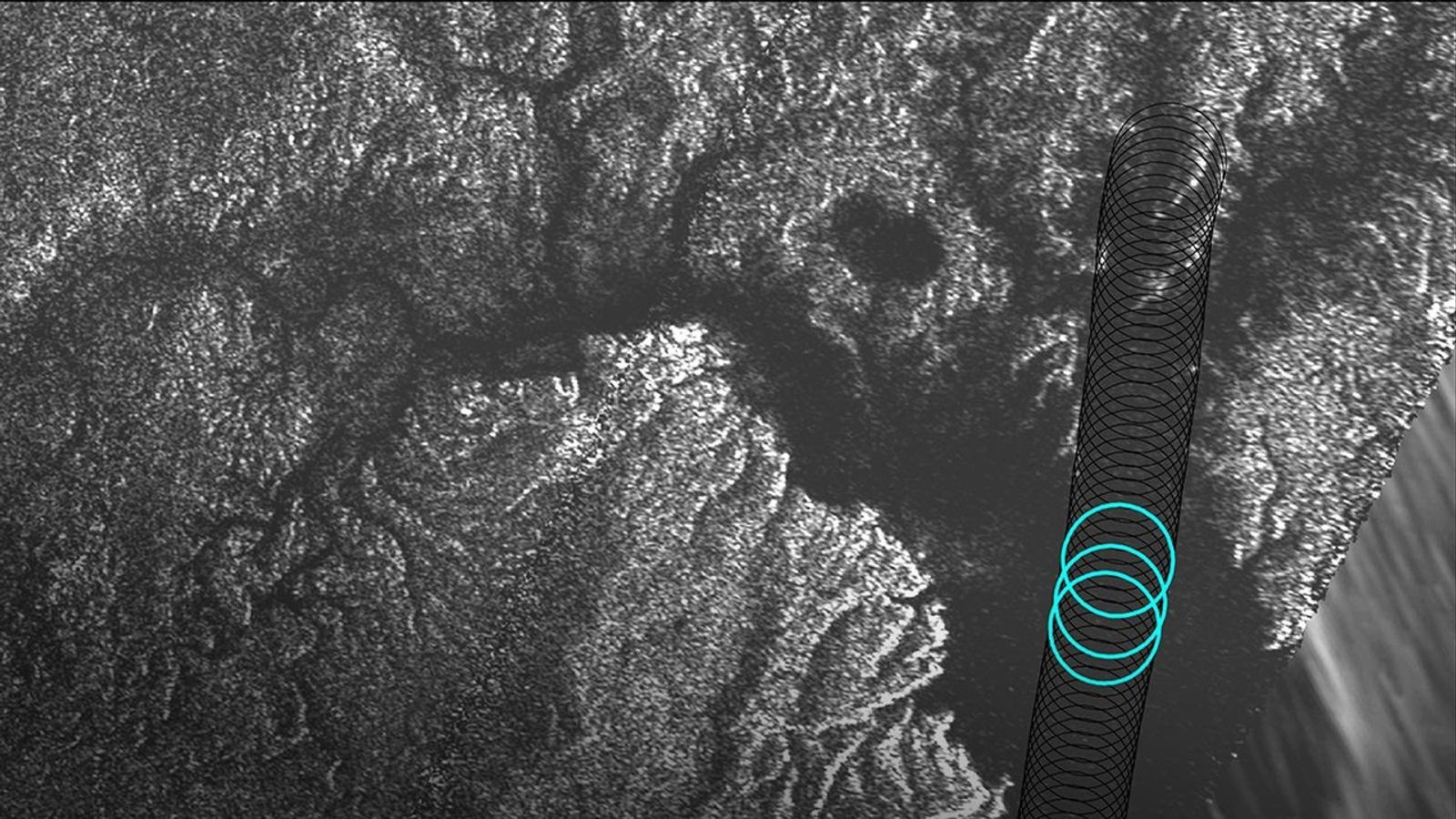
From these observations, scientists suggest that the central regions of Kraken Mare may reach depths of 300 meters, establishing it as not only the deepest known sea on Titan but also a major reservoir of surface liquids in the outer solar system.
The research estimates that Kraken Mare contains about 80 percent of Titan’s surface liquid hydrocarbons, underscoring its importance in the moon’s liquid cycle and surface dynamics.
Titan’s Hydrocarbon Rain Cycle
On Titan, methane behaves much like water on Earth, cycling through evaporation, cloud formation, precipitation, and accumulation in lakes and seas. Additionally, ethane, a hydrocarbon derived from methane photolysis, remains liquid due to Titan’s frigid average temperature of about minus 179 degrees Celsius.
Evidence from the study points to a higher ethane fraction within Kraken Mare than once thought. This is likely influenced by the sea’s size and latitude, which reduce methane replenishment via rainfall or runoff compared to smaller polar lakes.
Data from earlier Cassini missions and the Huygens probe landing in 2005 confirmed that methane rain regularly reaches Titan’s surface.
Since ethane absorbs radar waves more strongly than methane, this compositional difference likely contributes to the lack of radar signals reflected from the deepest parts of Kraken Mare. The makeup of these liquids influences not only remote sensing accuracy but also reveals intricate geological and atmospheric phenomena on Titan’s surface.
Obstacles and Future Exploration Plans
While Cassini’s radar imaging was groundbreaking in penetrating Titan’s dense atmosphere for surface mapping, it had limitations in revealing underwater terrain. The Synthetic Aperture Radar was ideal for surface observation, but its underwater depth mapping depended heavily on the transparency of the liquid and the radar’s angle of incidence.
Lost radar echoes forced scientists to infer depths by analyzing how much radar energy the liquids absorbed. Although this technique adds valuable clues, direct exploration is essential for accurate mapping of Kraken Mare’s physical and chemical properties.
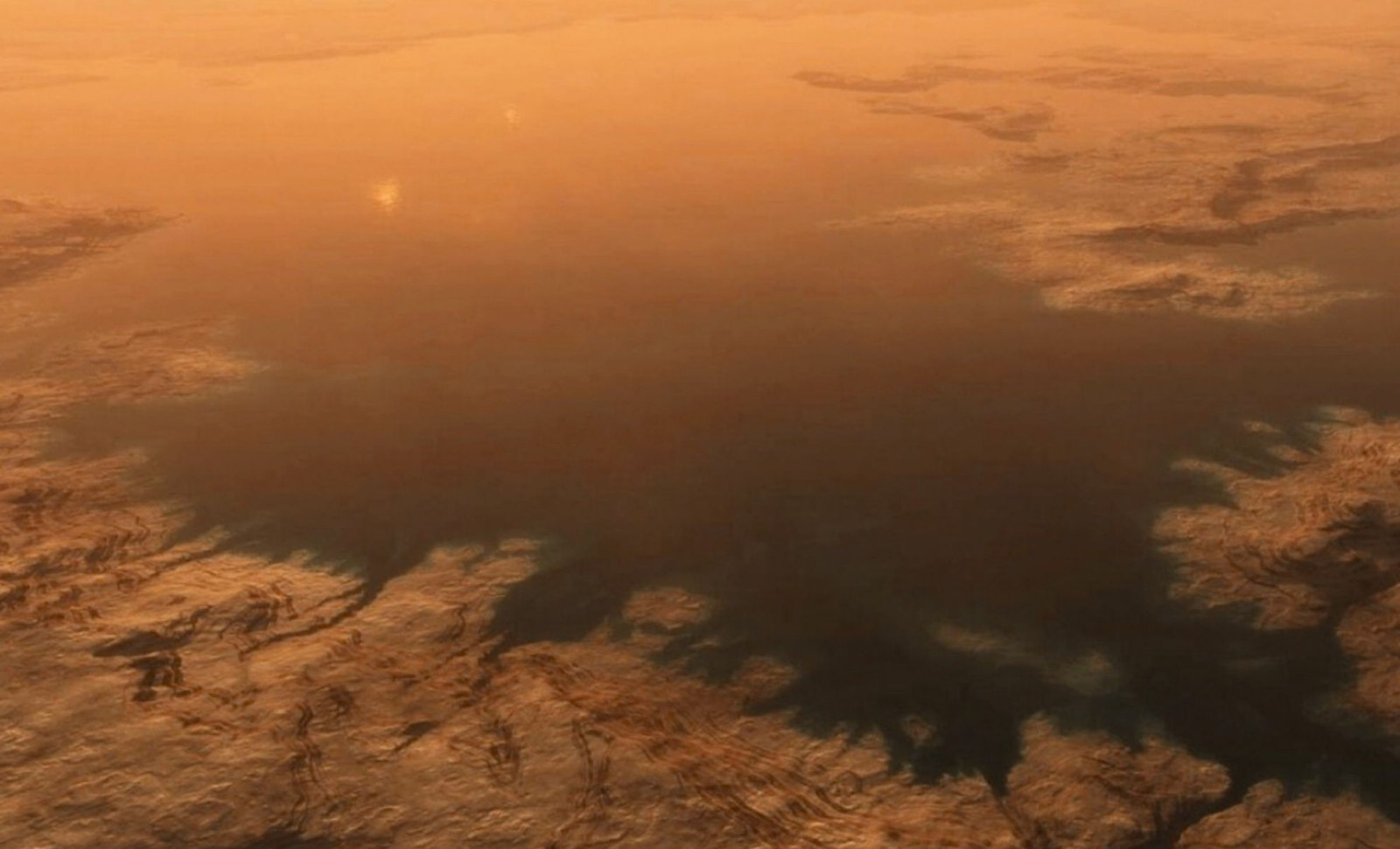
NASA has conceptualized a submarine mission since 2015 aimed at autonomously exploring Kraken Mare’s depths, equipped to measure pressure, temperature, currents, and hydrocarbon content. Although currently unfunded, this idea remains a potential blueprint for future investigations.
The Dragonfly mission set to launch in 2027 will touch down near Titan’s equator to study dunes and surface chemistry, offering vital environmental data that may inform later missions targeting Titan’s lakes and seas.
Unveiling Titan’s Hidden Depths
The discovery that Kraken Mare is much deeper than previously assumed significantly adjusts our understanding of Titan’s geology and climate system. Such a vast reservoir capable of storing enormous amounts of hydrocarbons raises intriguing questions about the moon’s internal activity, icy volcanism, and methane lifecycle.
This work also highlights the enduring scientific treasure trove left by the Cassini-Huygens mission, as re-examined radar archives continue to deepen insight into one of the solar system’s most Earth-like environments.
Titan’s vast hydrocarbon seas persist as premier targets for future space exploration, with Kraken Mare poised to be central in revealing vital clues about surface–atmosphere interplay, planetary chemistry, and potential exotic life-supporting conditions beyond Earth.
- Categories:
- Space










0 comments
Sign in to Comment