
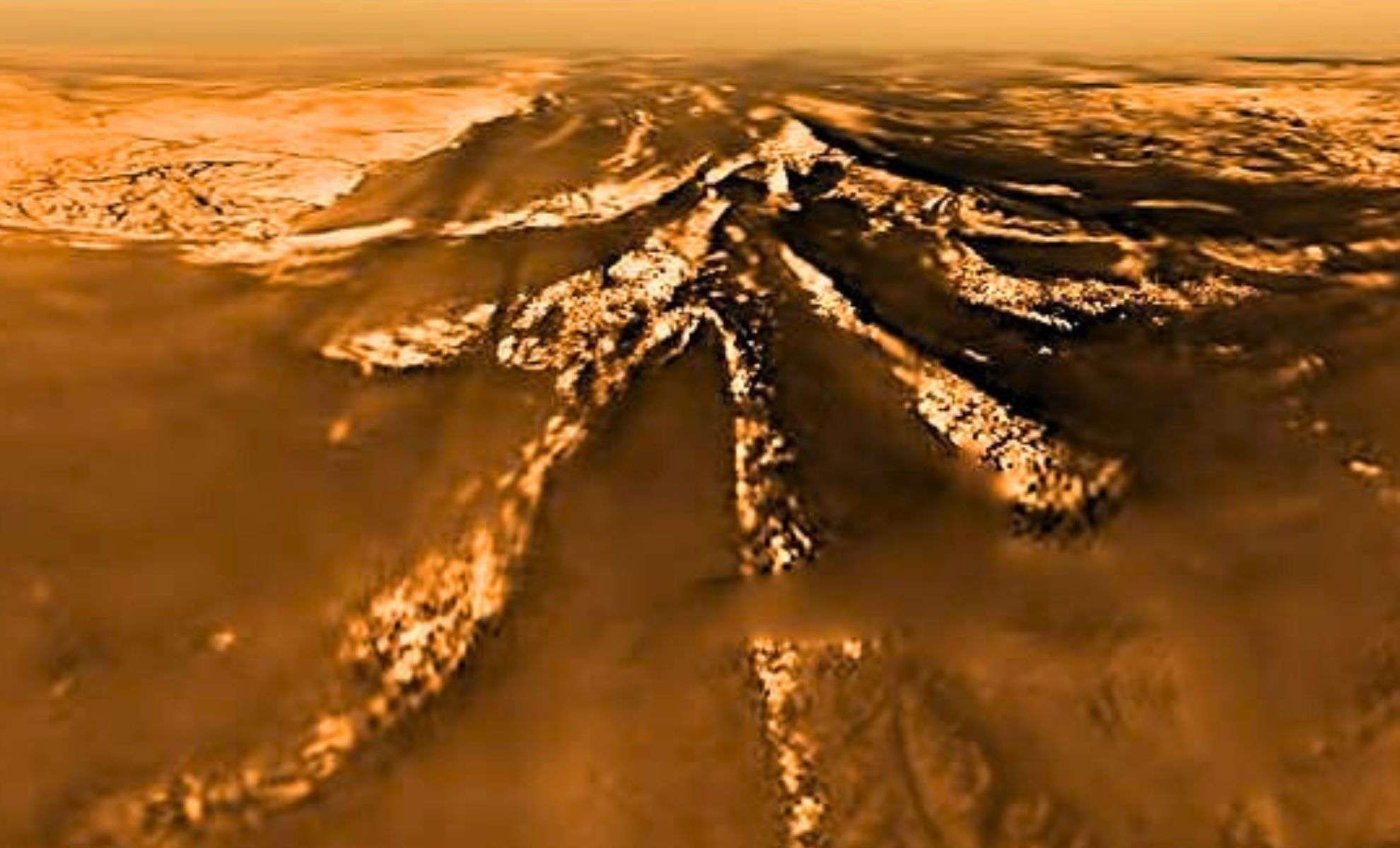
In the early hours of January 2005, a compact spacecraft roughly the size of a home appliance descended slowly through the dense, orange atmosphere enveloping Saturn’s moon Titan. Traveling at just over four meters per second, the Huygens probe softly landed on what appeared to be a frozen, floodplain over a billion kilometers from Earth. During its brief 72-minute mission, it sent back unprecedented images, audio, and chemical readings from this distant, alien environment.
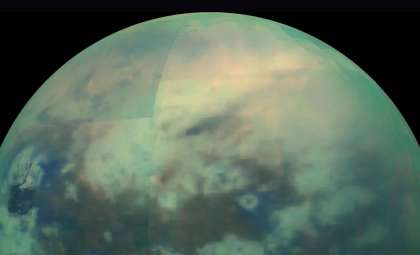
Now, two decades on, the Huygens probe, deployed from NASA’s Cassini spacecraft and operated by the European Space Agency, remains the only craft to have touched down in the outer reaches of our solar system. Its discovery radically changed our view of Titan and challenged our ideas about the possibility of life beyond Earth. Titan’s landscape, with its orange skies, methane lakes, and hydrocarbon dunes, presents a remarkable Earth-like terrain despite its extreme cold, colder than frozen carbon dioxide.
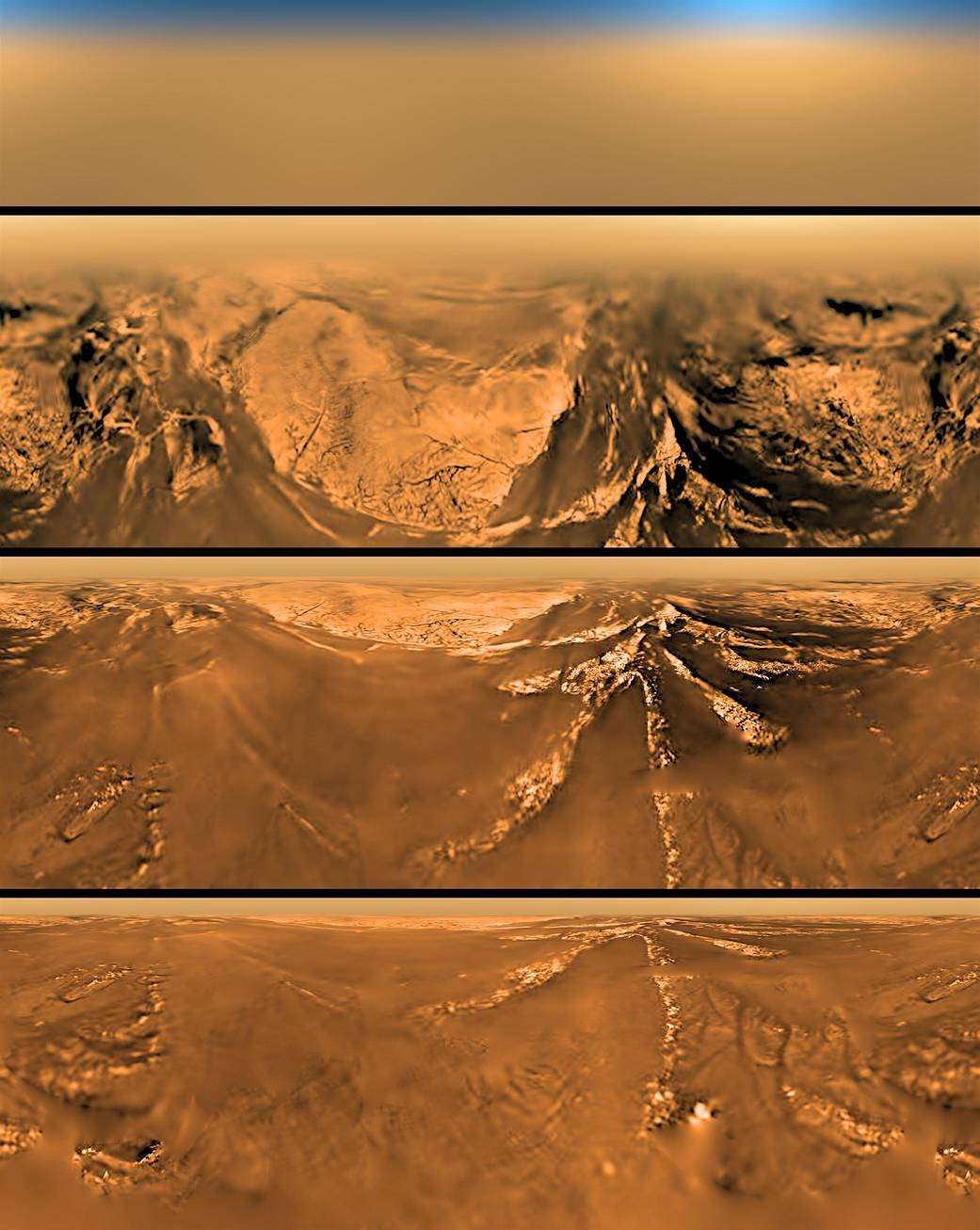
The touchdown point, scattered with icy stones and moist soil, resembled an ancient river delta swept dry. Images taken at various heights during descent displayed winding channels, basin-like floods, and elevated plateaus — evidence of a surface carved by liquids. Here, however, the fluid was not water, but methane, cycling through rain, lakes, and evaporation in a complete hydrocarbon hydrological cycle.

Touching Down on a Remote World
Huygens’ journey through Titan’s nitrogen-rich atmosphere lasted about two and a half hours. The probe slowed using a series of parachutes, encountering shifting winds, pressure changes, and limited visibility while relaying data in real-time to the orbiting Cassini spacecraft. Scientists anxiously monitored the signal, knowing it would be lost once Cassini dipped below the horizon.
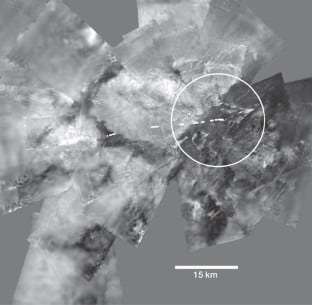
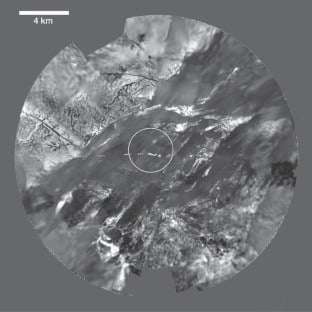
At exactly 11:38 UTC, the probe made contact with a region close to the area now known as Adiri, 10 degrees south of Titan’s equator. A built-in lamp illuminated the surface with a soft amber light, revealing smooth, pebble-like objects—likely composed of water ice—resting atop sediment resembling wet sand.
Data from the Surface Science Package indicated a gentle landing with a slight tilt, suggesting a hard crust gave way to a moist, soft layer beneath. These results are detailed in the NASA article marking the mission’s 10-year milestone, which features both imagery and technical flight data.
The onboard Gas Chromatograph Mass Spectrometer (GCMS) confirmed Titan’s atmosphere consists of roughly 98% nitrogen and 1.4% methane, a composition similar to Earth’s atmosphere in its infancy billions of years ago. Trace isotopes of argon pointed towards ongoing geological activity beneath the surface. Yet, intriguingly, no signs of ammonia or biological markers were detected, underscoring Titan’s complex yet alien nature.
Earthly Features Beneath an Icy Sky
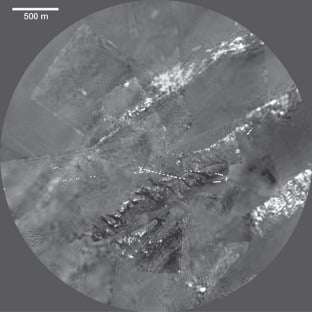
The most striking revelation was that Titan’s terrain bore an uncanny resemblance to Earth. The Descent Imager/Spectral Radiometer (DISR) created mosaics revealing erosion and clearly defined drainage systems. A study published in Nature highlighted arid riverbeds and floodplain structures suggesting not just historic flows but an ongoing cycle of methane precipitation.
“Only Titan and Earth exhibit rain and surface lakes within the solar system,” explained Dr. Jonathan Lunine, a planetary scientist involved with Cassini-Huygens at Cornell University. “It’s a complex methane-driven weather system operating at an extreme -290 degrees Fahrenheit.”
Despite the frigid conditions, the motion of liquids across Titan’s surface imbues it with an unusual vitality. Its thick, hazy atmosphere composed of intricate organic aerosols filters incoming sunlight, possibly creating a photochemical smog. These tholins—organic compounds forged by ultraviolet radiation—are thought to be precursors to life’s molecular building blocks.
Insights Into the Proto-Earth Environment
Titan acts as a window into Earth’s primordial environment. Its dense atmosphere, rich in carbon-based chemicals, and dynamic climate have led researchers to consider it a model for prebiotic Earth, though far colder and slower in its processes. The detection of solid organic particles and fractal haze in its atmosphere, along with organic sediments on the surface, offers vital clues on how life’s essential compounds may form under extreme conditions.
However, many questions remain. Near-surface winds proved gentler than expected, moving in sync with Titan’s rotation—a pattern more reminiscent of Earth than Mars. Research by Bird et al., detailed here, shows a complex upper-atmosphere with a near-still lower layer, leading to uncertainties about how Titan’s surface liquids behave and evaporate.
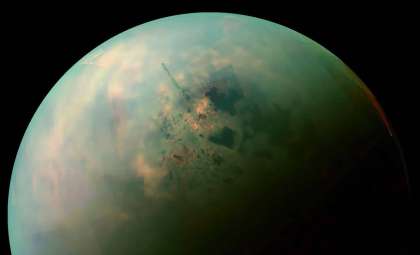
Huygens provided a momentary glimpse, but failed to capture Titan’s full meteorological complexity. Cassini later mapped large methane seas like Ontario Lacus and Kraken Mare via radar, though how these bodies fluctuate over time continues to puzzle scientists. While there is evidence suggesting cryovolcanism, definitive volcanic activity remains elusive.
The Future: Aerial Exploration of Titan
NASA’s upcoming Dragonfly mission, planned for launch in 2028, hopes to deepen our understanding. Unlike the stationary Huygens, Dragonfly will be a mobile rotorcraft capable of flying across Titan’s surface for tens of kilometers, landing amidst the Shangri-La dune fields, well away from the original touchdown site.
This mission will conduct on-site chemical analyses of organic molecules, searching for complex compounds or potential metabolic precursors. “We are transitioning from a single brief snapshot to a long-term exploration,” stated Dr. Elizabeth Turtle, Dragonfly’s principal investigator.
Nevertheless, all future Titan research builds upon the foundation laid by Huygens. The NASA Science Cassini-Huygens archive remains a crucial source for researchers. It offers detailed descent imagery, atmospheric data, and landing insights complemented by high-resolution mosaics. For comprehensive technical information on the mission’s arrival, the Cassini Arrival Press Kit is indispensable.
- Categories:
- Space





0 comments
Sign in to Comment