
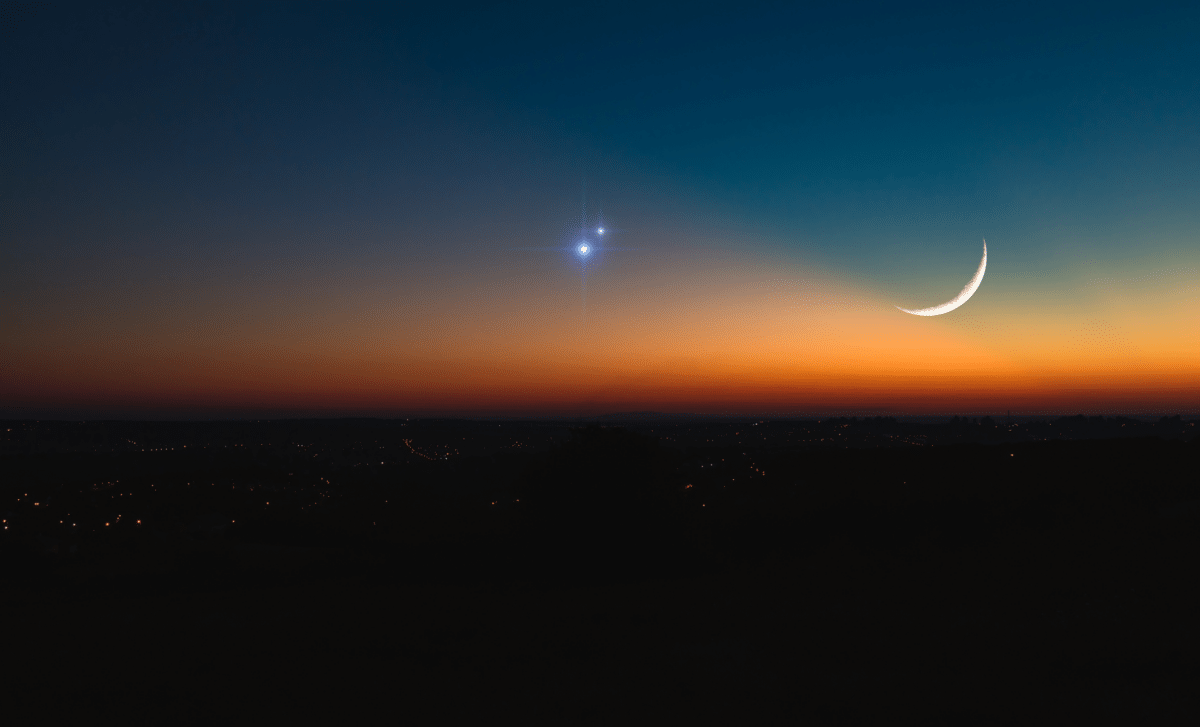
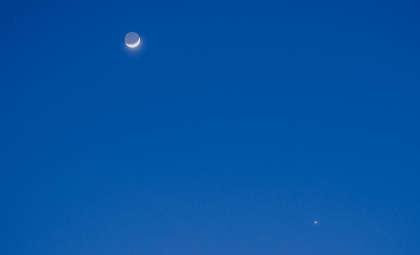
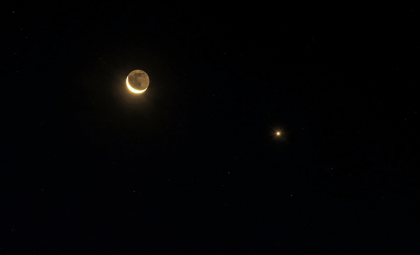
Stargazers in the southern United States are in for a visual delight this evening as the waxing gibbous moon draws near the brilliant blue-white star Spica, creating a memorable pairing overhead. This rare conjunction invites both casual viewers and astronomy fans to catch one of the month’s most captivating sky sights.
Spica: Virgo’s Shining Star
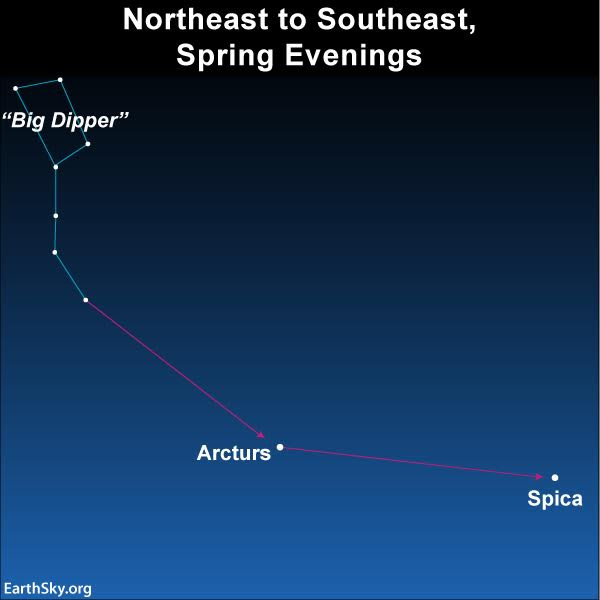
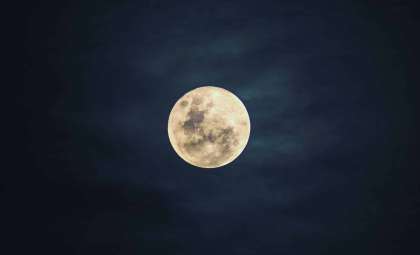
Spica stands out as the brightest star within the Virgo constellation and is actually a binary star system composed of two massive stars orbiting each other every four days. As detailed by EarthSky, this pair emits energy equivalent to over 12,000 times that of the Sun, giving it a distinct blue-white radiance that rivals the moon’s glow when observed from Earth. Spica’s intense light and striking coloration offer a vivid contrast against the lunar brightness. Currently, the moon shows about 83% illumination and is positioned ~40 degrees above the southern horizon, creating ideal conditions for this celestial duo.
Exploring Lunar Features
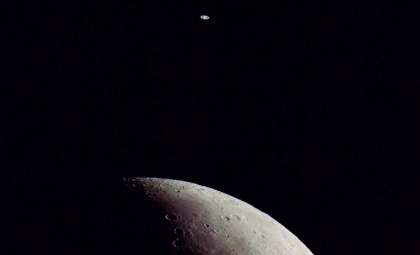
Using binoculars or a small telescope, enthusiasts can delve deeper into the lunar details visible tonight. The terminator—the dividing line between night and day on the moon—highlights shadows that accentuate topography, including the Montes Jura mountain range bordering the northwestern edge of Mare Imbrium. The huge Copernicus Crater, roughly 58 miles (93 km) wide, shines with its bright ejecta streaks radiating from the impact site. Looking beyond, the moon’s south pole can be approximated, notable as a potential target for NASA’s upcoming Artemis 4 mission planned for 2028, according to Space.com. These fascinating features transform moon gazing into a voyage over its rugged terrain.

Tracking Movements Through the Night
As the night unfolds, the moon will gradually shift closer to Spica, with both setting in the westerly sky in the early hours of May 27. In the nights following, the moon continues its orbit, eventually passing near Antares, the striking red supergiant in Scorpius, ahead of the rare Blue Moon on May 31. This series of celestial events presents multiple chances for photographers and skywatchers to observe the moon’s path relative to some of the sky’s most notable stars.
What Makes Spica So Captivating
Besides its brightness, Spica holds a notable place within the Virgo constellation with a rich background in both science and culture. Astronomers have spent years analyzing its spectroscopic qualities and swift orbital dynamics, key to understanding the evolution of massive stars. Historically, various cultures relied on Spica as a marker for agricultural cycles and navigation. Tonight’s close approach with the moon not only highlights astronomy but also connects observers to a longstanding human tradition of star appreciation.
Tips for an Optimal Viewing Experience
To fully enjoy this event, choose a dark location away from city lights and give your eyes time to adjust to the darkness. Using binoculars or a modest telescope enhances details on the moon and reveals subtle shades in Spica’s light. Star maps or astronomy apps can assist in tracking the moon’s movement and the positions of surrounding celestial objects. While the pairing is visible without aid, magnified views uncover textures on the lunar surface and Spica’s vivid glow.
The Astronomical Importance of This Pairing
Experts, including those cited by Space.com, note that such alignments serve purposes beyond visual pleasure—they offer opportunities for learning. Amateur astronomers can practice astrometry by monitoring the moon’s passage near Spica, while professionals may analyze the star system’s light fluctuations. Events like this deepen public interest in astronomy and highlight the intricate dynamics within our solar system and beyond.
Anticipating the Upcoming Blue Moon
Later this month, the second full moon—commonly called a Blue Moon—will grace the night sky with another spectacular display. Following tonight’s Spica-moon encounter, the lunar voyage toward Antares sets the stage for this uncommon full moon, encouraging observers to continue their nightly skyward explorations. This sequence beautifully illustrates the harmonious interplay of planetary and stellar motions that shape our celestial view.
- Categories:
- News



0 comments
Sign in to Comment