
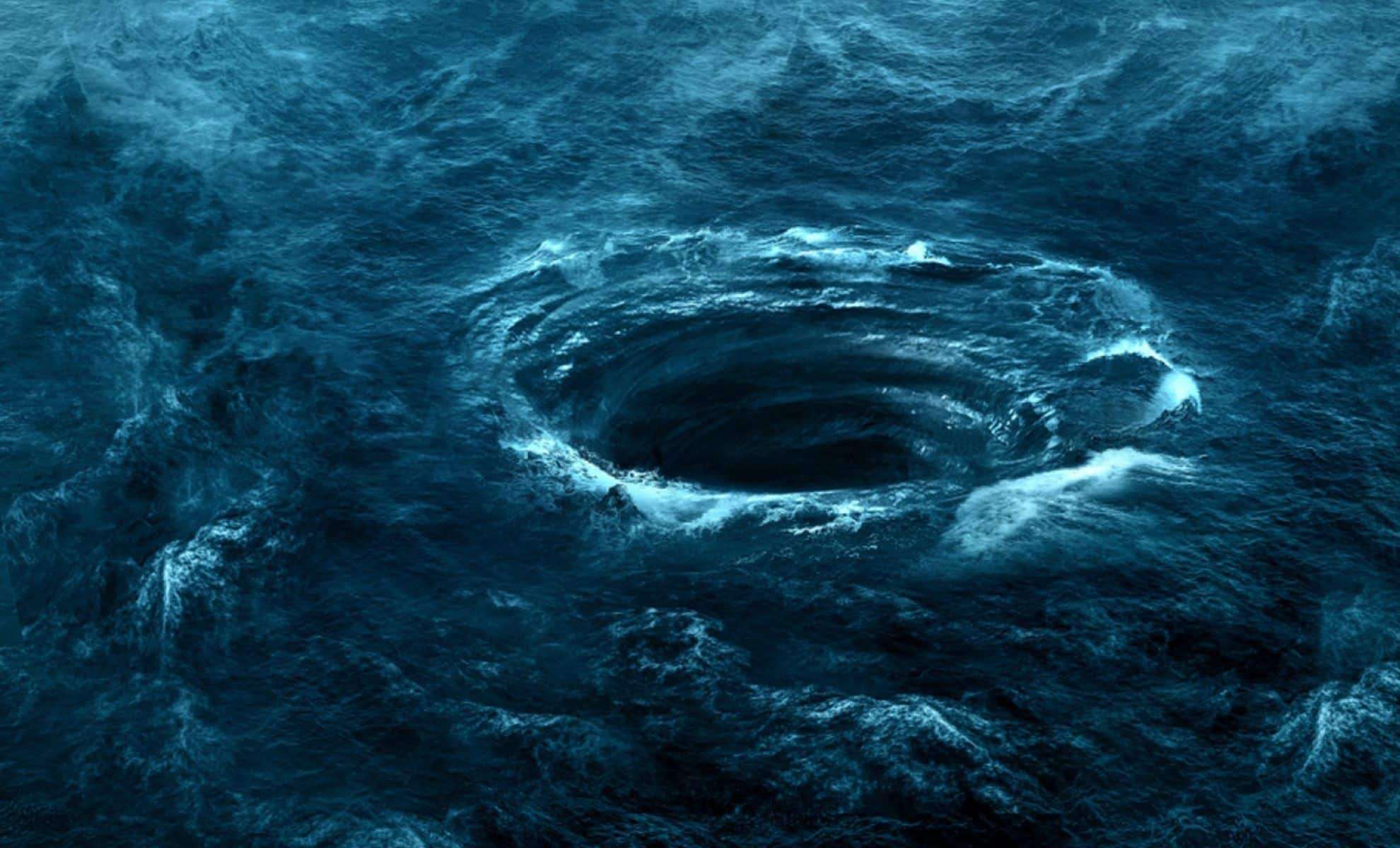
For more than seven decades, scientists have been intrigued by an unusual gravitational depression beneath the Indian Ocean. Termed the Indian Ocean Geoid Low (IOGL), this feature represents the lowest point in Earth's gravitational field. Recent research, featured in Geophysical Research Letters, provides fresh insights into its origins by employing sophisticated geodynamic modeling combined with a detailed review of Earth’s tectonic past.
A One-of-a-Kind Gravitational Feature on Our Planet
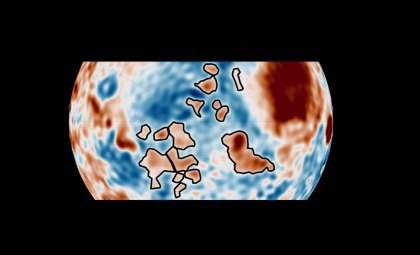
The IOGL was initially identified in 1948 by Dutch geophysicist Felix Andries Vening Meinesz. Unlike a physical trench or hole on the seafloor, it is a significant depression in the geoid—a model representing Earth’s gravitational shape affected by rotation and gravity. This gravitational trough extends over approximately 3.1 million square kilometers and dips as much as 106 meters below the average sea level of adjacent ocean areas.
This anomaly indicates locally diminished gravitational strength, resulting in slightly lower sea levels in the region. Its presence raises critical questions regarding the internal mass distribution of Earth and why this area behaves so differently compared to others.

The Significance of Earth’s Irregular Shape
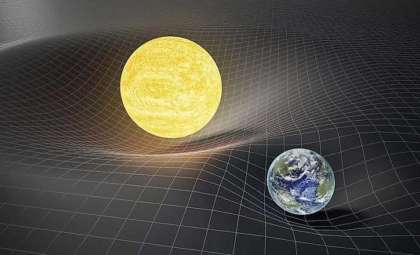
Contrary to the common impression of a perfectly round planet, Earth more closely resembles an oblate ellipsoid. This shape is further modified by uneven mass distribution beneath the surface. The geoid offers a more precise depiction of Earth’s gravity surface, highlighting zones of stronger or weaker gravity caused by subsurface structures.
In the case of the IOGL, scientists hypothesize the anomaly arises from a deficit of mass deep beneath the Indian Ocean. Such imbalances can create significant alterations in Earth’s gravitational field and distort the geoid on a large scale.
Ancient Tectonic Activity Explains the Anomaly
The latest study proposes a compelling explanation for the IOGL. Scientists argue that about 30 million years ago, a cold, dense slab of oceanic crust from the extinct Tethys Ocean subducted beneath the African continent. This sinking chunk likely interrupted a massive mantle superplume—a large upwelling of hot mantle material—beneath Africa.
The research suggests this interaction shifted the mantle’s heat flow beneath the Indian Ocean, causing the geoid to deform and resulting in the pronounced gravitational dip that persists today. Their approach included numerical simulations that recreated 140 million years of tectonic progression, revealing how subducted slabs and mantle plumes combined to produce this unique feature.
Some Experts Question the New Model
Despite the persuasive new findings, not everyone is convinced. Dr. Alessandro Forte has expressed doubts about whether the model accurately portrays the intense mantle plume beneath Réunion Island, located within the IOGL zone. He also highlighted inconsistencies between the simulated geoid and actual observations, indicating that the theory might still need adjustments.
Professor Attreyee Ghosh, lead author from the GFZ German Research Centre for Geosciences, remarked, “It could be that it persists for a very long time. But it could also be that the plate movements will act in such a way to make it disappear—a few hundreds of millions of years in the future.”
Ghosh pointed out that some geological factors remain unincorporated in current models but emphasized that the IOGL provides a rare window into Earth’s interior dynamics. She described Earth’s gravity field as resembling “a potato with dents,” illustrating the planet’s true complexity far beyond a simple sphere.
- Categories:
- News







0 comments
Sign in to Comment