

In early March, satellite imagery from the European Space Agency’s Copernicus program uncovered a remarkable phenomenon in Antarctica: patches of green-colored ice. This unusual discovery immediately sparked curiosity among scientists, prompting further study into its cause. The unusual tint is linked to an intriguing natural process involving minute organisms.
These images, taken by the Sentinel-2 and Sentinel-3 satellites, are providing new insights into shifts occurring within the Southern Ocean’s ecosystems. Moreover, this fresh perspective on the ice offers scientists new tools to monitor ocean currents and marine biodiversity from orbit.
How Phytoplankton Blooms Signal Spring in the Antarctic
The Copernicus program explains that the green hue in the ice and surrounding waters is caused by phytoplankton blooms. These microscopic, photosynthetic organisms are vital components of marine food chains, influencing the color changes observed. Their growth coincides with the return of sunlight to Antarctica following the long polar night.

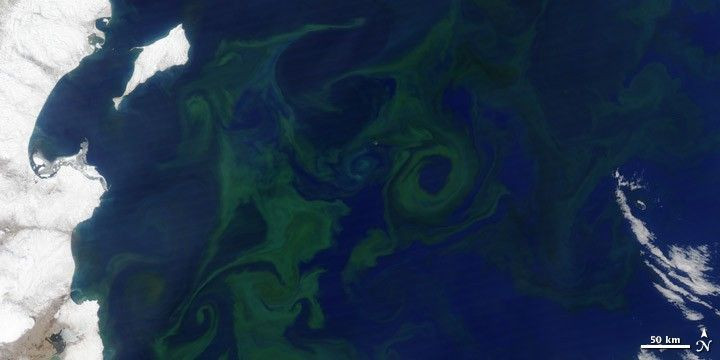
As daylight returns and ice melts, nutrients are released into the water, creating ideal conditions for phytoplankton to flourish. This annual cycle indicates that the Southern Ocean remains a thriving and healthy environment.
Innovative Tools for Monitoring Oceanic Ecosystems
The satellite images collected by the Copernicus fleet contribute to a broader initiative to observe Earth’s ecosystems from space. Instruments aboard Sentinel-2 and Sentinel-3 allow researchers to detect and analyze changes in oceans, even in remote, challenging regions such as Antarctica.
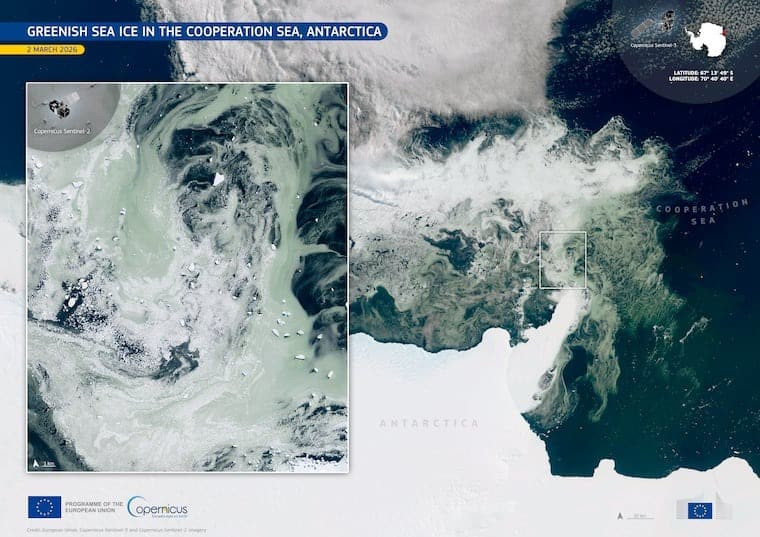
These high-quality satellite images enable scientists to map the extent of phytoplankton blooms throughout the Southern Ocean, offering crucial data on how these biological changes might impact the broader marine ecosystem.
“These observations help researchers better understand austral marine ecosystems and assess how they respond to environmental change,” announced Copernicus.
Signs of a Healthy Antarctic Marine Environment
While green-tinted ice might initially raise concerns, it actually signals a well-functioning ecosystem. Phytoplankton blooms play a foundational role in the Antarctic food web, providing nourishment for small fish and larger creatures such as krill.
Abundant phytoplankton indicates balanced nutrient cycles in the Southern Ocean, underscoring the health of this marine habitat. Monitoring such shifts is essential, as subtle ecosystem changes can ripple through global biodiversity.
- Categories:
- Science






0 comments
Sign in to Comment