

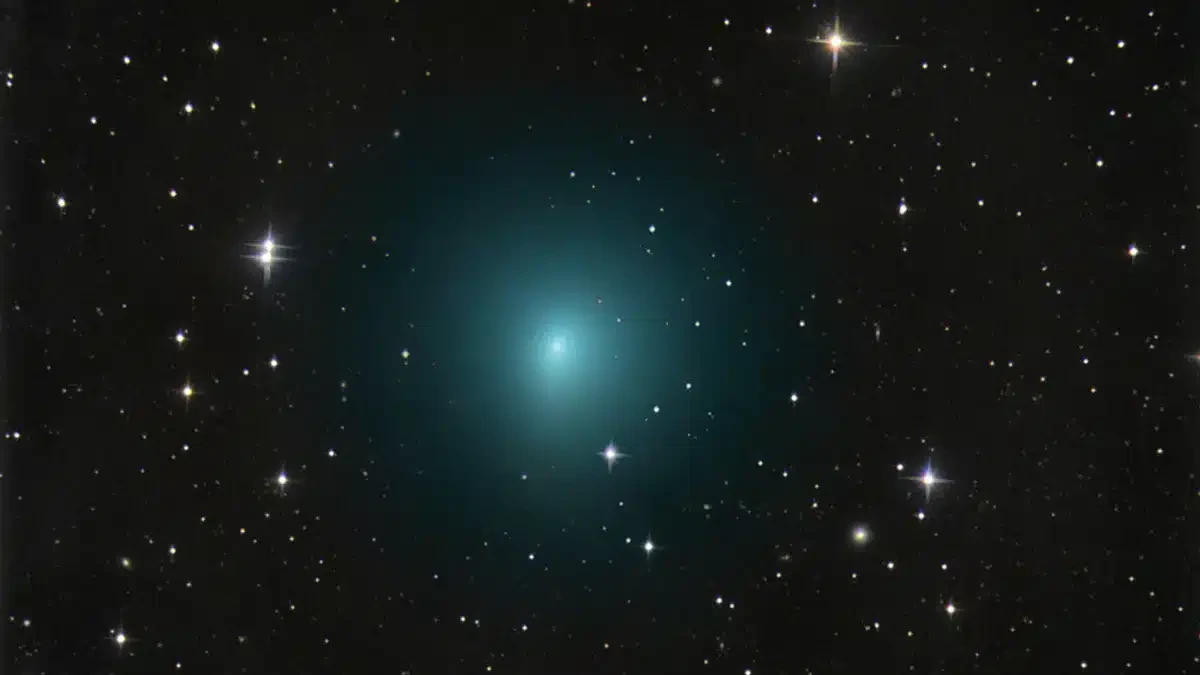
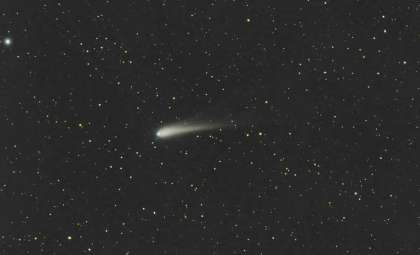
Comet 41P/Tuttle-Giacobini-Kresak has recently captivated the astronomy community with a bewildering phenomenon: its spin rate not only slowed drastically but also reversed direction entirely. This rare occurrence challenges existing comet models and opens up fresh avenues of research into cometary dynamics.
Astonishing Slowdown Observed in Comet 41P
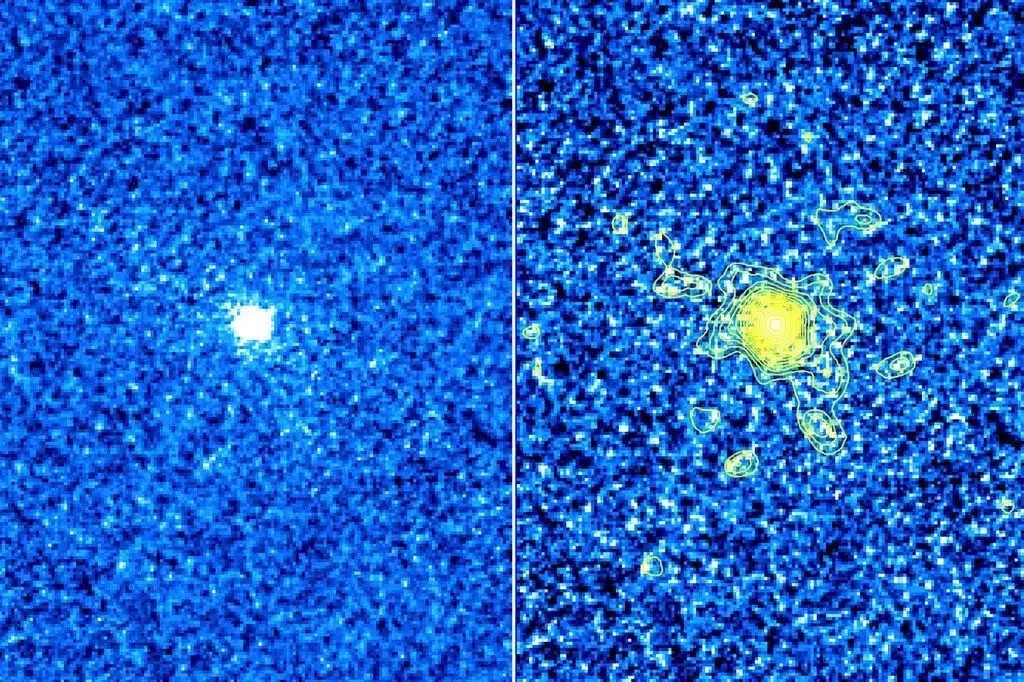
Comet 41P/Tuttle-Giacobini-Kresak has intrigued astronomers for years, but its latest rotational shift has been unprecedented. In 2017, NASA’s Swift telescope recorded a striking decrease in the comet’s rotation speed, slowing it down to nearly a third of its previous rate. Initially, the comet completed a rotation every 20 hours, but within a mere 60 days, that period extended to 53 hours. Such a steep deceleration in spin is unlike anything ever documented in the study of comets.
“The previous record for a comet spindown went to 103P/Hartley 2, which slowed its rotation from 17 to 19 hours over 90 days,” said Dennis Bodewits, a former associate research scientist at the University of Maryland. “By contrast, 41P spun down by more than 10 times as much in just 60 days, so both the extent and the rate of this change is something we’ve never seen before.”
Add Cosmo Herald as a Preferred Source

This extraordinary deceleration puts comet 41P in a category of its own, presenting scientists with puzzling questions about the mechanisms driving such rapid change.
What Caused the Spin Direction to Reverse?
Adding to the intrigue, the comet’s spin didn’t just slow; it actually reversed direction. Such rapid inversion is rare among comets, which typically undergo gradual rotational changes. David Jewitt’s research suggests that uneven outgassing is the key factor. As Comet 41P migrates closer to the Sun, solar heating causes localized jets of gas to erupt from its surface, producing an uneven force that acts like a torque and alters its rotation.
“The simplest explanation of the changing period is that the nucleus was torqued by recoil forces from anisotropic outgassing, as has been widely demonstrated in other comets,” Jewitt explains in his paper.
According to Jewitt’s findings, the comet's relatively small nucleus—less than 0.7 km in radius—makes it especially vulnerable to swift rotational shifts fueled by these outgassing jets.
Consequences of Rapid Rotational Changes
This investigation also highlights concerns regarding the long-term stability of Comet 41P. Jewitt points out that the swift spin variations may eventually threaten the comet’s structural integrity.
“The lifetime of the nucleus to rotational instability (a few decades) is short compared to the dynamical lifetime (∼ 103 years) in its current orbit,” Jewitt states.
This indicates that despite its orbit potentially lasting thousands of years, the comet’s physical make-up could be vulnerable to disruptions caused by its own rapid rotation.
The comet’s endurance might hinge on whether its outgassing activity is exceptionally intense or if it is the remaining core of a previously larger parent body gradually losing mass. Jewitt theorizes that either condition could explain why 41P continues to survive despite the extreme rotational forces it experiences. These insights also imply that comet lifespans may be shorter than previously thought, with internal stresses hastening their fragmentation.
The Impact of Outgassing on Comet Dynamics
Outgassing—the emission of gases and dust during a comet’s sunward journey—is a classic comet characteristic. However, Comet 41P’s outgassing stands out due to its intensity and irregularity. Instead of a gentle, even release, this comet exhibits sudden, powerful jets, which likely contribute to its fluctuating spin and might ultimately lead to its breakup.
Jewitt’s paper, accessible as a preprint on arXiv, delivers fresh perspectives on how outgassing processes can dictate a comet’s spin evolution and stability, offering valuable clues about predicting the eventual fate of comets.
- Categories:
- Astronomy










0 comments
Sign in to Comment