
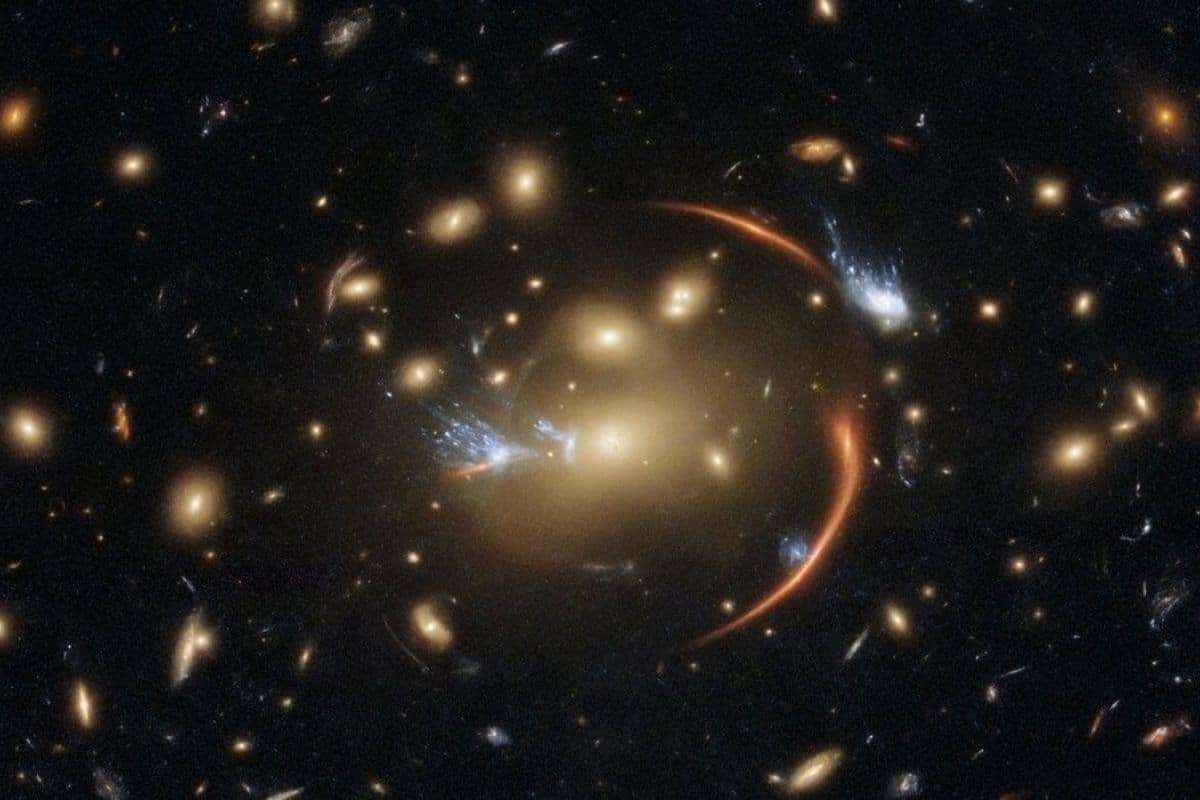
A galaxy cluster previously labeled as inactive is showing unexpected vigorous star formation, overturning long-held beliefs about aging galaxies and their capacity to birth new stars. Located 5.8 billion light-years away, the Phoenix Cluster had been assumed to have depleted its reservoir of cold gas essential for star creation.
Recent observations using the James Webb Space Telescope (JWST) have uncovered ongoing star production within this cluster, prompting scientists to reassess how cold gas can exist and sustain star formation in such an extreme environment.
Unraveling the Enigma of the Phoenix Cluster
Galaxy clusters represent the universe’s largest gravitationally bound assemblies, comprising hundreds to thousands of galaxies, alongside hot plasma and dark matter. Over cosmic timescales, their supply of cold, dense gas—needed for forming stars—tends to vanish. As a result, central galaxies in these clusters enter a ‘quenched’ state, ceasing new star formation.
The Phoenix Cluster was anticipated to follow this evolutionary path. However, astronomers have detected an intense starburst activity, generating nearly 1,000 new stars annually—a rate vastly exceeding the Milky Way's modest output of fewer than 10 stars per year.

The Challenge of the Cooling Flow Dilemma
Conventional models suggest that hot gas in galaxy clusters gradually cools, condensing into colder clouds that fuel star formation. Typically, this cooling is suppressed by energetic jets from central supermassive black holes, which keep the surrounding gas heated, thereby inhibiting star birth.
Contrary to these expectations, the Phoenix Cluster displays evidence that this gas cooling process is actively happening, defying the common assumption that cold gas is absent. This reveals a large-scale mechanism enabling the gas to cool enough to trigger star formation.
JWST Sheds Light on the Phenomenon
To investigate this unexpected activity, a team led by Michael Reefe, a graduate student at MIT’s Kavli Institute for Astrophysics and Space Research, leveraged the James Webb Space Telescope’s unique infrared capabilities to examine the Phoenix Cluster’s core.
Unlike earlier instruments, JWST detected signatures of warm gas—an intermediate phase bridging hot and cold states.
Neon emission lines revealed this medium-temperature gas, providing insight into the cooling path from hot intracluster gas to the cold material that nurtures star formation.
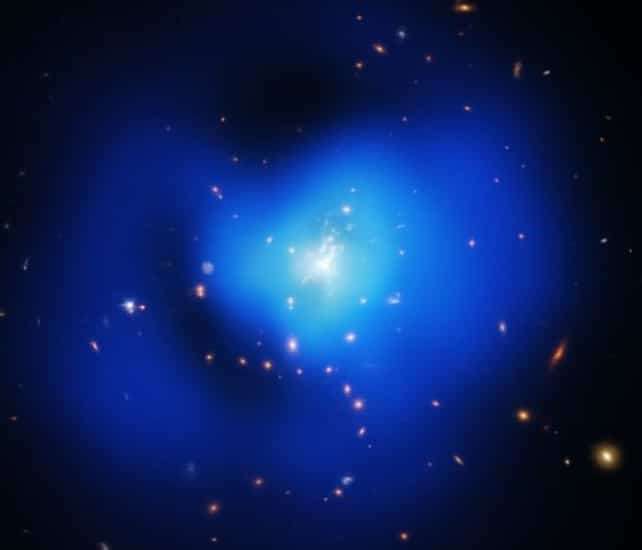
Could a Black Hole Be Triggering Star Formation?
Perhaps the most unexpected aspect of these findings is that the Phoenix Cluster’s supermassive black hole might actually encourage the cooling of gas rather than inhibiting it. Usually, jets from such black holes heat the nearby gas, suppressing star formation. Here, however, evidence suggests the reverse:
- The black hole’s influence may foster conditions favorable for gas cooling.
- Extensive cooling processes seem to generate approximately 20,000 solar masses of cold gas annually.
- This cold gas is directly responsible for sustaining vigorous star production.
“We have a solid grasp on the mechanisms driving the intense star formation; what remains unclear is the underlying reason behind it. This breakthrough opens new pathways to explore these extraordinary systems,” stated MIT astrophysicist Michael McDonald, a co-author of the research.
If supported by further research, these discoveries could reshape current models of how black hole feedback influences galaxy development and evolution.
- Categories:
- Astronomy





0 comments
Sign in to Comment