

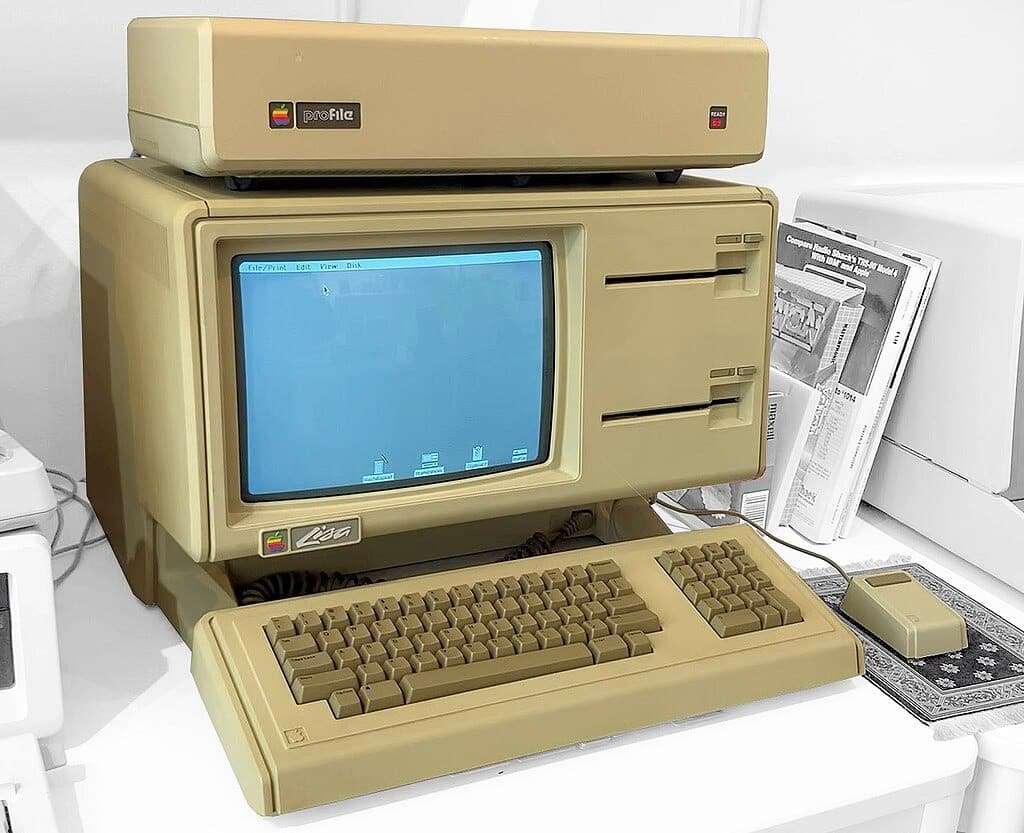
Back in 1989, Apple took an unexpected step that erased a significant chapter in its technological journey by eliminating 7,000 Apple Lisa computers. This unusual incident in Logan, Utah, puzzled many, as it involved the complete destruction of a once-cutting-edge product. Although innovative when introduced, the Lisa ultimately became one of Apple’s most infamous flops, never regaining its former prominence.
The Introduction and Decline of the Apple Lisa
Released in 1983, the Apple Lisa broke ground as one of the first personal computers to offer a graphical user interface (GUI), complete with a mouse and window-based navigation—elements that are now standard in computing.
Despite these trailblazing attributes, the Lisa faced major obstacles that hindered its market success. Its steep price, nearly $10,000 (equivalent to about $30,000 today), put it out of reach for most buyers, and its hardware was prone to overheating issues.

The launch of the far more budget-friendly and dependable Macintosh soon after overshadowed the Lisa. By 1985, Apple had ceased production, leaving the destiny of its remaining unsold units unclear.
Bob Cook’s Innovative Attempt to Bring the Lisa Back
Bob Cook, founder of Sun Remarketing, recognized an opportunity amid Apple’s discarded Lisa models. As a reseller with a history of salvaging unsold Apple merchandise, he aimed to refurbish these machines for a fresh market.
In 1986, Cook negotiated to buy up to 7,000 leftover Lisa computers from Apple. His plan was to upgrade the machines’ hardware and software, making them available at more accessible prices. Cook dedicated $200,000 toward research and development for this enhancement project.
The result was the Lisa Professional, a revamped and rebranded version of the original device. Sales initially showed promise, suggesting a potential revival for the Lisa, but Apple soon intervened abruptly.

Apple’s Drastic Move to Eliminate the Lisa Units
In September 1989, Apple issued an order to retrieve all remaining Lisa computers. Though Cook complied, what happened next shocked many: Apple arranged for these devices to be hauled from Sun Remarketing’s warehouse to a landfill in Logan, Utah.
At the landfill, the computers were destroyed and buried, effectively erasing them from existence. Apple never publicly clarified the rationale behind this extreme measure, leading to much speculation.

Some suggest Apple wanted to protect its brand image by eliminating refurbished and secondhand Lisas from circulation. Others believe Steve Jobs, who had a complex relationship with the Lisa project, aimed to cleanse the company’s history of its failures.
This episode is particularly resonant today, given Apple’s modern-day commitment to environmental responsibility. The company now emphasizes carbon-neutral products and materials made from fully recycled aluminum.
Still, the destruction of functional computers decades ago stands in stark contrast to Apple’s current eco-friendly messaging, sparking discussions about its evolving corporate values.













0 comments
Sign in to Comment