
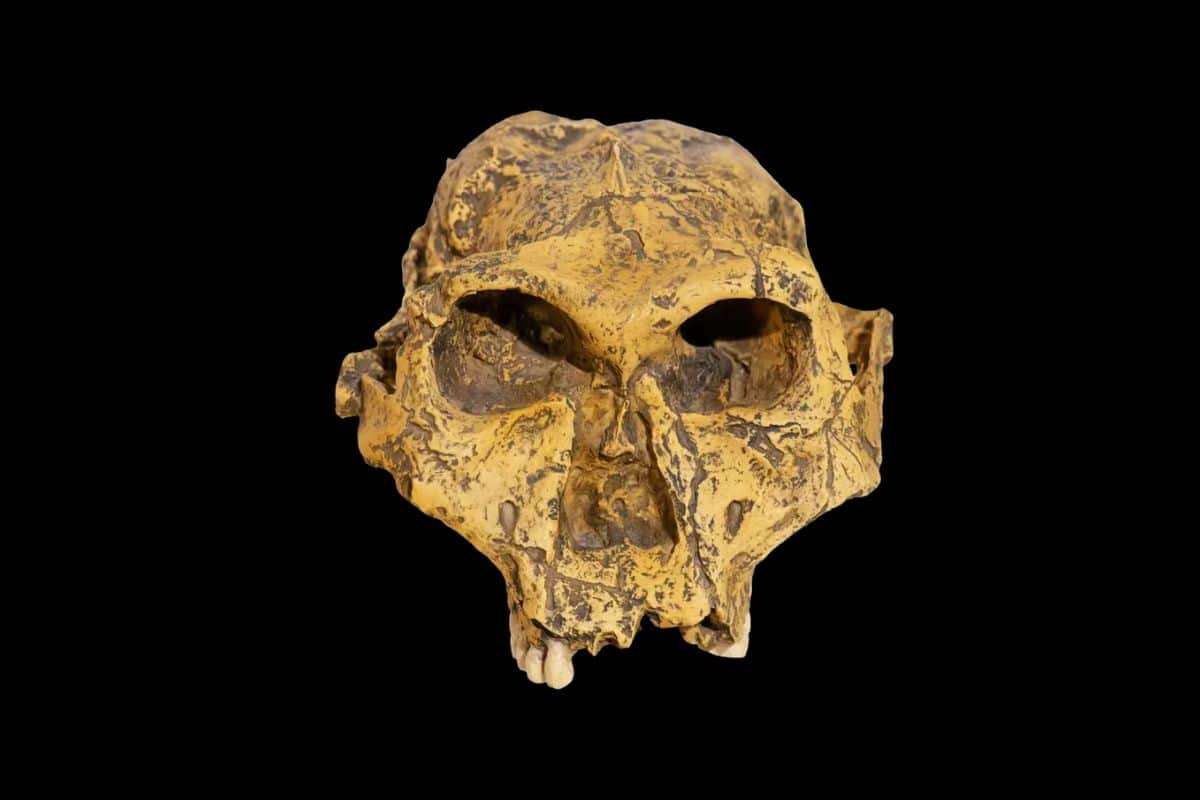
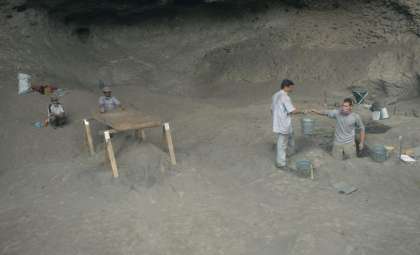
Excavations at Swartkrans Cave in South Africa have unveiled fossil evidence that transforms our perception of Paranthropus robustus, an ancient hominin species dating back approximately 2 million years.
The recent publication in the Journal of Human Evolution indicates that this species, formerly seen as more primitive, exhibited upright, bipedal walking behavior similar to that of contemporary humans. This milestone provides fresh insights into the complexities of human ancestry and evolutionary adaptations.
Paranthropus Robustus: An Enduring Early Hominin
Paranthropus robustus, also known as Australopithecus robustus, lived alongside early Homo species such as Homo ergaster. Unlike its Homo counterparts, P. robustus was distinguished by a sturdy frame, short stature, and robust jaws with thick teeth, designed to process tough, fibrous vegetation.
Specimens recovered from the Cradle of Humankind, especially at Swartkrans Cave, have shed light on this species’ unique traits. Its massive skull and durable teeth point to a diet heavy in roots, tubers, and seeds, demanding tremendous chewing strength. Such dietary specialization likely played a crucial role in their ability to endure challenging ecological circumstances.

Unveiling a Nearly Complete Lower Skeleton
Previously, the anatomical knowledge of P. robustus's post-cranial structure was limited due to sparse and fragmentary skeletal finds. This changed when scientists from the Evolutionary Studies Institute at the University of the Witwatersrand discovered a connected pelvic bone, femur, and tibia from a single individual. This discovery represents the first well-preserved lower body fossil of Paranthropus robustus.
Analysis of these bones demonstrates that P. robustus was habitually bipedal, supporting the idea of upright walking that parallels modern human movement. This finding reveals a more advanced locomotor capability than previously attributed to the species.
Size and Build: Smaller Than Expected
Estimates from the scientists suggest this particular specimen, probably female, stood around one meter tall (3.3 feet) and weighed about 27 kg (60 pounds) at the time of death. This stature is notably smaller than other early hominins, including the notable fossil ‘Lucy’ (Australopithecus afarensis, approximately 3.2 million years old) and the ‘Hobbit’ (Homo floresiensis, roughly 90,000 years old) from Indonesia and Ethiopia, respectively, remarked Professor Pickering of the University of Wisconsin–Madison.
The relatively compact frame of P. robustus may have made it susceptible to predation by formidable ancient carnivores such as sabertooth cats and enormous hyenas. Numerous fossils exhibit leopard bite marks, supporting evidence of predation pressure.
Survival Strategies of Paranthropus robustus
Despite their diminutive size, P. robustus was certainly not defenseless. The evidence points towards a social lifestyle that could have enhanced their chances of survival in perilous habitats. Nearby findings of stone and bone tools hint at their ability to employ basic implements for gathering and preparing food.
Although lacking the advanced tool-making skills of later Homo species, P. robustus might have utilized rudimentary tools to access tough plants or uncover concealed edibles. This adaptability implies a level of intelligence and ecological flexibility previously underestimated.
- Categories:
- News










0 comments
Sign in to Comment