
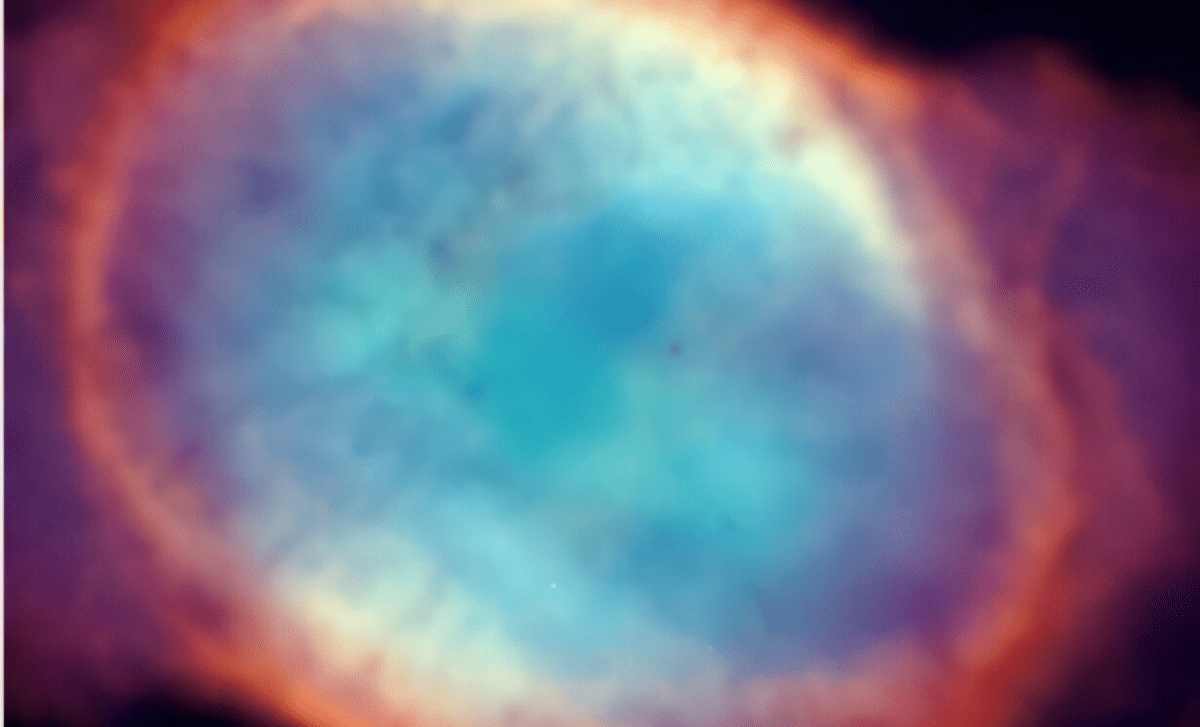
Recent research on the planetary nebula NGC 6563 has shown that its striking features are much older than the nebula’s main body. Utilizing advanced spectrographs from telescopes located in Chile and Mexico, scientists traced the nebula’s formation history, discovering that its distinctive ear-shaped lobes predate the central shell by several millennia. These results, detailed in the Galaxies journal, shed light on the complex phenomena influencing the death throes of stars.
Unexpected Age Differences Within a Well-Known Nebula
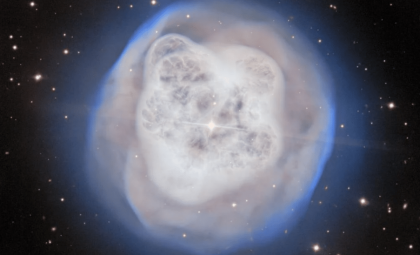
Situated roughly 5,400 light-years away in Sagittarius, NGC 6563 has fascinated astronomers since 1826. This planetary nebula features a uniquely elongated shape resembling an egg, with two protrusions dubbed its “ears” extending at each end.
Planetary nebulae form when stars similar to the Sun expel their outer layers in the final stages of their lives, with the exposed core illuminating the expanding gas. While many exhibit intricate forms, NGC 6563’s asymmetrical structure and pronounced appendages have always been particularly distinctive.

To delve deeper into its complex morphology, a research team led by Zahra Al from Istanbul University combined observations from the Multi Unit Spectroscopic Explorer (MUSE) on the ESO’s Very Large Telescope in Chile with data from the Manchester Echelle Spectrograph (MES) on Mexico’s Arcadio Poveda Telescope. These tools enabled a precise mapping of gas dynamics across the nebula, offering one of the most comprehensive kinematic analyses of NGC 6563 to date.
Older ‘Ears’ Reveal a Multi-Stage Formation Process
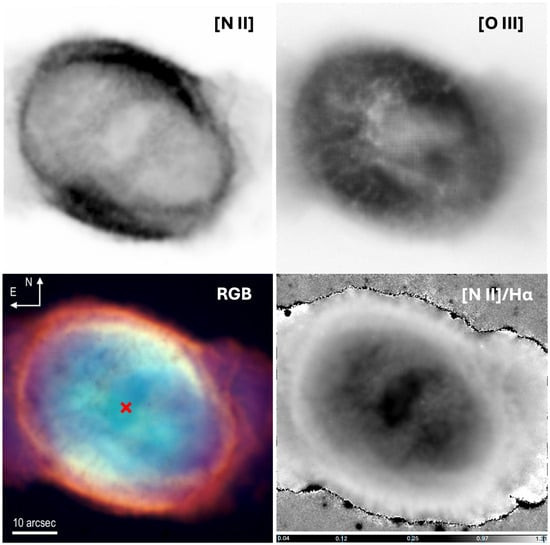
The data exposed a remarkably intricate nebula. Scientists identified an ellipsoidal central shell enveloped by a delicate outer layer, alongside the iconic ear-like lobes and several smaller features peppered throughout. Velocity measurements indicate the main shell expands at around 22 km/s, while the nebula travels through space at an average velocity near -25 km/s.
Most intriguingly, age estimates demonstrated that the central shell and ring structure are approximately 3,700 years old, whereas the ears are significantly older, at about 7,500 to 8,800 years.
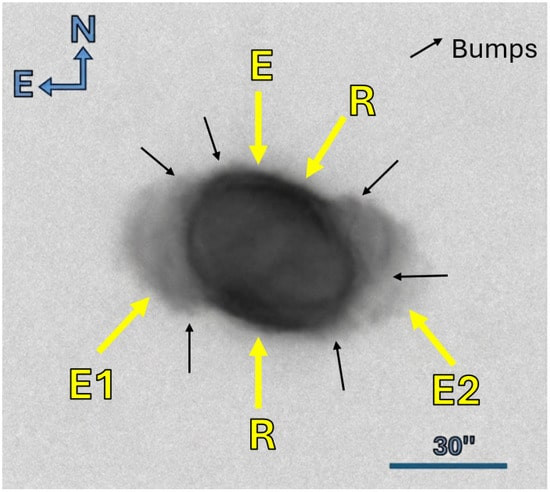
This challenges the assumption that all components formed simultaneously. Instead, the ears predate the dense shell, implying a more layered evolutionary history involving several mass-loss phases.
“This supports a scenario in which the ears originated from earlier collimated outflows, likely associated with a binary interaction phase preceding the ejection of the dense shell,” the authors of the paper published in the Galaxies journal wrote.
If accurate, NGC 6563 may hold evidence of stellar interactions that took place thousands of years before the nebula reached its present appearance.
Unearthing a Turbulent and Asymmetric Past
The study also revealed that the nebula does not grow evenly. One side expands more rapidly than the other, creating an imbalance in its motion. Additionally, brightness fluctuations and deformations across the nebula’s surface were observed.
These features suggest that the expanding gases encounter an uneven environment rather than empty space. Variations in density surrounding the nebula likely influence its non-uniform growth and irregular form, though environmental effects alone cannot explain the full complexity.
The older ear-lobes add further nuance to this picture, implying that forces shaping the nebula were active long before the present shell was expelled. The researchers propose that multiple processes affected the nebula over time, each leaving unique marks on its structure.
These insights provide a rare glimpse into how diverse astrophysical phenomena can interact to shape a single celestial formation. Rather than a uniform expanding shell, NGC 6563 appears to be the product of several distinct ejection events spanning thousands of years.
NGC 6563's Role in Understanding Stellar End Stages
Planetary nebulae are fleeting on astronomical timescales, making them essential for studying the final phases of star evolution. Their forms often encode the history of how stars shed material en route to becoming white dwarfs.
NGC 6563 serves as an especially valuable case study. Its older ear structures, younger shell, uneven expansion, and environmental interaction highlight a far more intricate past than previously appreciated.
The team suggests that factors like stellar winds, shell instabilities, binary star interactions, and surrounding medium influences all contributed to shaping the nebula at different times.
“Internal wind interaction, thin-shell instabilities, binary-driven mass-loss episodes, and environmental effects may therefore all contribute to the present morphology, operating at different epochs and spatial scales. Further observational and theoretical studies will be necessary to better constrain the relative contributions of these mechanisms,” the researchers concluded.
More than 200 years after its discovery, NGC 6563 continues to reveal unexpected chapters in its story as advanced observations expose the rich, complex history beneath a familiar cosmic gem.
- Categories:
- Astronomy





0 comments
Sign in to Comment