
Across the immense darkness of space, an enduring enigma surrounds the universe’s inaugural stellar giants—the massive, radiant stars that illuminated the cosmos shortly after its birth. These primordial bodies, often called Population III stars, remain elusive, with much about their nature still shrouded from modern science. After years of relentless pursuit, researchers have developed innovative techniques that tap into faint relic signals sent billions of years ago to shed light on these ancient stars.
The Power of the 21-Centimeter Cosmic Signal
Central to this breakthrough is an extremely weak yet telling radio wave known as the 21-centimeter signal. Originating from hydrogen atoms soon after the Big Bang, this radiation offers glimpses into the era called the Cosmic Dawn, when the universe’s first stars began to ignite and bring light to the primordial cosmos.
This signal is invaluable because, unlike more familiar forms of light such as X-rays or visible spectra, it directly reveals critical features like the mass, behavior, and distribution of these first luminous giants. Despite its importance, astronomers have only recently begun to fully grasp how this subtle radio whisper can decode the universe’s formative times.

Decoding the Early Universe Using the 21-Centimeter Signal
A collaboration spearheaded by Professor Anastasia Fialkov at the University of Cambridge’s Institute of Astronomy has provided vital insight into how this ancient radio signal reflects the traits of the earliest stars. Their findings, appearing in Nature Astronomy, indicate that this cosmic broadcast can be employed to infer the mass ranges of Population III stars, whose direct observation remains beyond reach.
This advancement opens new frontiers for investigating the early universe, initially dominated by hydrogen and helium. As the first stars formed, their emitted radiation transformed the interstellar medium, gradually altering its makeup. By examining changes in the 21-centimeter signal caused by these stars, scientists can piece together the cosmic evolution from a featureless expanse to the richly structured universe witnessed today.
REACH and SKA: Pioneering Efforts to Chart Cosmic Origins
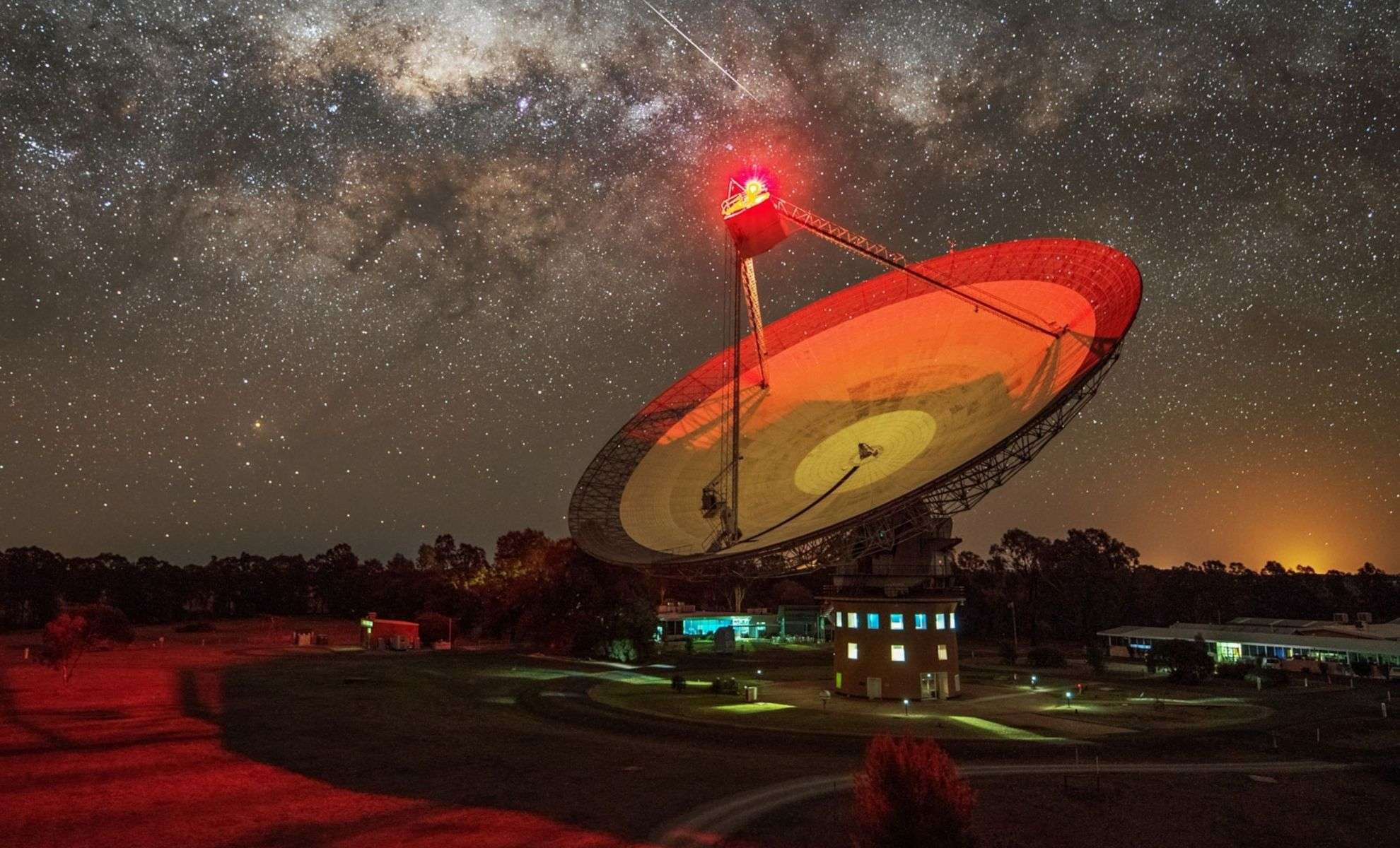
The researchers leading this study are deeply involved in two major initiatives—REACH (Radio Experiment for the Analysis of Cosmic Hydrogen) and the Square Kilometre Array (SKA). While REACH is currently undergoing calibration, it already uses powerful radio antenna arrays to capture the 21-centimeter wavelength. The much larger SKA facility promises to cover enormous swathes of the sky, analyzing cosmic radiation fluctuations to reconstruct early-universe phenomena.
Both projects represent the cutting edge of radio astronomy, focused on detecting subtle statistical signals rather than direct images. According to Professor Fialkov, their models forecast that REACH and SKA will provide unprecedented insights into the distribution, brightness, and mass profiles of Population III stars, offering deeper understanding of the universe’s developmental forces.
The Influence of X-ray Binary Systems on the 21-Centimeter Signal
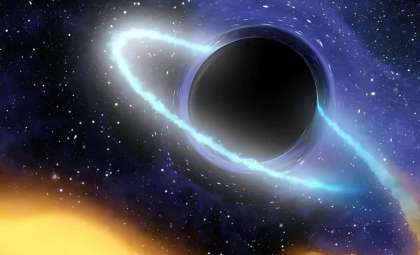
A particularly intriguing element of this research is the role of X-ray binaries—star pairs where one component is a collapsed object such as a black hole. These systems likely emitted high-energy radiation that altered the early universe’s gas and affected the 21-centimeter signal’s appearance. The team’s model incorporates these effects, revealing that earlier analyses may have underestimated the impact of such systems on cosmic history.
This discovery introduces additional complexity to models of how the first stellar populations influenced their surroundings. Radiation from both conventional stars and X-ray binaries together shapes the 21-centimeter signal, enhancing its usefulness as a tool for understanding the dawn of cosmic time.
Radio Observatory Advances: Unlocking the Past Universe
The increasing sophistication of radio telescopes amplifies the potential of the 21-centimeter signal to illuminate the early universe. Unlike optical instruments that capture detailed images, radio arrays like REACH and SKA interpret faint cosmic signals to deduce characteristics of ancient astronomical objects. Although these arrays cannot generate pictures of individual primordial stars, they excel at revealing large-scale patterns from cosmic infancy.
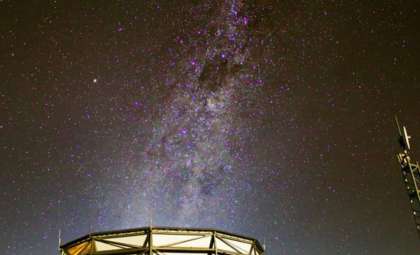
Dr. Eloy de Lera Acedo, principal investigator of REACH, emphasizes the importance of radio observations for determining the mass and properties of the first stars. With data being compiled from the Karoo radio telescope installation in South Africa, this research paves the way for groundbreaking future findings.
- Categories:
- Space


0 comments
Sign in to Comment