
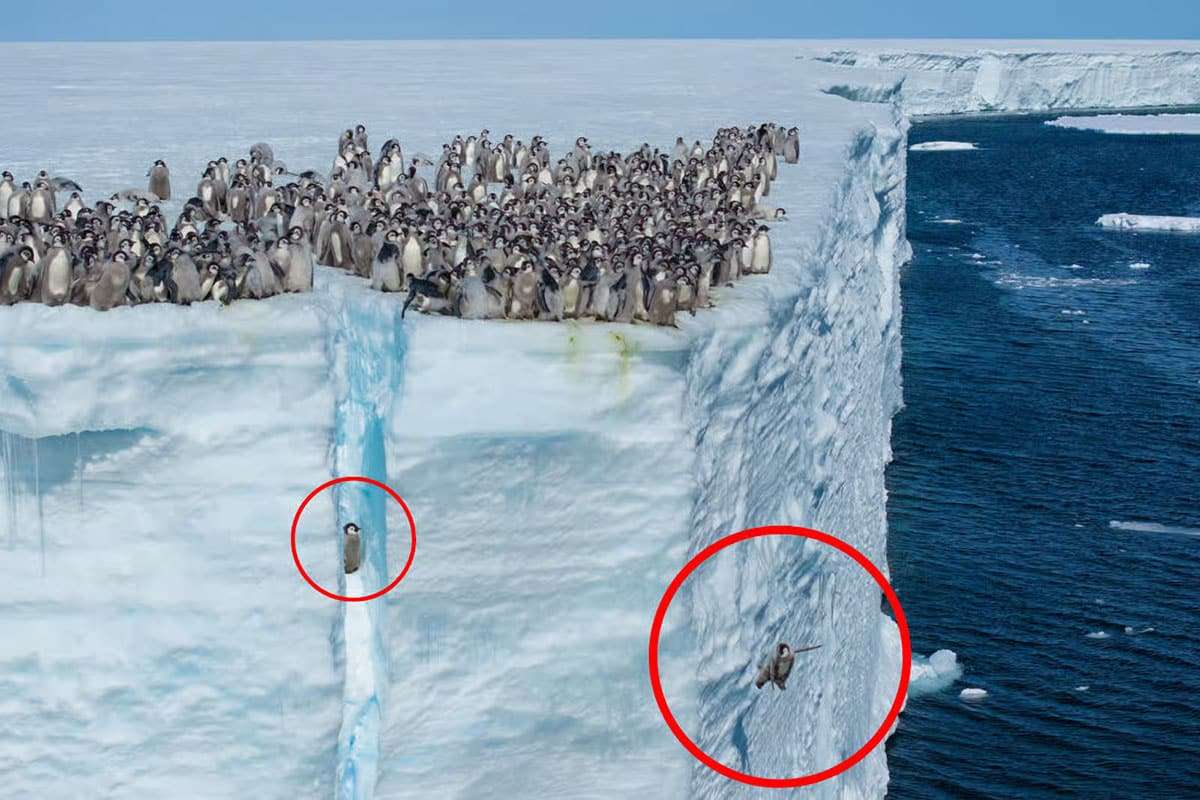
In January 2024, scientists documented a remarkable event at Atka Bay in Western Antarctica. Hundreds of emperor penguin chicks (Aptenodytes forsteri) assembled at the edge of an ice shelf, gearing up to leap into the freezing ocean below, a behavior rarely seen and now sparking new questions about these iconic birds’ survival strategies amid changing environments.
The scene is truly striking: juvenile penguins, just a few months old, positioned at the edge of a towering 15-meter ice ledge. Fueled by hunger and instinctual drive, these daring young penguins prepare to plunge into the frigid Antarctic waters. This extraordinary moment, recorded via drone for National Geographic’s “Secrets of the Penguins” series, represents a breakthrough in penguin behavioral studies.
Michelle LaRue, a conservation biologist at the University of Canterbury, expressed her awe: “I can’t believe they managed to film that.” Researchers are now exploring what motivates these inexperienced birds to undertake such perilous jumps. The primary factors include:

- Hunger: With parents gone, the chicks must fend for themselves
- Survival instinct: The urgent need to reach the ocean for sustenance
- Environmental adaptation: Nesting shifting from traditional sea ice to ice shelves
Changing habitats and climate impacts
Emperor penguins have historically nested on seasonal sea ice that melts and reforms annually. Recently, however, some have begun establishing colonies on permanent ice shelves connected to land. This change is likely linked to accelerated sea ice melting driven by global warming.
Peter Fretwell, a researcher with the British Antarctic Survey (BAS), warns that this trend may grow increasingly common. Antarctic sea ice extent has been decreasing steadily since 2016, raising concerns over the species’ future. Current projections reveal a troubling outlook:
YearPredicted Emperor Penguin Population2024About 500,000 individualsEnd of this centuryPotential extinction risk
The rapid environmental changes present daunting challenges. Scientists question whether emperor penguins can adjust swiftly enough to ensure their continuation. Similar concerns affect other species, such as the kagu, New Caledonia’s emblematic bird, which recently experienced a remarkable population rebound.
Endurance amid threats
Despite the grim projections, some experts remain hopeful about emperor penguins’ resilience. Michelle LaRue points out their impressive survival history: “They have thrived through millions of years and endured numerous environmental transformations.” This adaptability might be key to surviving ongoing climate shifts.
Emperor penguins show notable innovations to face challenges:
- Switching to new nesting locations
- Altering breeding timings
- Mastering dives from exceptional heights
These shifts underline the species’ capacity to endure environmental fluctuations, a trait honed through their extensive evolutionary journey.
Safeguarding Antarctic life
Watching young emperor penguins leap from a 15-meter-high cliff offers more than a mesmerizing spectacle; it highlights the urgent need to protect Antarctica’s delicate ecosystems. Conserving this unique habitat is vital not just for emperor penguins but for maintaining global biodiversity.
In response, conservation strategies and research programs are underway. Satellite monitoring, behavioral studies, and public outreach initiatives are critical tools in safeguarding these captivating birds. The fate of emperor penguins hinges on collective efforts to address climate change and preserve their natural environs.
As these courageous chicks make their leap, they remind us of nature’s fragility and our duty to safeguard it. Their journey stands as a powerful symbol of resilience and adaptation, urging us to act to preserve a future where these majestic birds continue to flourish in their icy world.
- Categories:
- Evolution

















0 comments
Sign in to Comment