
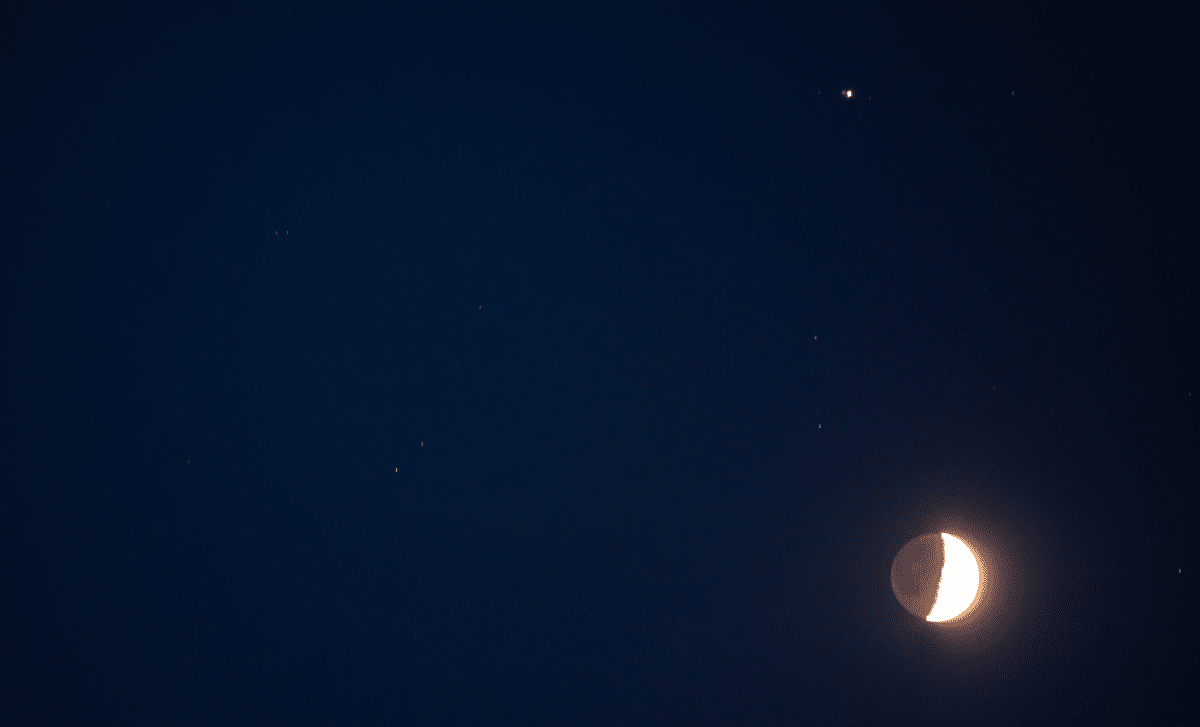
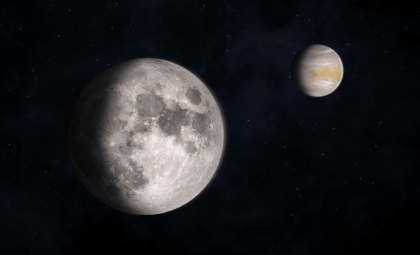
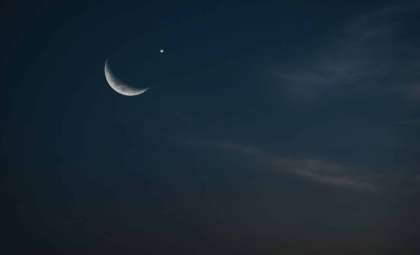
On the night of April 22, 2026, skywatchers will be treated to a remarkable celestial event as the half moon lines up closely with Jupiter in the western horizon. This dazzling duo will offer a captivating display, sure to impress anyone gazing upward during dusk.
The Moon Meets Jupiter: A Spectacle of the Skies
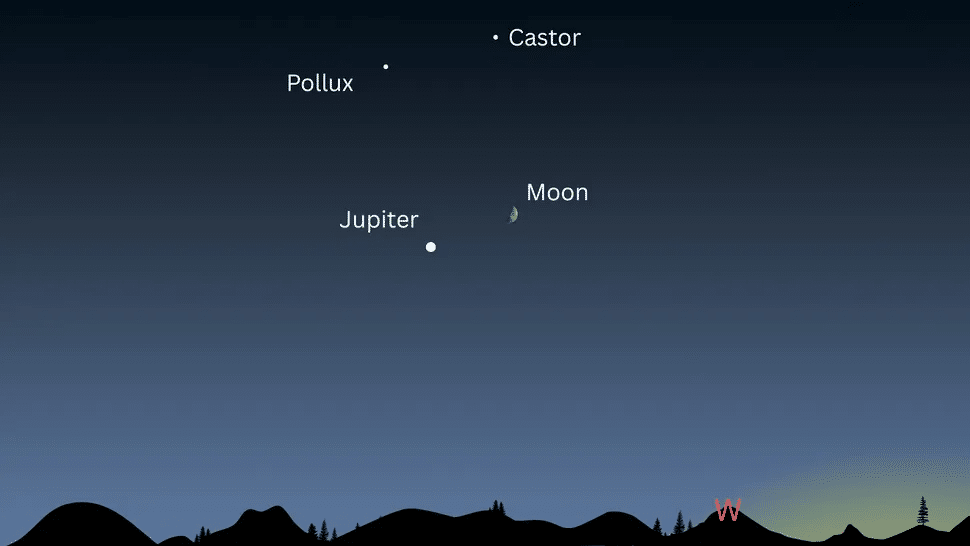
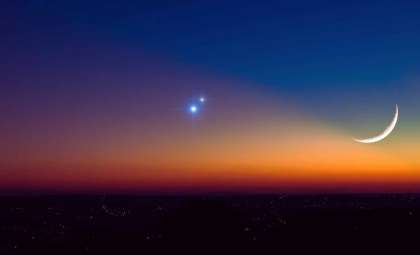
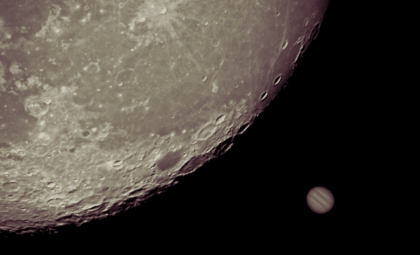
As twilight fades and darkness sets in, the half moon will rise, appearing alongside Jupiter at a narrow separation of just 3 degrees. According to Space.com, the moon will be illuminated at 38%, positioned slightly above and to the right of Jupiter, creating a striking contrast between their glows. Together, they will brighten the western sky and draw the attention of all night admirers.
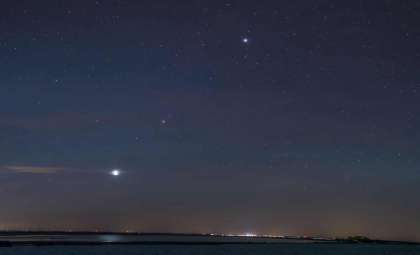
About 45 minutes post-sunset, both celestial bodies will be situated roughly two-thirds up from the horizon, shy of the zenith. They will gradually trace a gentle arc across the night sky, offering an exceptional opportunity for those with clear views westward. To experience this extraordinary alignment, enthusiasts should focus their gaze shortly after the sun disappears below the horizon.

Jupiter Shines Bright as the Night's Leading Luminary
Jupiter is well-known as one of the most luminous highlights in the evening sky, and on April 22, it will reaffirm its brilliance. After Venus sets, Jupiter will stand out as the brightest “star” visible that night. With a magnitude near -2.1, it outshines nearly all other celestial objects except Venus and the moon. As night deepens, Jupiter’s glow will dominate alongside the half moon, providing a stunning visual showcase.
Beyond its size and radiance, Jupiter’s location this evening signals the closing of winter’s star season and the arrival of spring’s constellations. Stargazers will also notice the nearby stars emerging as night envelops the sky, making it a perfect moment to observe the changing celestial panorama.
Castor and Pollux: Gemini’s Twin Stars Enhance the Evening Scene
The event’s appeal extends with the inclusion of the twin stars Castor and Pollux, which crown the heads of the Gemini constellation. Positioned just above the moon and Jupiter, these stars form a cosmic trio likely to captivate sky observers.
Pollux, glowing with a yellowish tint, and the whiter Castor will be located around 6.5 degrees above the moon and roughly 9 degrees higher than Jupiter. Their close proximity to the bright pair adds richness and a captivating layer to the night’s view.
This exceptional alignment of the moon, Jupiter, and the Gemini stars offers a splendid occasion for both amateur and expert astronomers to marvel at the wonders above.
Exploring Jupiter Through Telescopes: A Delight for Astronomy Enthusiasts
For those with telescopes, Jupiter presents an excellent target for detailed observation. Although slightly smaller than during its January opposition, the planet’s iconic belts and atmospheric bands will remain observable. Additionally, Jupiter’s moons will be visible, enhancing the viewing experience.
With binoculars or a modest telescope, viewers can expect to see at least three of the Galilean moons: Io, Callisto, and Ganymede. These satellites appear as tiny points of light near Jupiter and are constantly moving, offering a dynamic celestial performance. Notably, Io will vanish behind Jupiter at 10:39 p.m. EDT, while Europa will reappear from the planet’s shadow at 11:36 p.m. EDT.
Anyone considering astronomy gear will find this an ideal time to acquire quality binoculars or a telescope, ensuring a more immersive and detailed encounter with this spectacular night sky event.
- Categories:
- News

0 comments
Sign in to Comment