

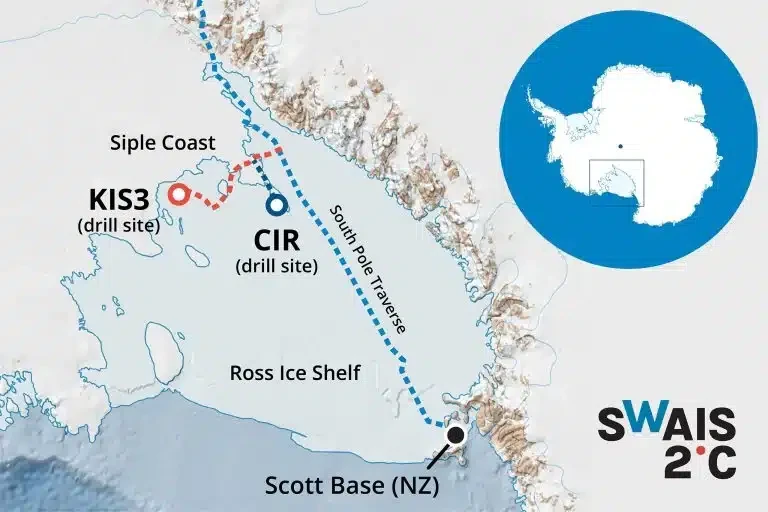
Scientists have penetrated through an impressive 523 meters of Antarctic ice, extracting a sediment core that chronicles 23 million years of Earth's climatic evolution. This discovery, made at the isolated Crary Ice Rise in West Antarctica, sheds new light on ice sheet reactions during historic warming periods and offers valuable data for forecasting future sea-level changes.
This effort was part of the SWAIS2C project (Sensitivity of the West Antarctic Ice Sheet to 2°C), which investigates how warming scenarios could affect the West Antarctic Ice Sheet. By analyzing signs of previous ice retreat captured by the core, researchers can better predict the sheet's response to ongoing global temperature rises.
A Buried Climate Time Capsule
Central to the findings is a 228-meter sediment core retrieved beneath the ice sheet. As explained by Huw Horgan, co-chief scientist of the SWAIS2C project, this sedimentary sequence provides crucial insights into the historical behavior of the West Antarctic Ice Sheet and the Ross Ice Shelf during intervals when global temperatures surpassed 2°C above pre-industrial levels.

Published in Scientific Drilling, the sediment layers exhibit a range of compositions—from fine clays to dense gravel—that recount how the ice sheet has interacted with its surroundings over millennia. This repository aids scientists in projecting how ice melt may accelerate as global warming continues.
Traces of Ancient Ice Sheet Melting
The presence of marine fossils and shells in the core suggests that the current ice-covered region was once open ocean, indicating past retreats or collapses of the Ross Ice Shelf during warmer phases. Co-chief scientist Molly Patterson notes:
“We saw a lot of variability. Some of the sediment was typical of deposits that occur under an ice sheet like we have at Crary Ice Rise today. But we also saw material that’s more typical of an open ocean, an ice shelf floating over ocean, or an ice-shelf margin with icebergs calving off.”
This core delivers enhanced understanding of Antarctica’s ice sheet responsiveness to temperature increases. Scientists are concentrated on identifying the factors that initiated previous glacial withdrawals and establishing their timing.
A Landmark in Engineering and Science
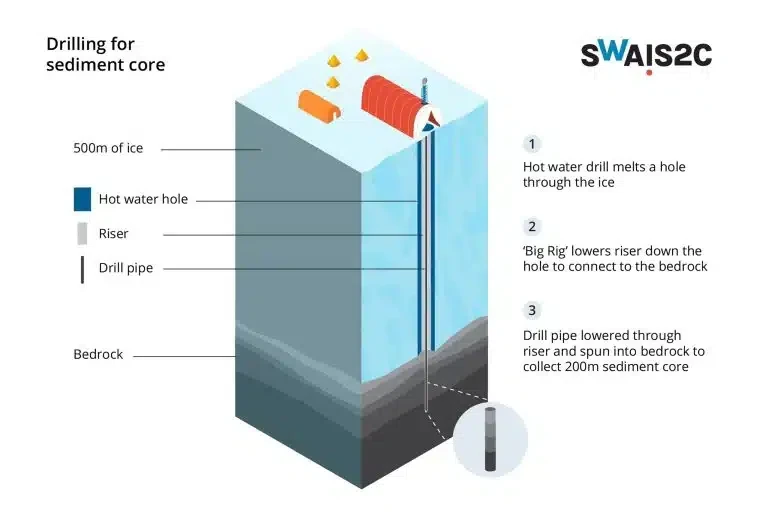
Recovering this sediment core marks a significant technological and scientific breakthrough, achieved in one of Earth’s most isolated and harsh landscapes. After overcoming earlier spates of mechanical failures, the team managed to drill through 523 meters of ice employing a hot water drilling system and deployed a 1300-meter-long riser and drill string to collect the samples.
The core was extracted in sections sized up to three meters, each carefully cataloged and scrutinized. This achievement reflects the dedication and collaboration of an international assembly of scientists, engineers, and polar experts from 10 countries.
“With our drilling system having been put to the test under these tough Antarctic conditions and passing with flying colors, we’re looking ahead to plan future drilling to continue our mission to learn more about the sensitivity of the West Antarctic Ice Sheet to global warming,” said Horgan.
- Categories:
- Science




0 comments
Sign in to Comment