
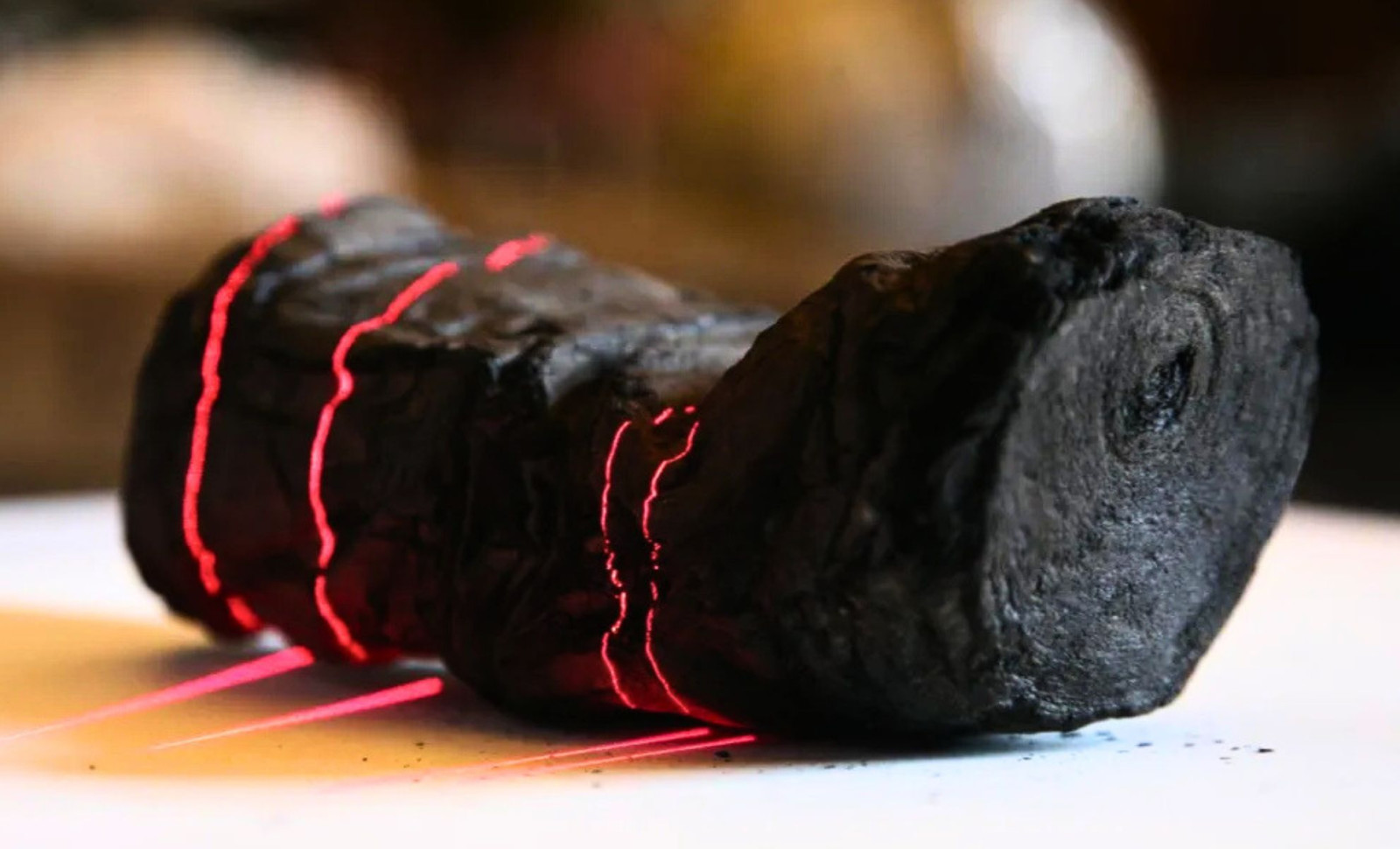
For nearly two thousand years, a charred papyrus scroll rested unread in a Naples library, its text obscured by damage and shrinkage to under an inch wide. Unearthed from Herculaneum, devastated in the 79 C.E. eruption of Mount Vesuvius, the scroll endured the volcanic catastrophe yet suffered further harm from early attempts to open it.
Now, thanks to advanced CT imaging combined with artificial intelligence, scientists have successfully extracted the entire surviving script of this ancient artifact. The recovered document reveals a 2,000-year-old philosophical discourse exploring reason, virtue, and the boundaries of human understanding.
Announced at a Naples conference on June 25, 2026, and covered by National Geographic, this is the first time an intact text section from a Herculaneum scroll has been fully deciphered. The segment, measuring nearly five feet long, contains about 20 columns of ancient Greek script, offering fresh access to knowledge previously lost since the first century B.C.E.

The Scroll’s History of Damage During Early Exploration
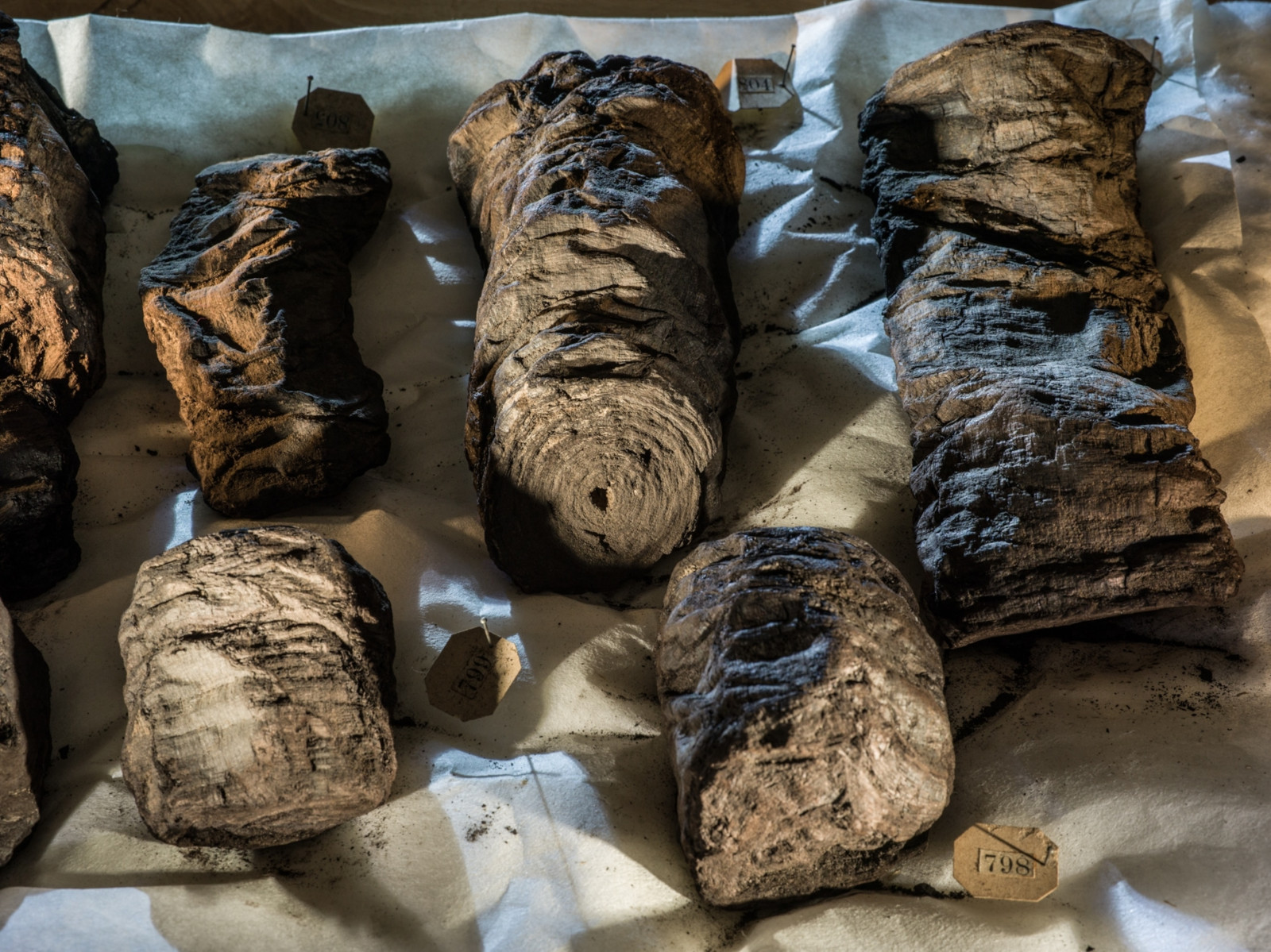
The scrolls found at Herculaneum comprise the sole surviving library from Greco-Roman times. Buried beneath approximately 60 feet of volcanic ash and pumice, the collection’s 1,800 papyri were preserved by the very disaster that made them nearly impossible to handle. Rather than burning away, they transformed into fragile, carbonized lumps prone to crumbling.
Discovered in the 1750s within the Villa of the Papyri, the scrolls faced further degradation by early scholars. Their initial methods included slicing scrolls open and scraping layers, worsening the damage. Techniques applied in the 1960s and 1980s to soften the scroll known as PHerc. 1667, involving gelatin and acetic acid, destroyed over half its text and reduced its diameter dramatically from 1.9 inches to under 0.8 inches.
“Only a fraction of the original scroll remains today,” Federica Nicolardi, lead papyrologist of the Vesuvius Challenge, explained at the press briefing in Naples. “Though the title and upper lines are lost, we can now trace the argument throughout continuous lines and columns.”
Innovative Virtual Unwrapping Reveals Invisible Ink on Fragile Papyrus
The breakthrough technique was pioneered by Brent Seales, a computer scientist from the University of Kentucky who has dedicated decades to this challenge. His approach harnesses x-ray tomography—akin to medical CT scans—to gather detailed 3D images of a scroll’s interior. Software then isolates and flattens individual layers, enabling text to be digitally 'unfolded.' Because ink on carbonized papyri appears faintly as texture rather than distinct contrast, Seales developed an AI-driven tool tailored to detect these subtle markings.
In 2023, Seales collaborated with two Silicon Valley investors to launch the Vesuvius Challenge, facilitating global innovation by awarding over $1.8 million in prizes for advances in scroll reading technologies. Milestones advanced swiftly: from recognizing a single readable word in 2023, then recovering 2,000 Greek characters from one scroll, leading up to identifying its title.
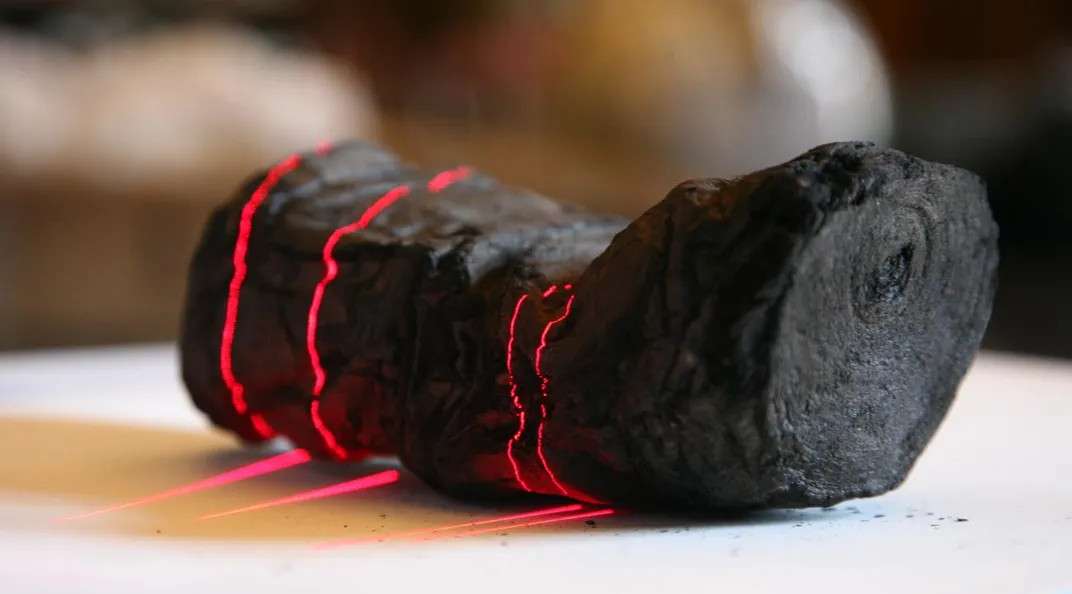
The complete retrieval of PHerc. 1667’s remaining text represents the project’s most comprehensive achievement so far. “Though the technology seems magical, it is simply a powerful tool enabling the revival of ancient voices,” Seales commented during the announcement.
Insights from the Scroll’s Stoic Philosophy
The text contained in PHerc. 1667 embodies fundamental principles of Stoicism, a school of thought emphasizing reason and ethical virtue as keys to a fulfilling life. The excerpts caution against allowing emotions to supplant rational judgment and champion phronesis, the concept of practical wisdom.
The manuscript also contemplates the limits of human knowledge: “We will inquire into something, but we will not grasp it, if in some way we depart from ourselves and from our own nature.” Papyrologist Claudio Vergara interprets this passage as highlighting human reason and an inherent tendency towards goodness, core tenets of Stoic philosophy.
An intriguing mention of Aristocreon, nephew of Chrysippus—an influential Stoic philosopher whose original works have mostly been lost—appears in the scroll. While it is unclear if Chrysippus authored PHerc. 1667, the possibility excites scholars.
“Having direct access to original texts rather than secondhand quotes is immensely valuable,” said Thomas Coward, a classical scholar at the University of Bristol, speaking to New Scientist.
Nicolardi remarked that the handwriting style is more archaic than in other Herculaneum manuscripts, featuring angular and diverse characters, suggesting a date from the second or possibly third century B.C.E. Such dating would make it one of the oldest surviving texts from Roman antiquity.
Additional Discoveries as Deciphering Efforts Expand
Beyond PHerc. 1667, researchers have identified the title of another scroll as Philodemus, On Gods, Book 8, extending knowledge of the series beyond the previously known Books 1 and possibly 3.
The existence of Book 8 hints at a longer work than previously documented, raising hopes that further volumes lie among unread scrolls. Another manuscript, PHerc. 172, has yielded over 70 columns of text from Philodemus’ On Vices, a substantial achievement considering the scroll was once completely unreadable.
The Vesuvius Challenge is now offering a $1 million reward for the full decipherment of another intact scroll by next year, requiring transparency of methods to benefit the broader academic community. Since Herculaneum’s excavation remains incomplete, archaeologists believe more scrolls remain hidden underground.
- Categories:
- Science








0 comments
Sign in to Comment