

A recent breakthrough published in Nature Communications sheds light on the enigmatic structure of Earth’s inner core, potentially resolving persistent seismic irregularities. Led by scientists from the University of Münster, the study investigates how combinations of carbon and silicon mixed with iron might account for unusual seismic wave behaviors observed within the Earth’s core.
Understanding Seismic Irregularities in the Inner Core
For decades, Earth’s inner core has fascinated researchers due to its intricate composition and dynamic properties. While the outer core is liquid, the inner core is thought to be solid, largely composed of iron with trace amounts of lighter elements like carbon, silicon, and oxygen. Seismologists have long reported inconsistent speeds and directions of seismic waves passing through the inner core. These irregularities, particularly the faster propagation of waves along Earth’s rotation axis compared to the equator, have puzzled scientists for years.
“There have been several hypotheses for the origin of these anisotropies,” states Prof. Carmen Sanchez-Valle, from the Institute of Mineralogy at the University of Münster.
Add Cosmo Herald as a Preferred Source

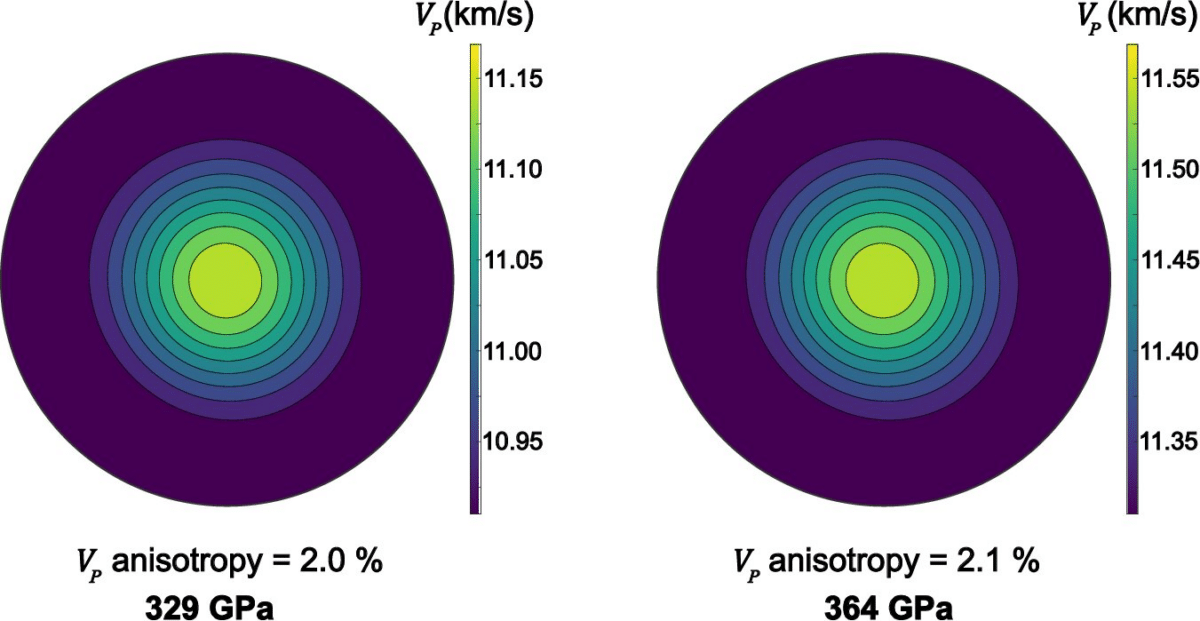
These variations—referred to as anisotropies—are key to decoding the inner core’s internal structure. For example, compressional seismic waves generated by earthquakes travel approximately 3 to 4% faster along the Earth’s rotational axis than across the equatorial plane. Various models have attempted to explain these findings, but none fully reconcile with the data—until now.
Revealing an Onion-Like Inner Core Composition
The published work in Nature Communications centers on iron alloys combined with silicon and carbon subjected to extreme pressure and temperature. Using a diamond anvil cell, the team recreated the intense conditions thought to exist deep within Earth’s interior. These iron-silicon-carbon alloys were compressed and heated to extreme degrees, and their structural changes were examined using X-ray diffraction.
The findings were notable: under core-like stress and heat, these alloys developed a lattice-preferred orientation (LPO), meaning their crystal lattices aligned in specific ways in response to directional forces.
“Unfortunately, there are very little experimental data on how such LPO might look like in Earth’s iron core, and there are no data on the LPO of iron-silicon-carbon alloy mixtures. Thus, we set out to study the combined effect of silicon and carbon on the deformation behavior of iron,” says Sanchez-Valle.
This insight supports a model where the inner core comprises multiple concentric layers, each with distinct characteristics owing to different amounts of lighter elements. Such a stratified structure could explain the seismic wave discrepancies and offers a new perspective on the inner core’s complex makeup.
Simulating Core Conditions through High-Pressure Tests
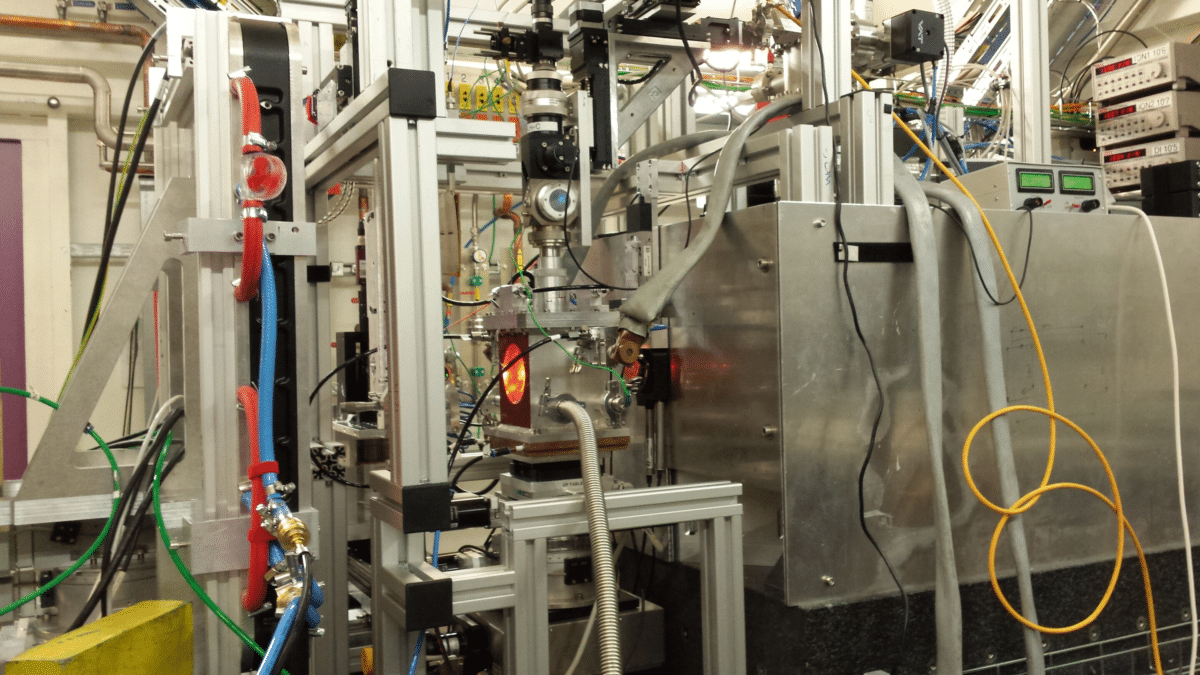
To replicate the harsh environment of Earth’s deep interior, experiments were conducted at the Deutsches Elektronen-Synchrotron (DESY) in Hamburg using the PETRA III synchrotron. Here, iron-silicon-carbon alloys endured pressures approximating a million times atmospheric pressure and temperatures up to 5,500°C, mimicking inner core conditions exceeding 3 million atmospheres of pressure.
These tests allowed the researchers to observe the alloys’ deformation mechanisms firsthand.
“We were able to decode the LPO via X-ray diffraction perpendicular to the compression axis,” explains Efim Kolesnikov, the first author of the study. The X-ray diffraction patterns revealed critical information about the alloy’s behavior under stress, helping the team to calculate plastic properties like yield strength and viscosity. “The diffraction patterns were analyzed after the experiment to derive plastic properties—specifically, yield strength and viscosity—of the iron-silicon-carbon alloys, which were further modeled through theory to extrapolate them to inner core conditions,” says Kolesnikov.
Gaining this deeper understanding is essential for explaining the distinct seismic velocities measured across different inner core regions. The varying concentrations of carbon and silicon play a pivotal role in shaping these properties and the resulting wave speeds.
Impact on Earth Science and Future Exploration
The team’s theoretical framework, grounded in experimental data, brings us closer to solving longstanding questions about Earth’s composition. The idea of an onion-style layering within the inner core aligns well with observed seismic anisotropies and advances our understanding of the planet’s internal dynamics.
“This matches the different anisotropies of velocities observed in the seismic profiles,” says Ilya Kupenko, the study’s team leader.
Beyond clarifying the inner core’s structure, these findings have broader implications—including insights into Earth’s magnetic field generation and core convection processes.
This research exemplifies how experimental validation enhances theoretical models of our planet’s hidden depths. Although many aspects remain elusive, this study represents a major stride toward deciphering the mysteries beneath our feet.
- Categories:
- Science











0 comments
Sign in to Comment