
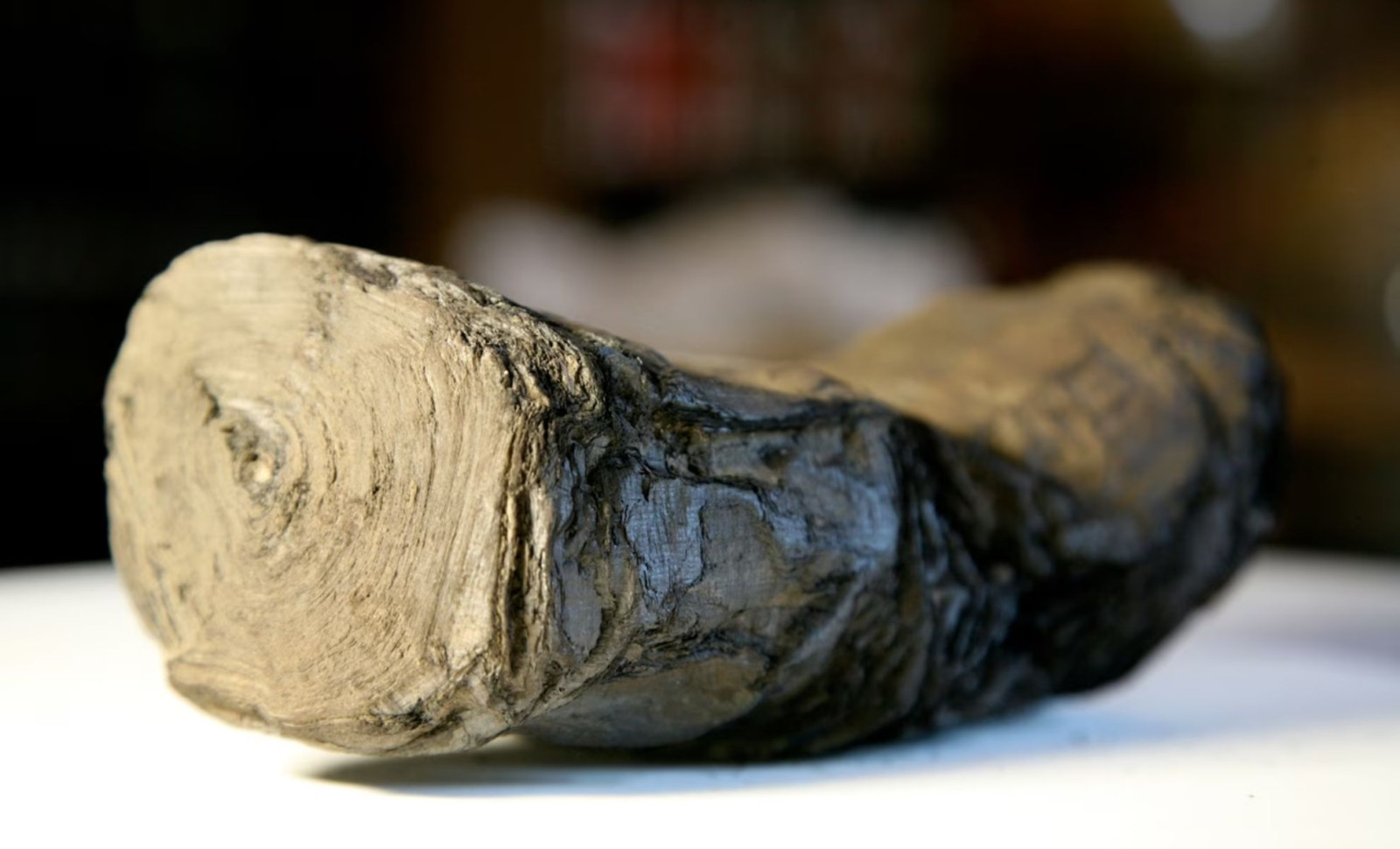
A burnt papyrus scroll long thought unreadable without causing damage has finally been deciphered. Using advanced AI technology, researchers managed to uncover writing inside a relic that has remained mysterious for more than two millennia.
This ancient document remained sealed for decades due to its delicate condition. According to a report by Oxford University, any attempt to physically open the scroll could have obliterated its ink, leaving no chance for examination.
This breakthrough marks a significant advancement in studying ancient texts too fragile to handle. Combining sophisticated imaging with AI analysis, scientists can now explore artifacts previously deemed inaccessible forever.

Preserving a Scroll Too Fragile for Handling
The scroll is part of the famous Herculaneum collection, dating back to 79 AD. When excavated, these scrolls resembled charred lumps rather than readable manuscripts. Any physical unrolling would have led to their destruction.
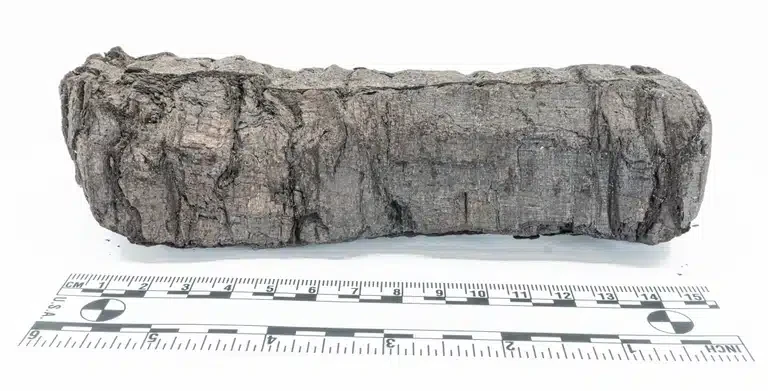
One such scroll has been housed at the Bodleian Library for years without a viable method to decipher its contents. Various approaches were tested without success, leaving the artifact’s message locked away indefinitely.
Virtual Unwrapping Powered by AI
The breakthrough came in 2024 when a team employed the Diamond Light Source to scan the scroll using high-intensity X-rays. This technique maps internal features without causing harm.
As detailed by Oxford researchers, this technology enabled a detailed virtual reconstruction of the scroll, exposing sections of the writing without any physical contact. This so-called digital unwrapping relies entirely on data interpretation instead of handling the delicate artifact.
“Researchers are further refining the image using a new segmentation approach, in the hopes that it will improve the coherence and clarity of the lines of text currently visible, and perhaps reach the end of the papyrus (the innermost part of the carbonised scroll) where the colophon with the title of the work may be preserved,” explained the authors.
Gradual Unveiling of Ancient Words
A unique characteristic made this scroll especially valuable: its ink composition. It stands out more vividly in X-ray imagery than others, possibly due to lead elements.
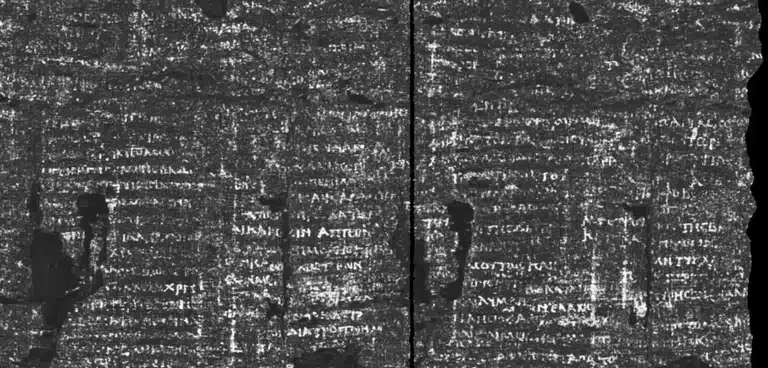
According to Oxford’s team, this aspect facilitated AI’s recognition of characters. The system flagged areas of text that experts from the Vesuvius Challenge then examined and interpreted.
“The image of the virtually unrolled scroll shows a considerable part of the papyrus and – most importantly – some columns of text (with about the last 26 lines of each column),” stated the researchers “Whilst efforts are underway by University of Oxford scholars to interpret the text, the Vesuvius Challenge is inviting others to come forward and join the collective effort to fully decipher its contents.”
Dr. Brent Seales noted that while there’s still much to decipher, the findings are encouraging.
“We are thrilled with the successful imaging of this scroll from the Bodleian Libraries and are grateful to our partners for their support and collaboration. This scroll contains more recoverable text than we have ever seen in a scanned Herculaneum scroll.”
Unlike previous scans, this scroll reveals more legible content, and ongoing advancements aim to uncover the remaining hidden sections.
- Categories:
- News






0 comments
Sign in to Comment