
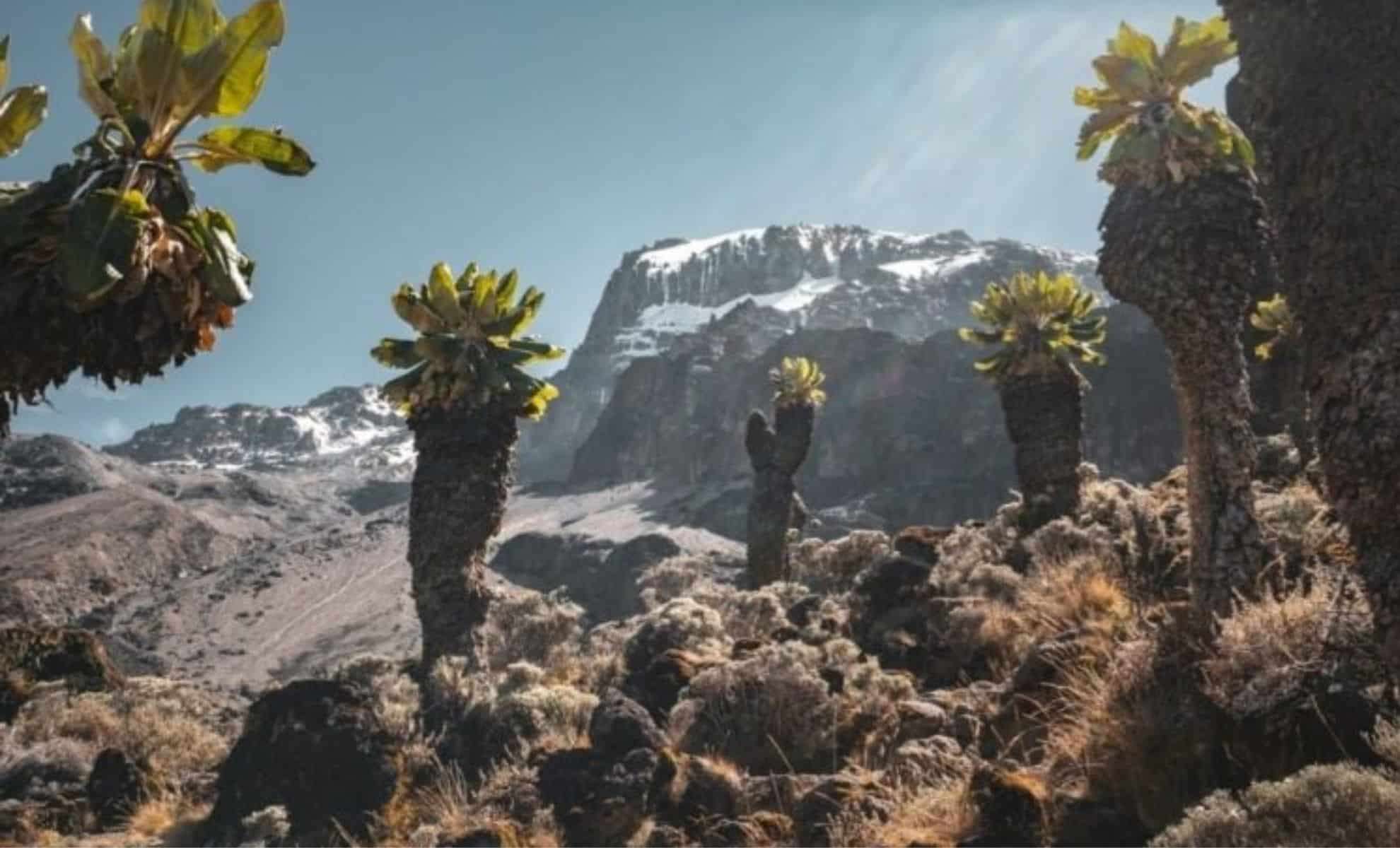
Rising above all other peaks in Africa, Mount Kilimanjaro hosts a remarkable plant species exclusive to its environment: the giant groundsels (Dendrosenecio kilimanjari). These distinctive plants inhabit the mountain’s mid-altitude zones, ranging from 9,200 to 13,100 feet (2,800 to 4,000 meters), showcasing extraordinary adaptations to withstand the mountain's intense and varying climate.
Survival Strategies in a Challenging Habitat
The giant groundsels possess a striking appearance, reminiscent both of pineapples and giant cacti, growing as tall as 30 feet (9 meters), although most remain closer to the height of an average person. Facing Kilimanjaro’s wildly shifting weather—from hot, moist conditions at lower elevations to freezing temperatures near the summit—the plants have evolved sophisticated means to persist.
These plants conserve water within their robust stems and densely hairy leaves, effectively limiting moisture loss. This internal water storage acts as a crucial reserve during the dry periods from December to March and June to October, helping them survive the drier months.

In colder conditions, the groundsels protect their tender tissues by wrapping dead leaves tightly around their stems, forming natural insulation. Additionally, they produce antifreeze compounds that allow them to endure and grow beyond the treeline, where most vegetation cannot persist.
Slow Growth Reflects Longevity and Light Access
The towering form of the giant groundsels provides optimal exposure to sunlight, vital for photosynthesis at high altitudes. Their growth rate is gradual, typically only 1 to 2 inches (2.5 to 5 centimeters) per year, which suggests that the tallest specimens may live for over a century.
Wind disperses their seeds across different parts of the mountain, while their yellow flowers attract insects for pollination, ensuring the plants’ continued survival in Kilimanjaro's isolated ecosystem.
More Than Just Strange Flora
Beyond their unusual appearance, giant groundsels serve vital ecological functions on Kilimanjaro. Their extensive roots help stabilize the slopes by preventing soil erosion, while providing nourishment and habitats for local birds and small mammals, enriching the mountain’s biodiversity.
Adventurers trekking Kilimanjaro’s Shira plateau or navigating trails such as the Northern Circuit, Lemosho, and Machame routes can observe these fascinating plants firsthand. It is crucial for visitors to respect the fragile ecosystem by refraining from touching or harming the groundsels.
Tracing the Evolutionary Journey of Kilimanjaro’s Giants
Genetic research published in PNAS reveals that giant groundsels colonized Kilimanjaro within the last million years. These species have evolved by gradually ascending the mountain, adapting to its strenuous environment.
Kilimanjaro’s climate is famously variable, generating rapid changes that range from intense sunshine to snow, rain, and harsh winds across different elevations—sometimes experiencing all in a single day. Despite these challenges, giant groundsels have flourished, standing as emblematic survivors atop Africa’s highest summit.
- Categories:
- Nature








0 comments
Sign in to Comment