
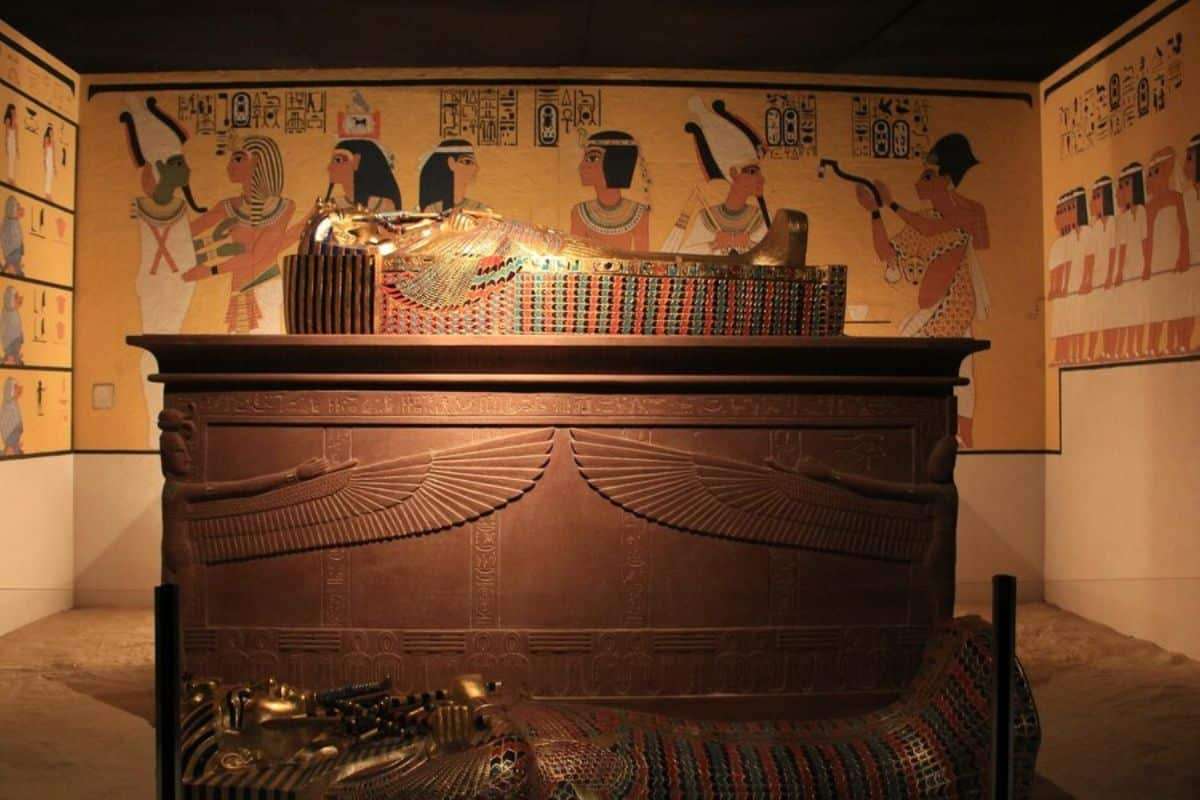
A collection of modest clay trays and wooden rods discovered beside King Tutankhamun’s illustrious treasures could reveal early evidence of a transformative shift in Egyptian funerary customs, potentially initiated by the young ruler himself. These artifacts have been linked to the earliest known depiction of the significant Awakening of Osiris ceremony.
Unassuming Finds Could Change Understanding of Egypt’s Spiritual History
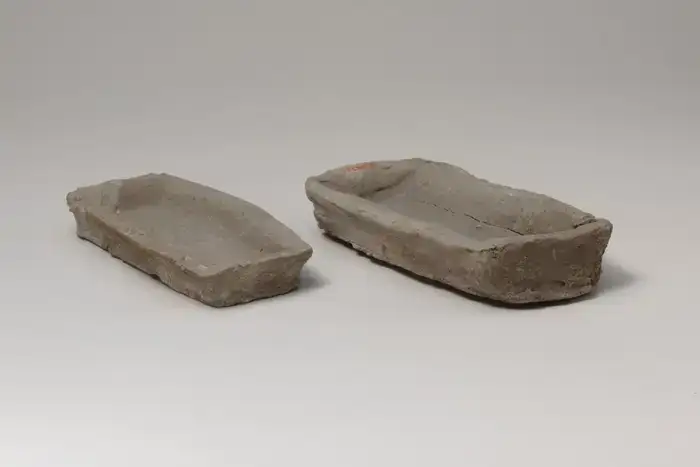
In addition to the famous golden death mask and ornate coffin, Tutankhamun’s tomb held items that previously seemed too ordinary to be noteworthy. Among these were four roughly made clay trays and four slender wooden staffs, each standing more than a meter tall, positioned roughly 1.5 meters from the pharaoh’s coffin.
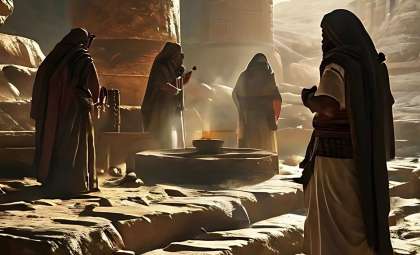
Nicholas Brown, a scholar at Yale University, believes their careful placement and material suggest use in an early sacred ritual. Brown’s research, published in the Journal of Egyptian Archaeology, parallels the arrangement with later depictions of the Awakening of Osiris—a rite wherein the deceased pharaoh is spiritually revived by priests, embodying the god Osiris.

A Ceremony of Renewal Rooted in Natural Elements
The hypothesis gains strength from the symbolic nature of the materials. The clay trays, molded from Nile river mud, were likely intended for ritual water offerings poured over reed mats. This practice aimed to keep the water symbolically pure, embodying the ancient belief that Nile water could rejuvenate the deceased.
The wooden staffs, located near the pharaoh’s head, are thought to have had a ceremonial role in “awakening” him. Funerary images from later periods show similar staffs raised behind Osiris’s head, suggesting these simple objects may have served as the earliest form of this vital funerary rite in Egyptian theology.
Alternate Theory: Torches and Sacred Milk
Another perspective is offered by Jacobus van Dijk of the University of Groningen, who proposes that these trays were part of the “spell of the four torches.” In this ritual, four torchbearers stand at the sarcophagus’s corners, symbolically escorting the king through the afterlife.
Each torch is extinguished in a tray containing milk from a white cow, a symbol of purity and rebirth with a different spiritual connotation.
Brown considers this interpretation to be equally valid, recognizing that Egyptian ceremonial items often held multiple meanings and were adaptable across various rituals.
Alternate Theory: Torches and Sacred Milk
Another perspective is offered by Jacobus van Dijk of the University of Groningen, who proposes that these trays were part of the “spell of the four torches.”strong>
In this ritual, four torchbearers stand at the sarcophagus’s corners, symbolically escorting the king through the afterlife. Brown considers this interpretation to be equally valid. Egyptian ceremonial items were often polyvalent—serving varied symbolic purposes.
“I am fairly confident that what we observe within Tutankhamun’s burial chamber represents the earliest known version of this ritual in the archaeological record,” Brown remarked.
Religious Renewal Following Akhenaten’s Reign
Tutankhamun’s short tenure as pharaoh came after the radical religious upheaval led by Akhenaten, who shifted Egypt to exclusively worship the sun god Aten, disrupting long-established traditions.
In reaction, Tutankhamun and his court likely aimed to revive the ancient polytheistic faith, possibly introducing new funerary rites to symbolically reaffirm the monarchy’s connection to traditional beliefs.
Salima Ikram of the American University in Cairo adds an important insight, noting that “It is quite plausible that Tutankhamun’s burial contains an early form of the Awakening of Osiris ritual.”
- Categories:
- Science





0 comments
Sign in to Comment