
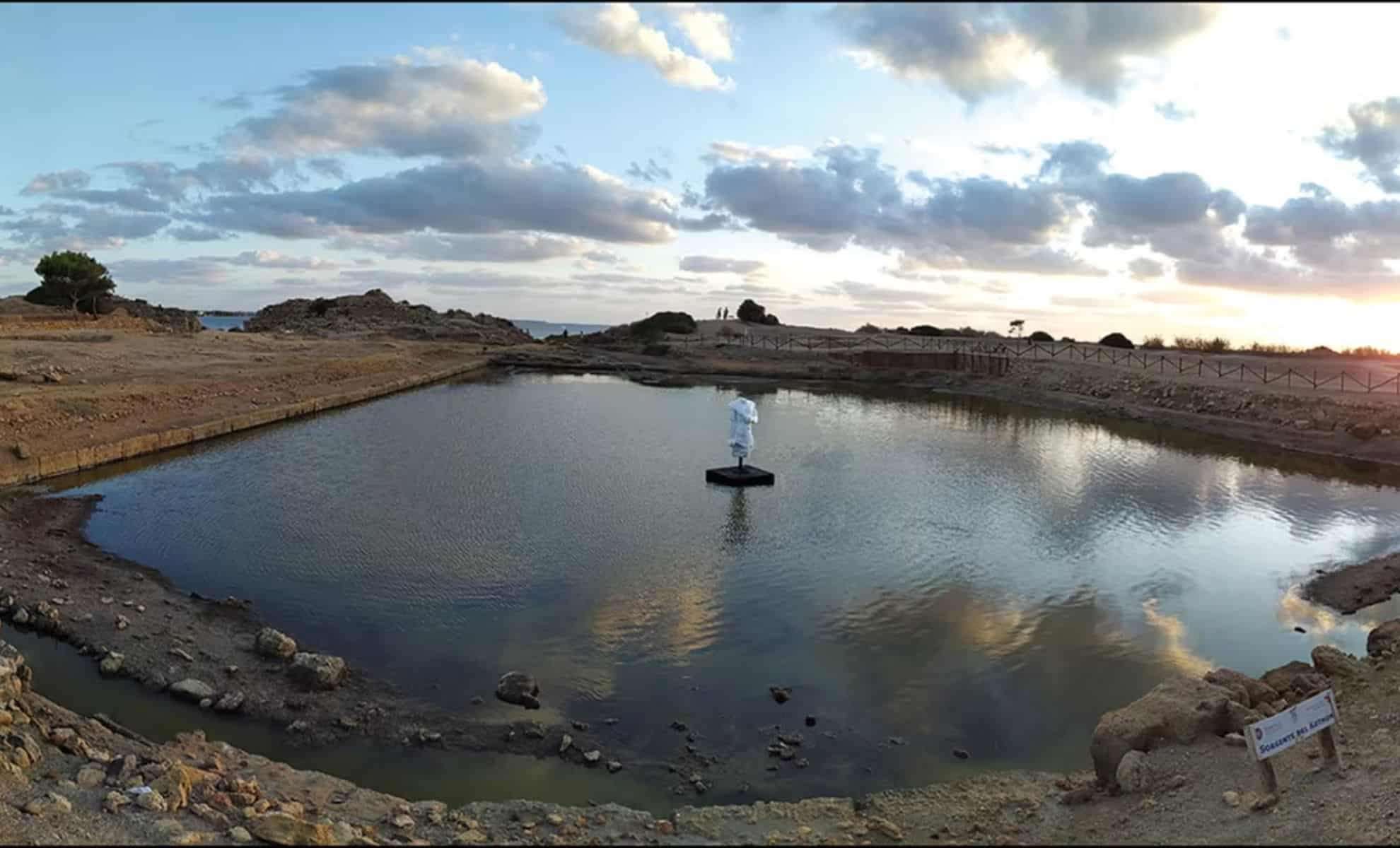
A man-made pool on a tiny island in Sicily, once thought to be a defensive harbor, has recently been recognized as one of the Mediterranean’s most extensive sacred basins. This finding, published in a peer-reviewed article in the journal Antiquity, alters the archaeological perspective on the Phoenician settlement of Motya, revealing this water feature was part of a grand spiritual complex aligned with the stars, rather than serving maritime purposes.
Reevaluating the Purpose of the Ancient Pool
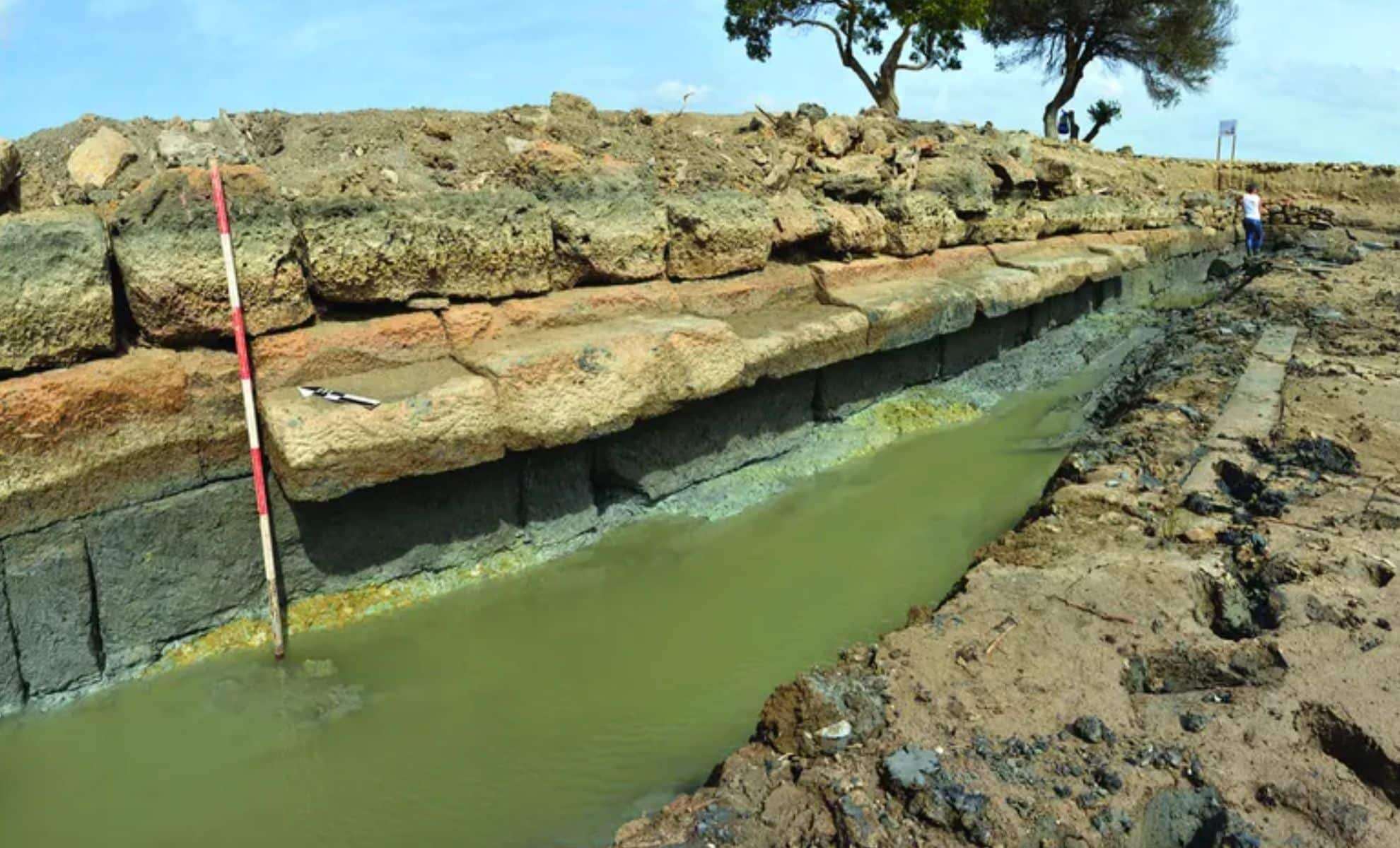
Originally uncovered in the 1920s, the stone-framed rectangular basin was assumed to be a Kothon—a harbor basin akin to one at Carthage. Its sizable dimensions and seaside position supported this view. Yet, through extensive research led by archaeologist Lorenzo Nigro from Sapienza University of Rome, this interpretation has been overturned. After years of investigation, Nigro’s team concluded that the basin was “a sacred pool within an expansive religious precinct,” rather than a naval facility.
Investigations confirmed the pool lacked any connection to the sea and was instead filled by natural freshwater springs. A robust wall separated it from a nearby lagoon, and sediment tests indicated it never functioned as a harbor. Measuring approximately 52.5 by 37 meters, the basin was nourished by an underground aquifer, providing clean water that would have held both practical and spiritual significance for the ancients.

An Astronomical Link to Phoenician Worship
The basin’s sacred role is supported by remains of three temples nearby, along with altars, ritual offerings, inscribed stelae, and a central pedestal that held a statue of Ba’al, the Phoenician god linked with the sky and storms. This statue, first found in the lagoon in 1933, is now housed at Palermo’s Regional Archaeological Museum Antonio Salinas.
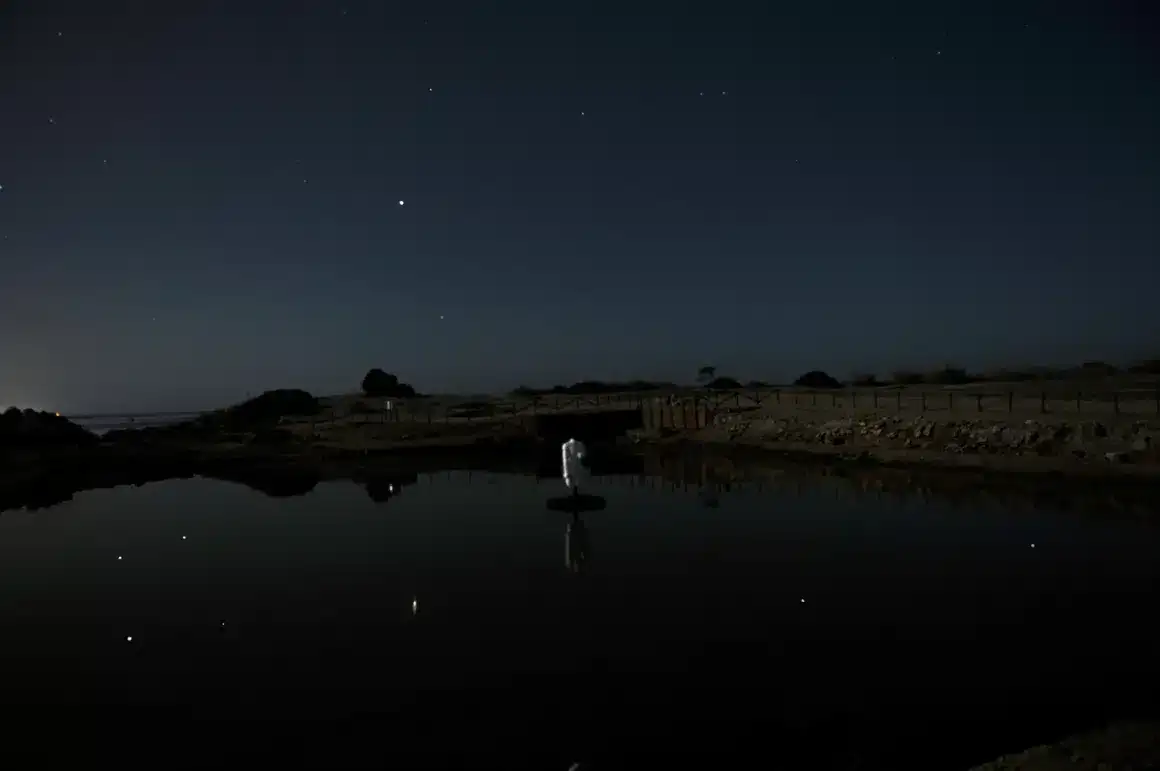
The sanctuary’s layout appears aligned with astronomical phenomena. One temple faces the winter solstice rise of Orion, a constellation connected to Ba’al. Other parts of the complex correspond with the positions of Capella, the sixth-brightest star in the night sky, and Sirius, which emerges during the autumn equinox. Nigro suggests this design might represent a “celestial vault.”
Celestial Reflections and Navigational Uses
The calm water surface of the basin likely served as a reflective plane, enabling ancient priests or astronomers to track star movements with accuracy. This would have aided in navigation as well as the timing of religious ceremonies aligned with astronomical cycles.
Supporting this idea, archaeologists found a bronze astrolabe pointer in the remains of the Temple of Ba’al, along with a dog-headed baboon statue, representing the Egyptian god Thoth, known for his associations with astronomy and timekeeping. These discoveries indicate an advanced celestial knowledge deeply intertwined with Phoenician spiritual traditions.
Preserving and Revitalizing a Cultural Treasure
Today known as San Pantaleo, Motya prospered due to its strategic position and rich resources, such as salt, fish, and crucially, freshwater. Serving as a vital hub within the Phoenician maritime trade network, the island was ultimately destroyed in the late 4th century BCE by Dionysius I of Syracuse. Nonetheless, its cultural and spiritual heritage endures.
Following their excavations, Lorenzo Nigro’s team refilled the basin and restored a replica of the Ba’al statue to its original pedestal positioned in the pool’s center. Nigro emphasized in an interview that the discovery of a freshwater supply at the sanctuary’s core “was the true ‘treasure’ sought and guarded by ancient civilizations.”
- Categories:
- News











0 comments
Sign in to Comment