
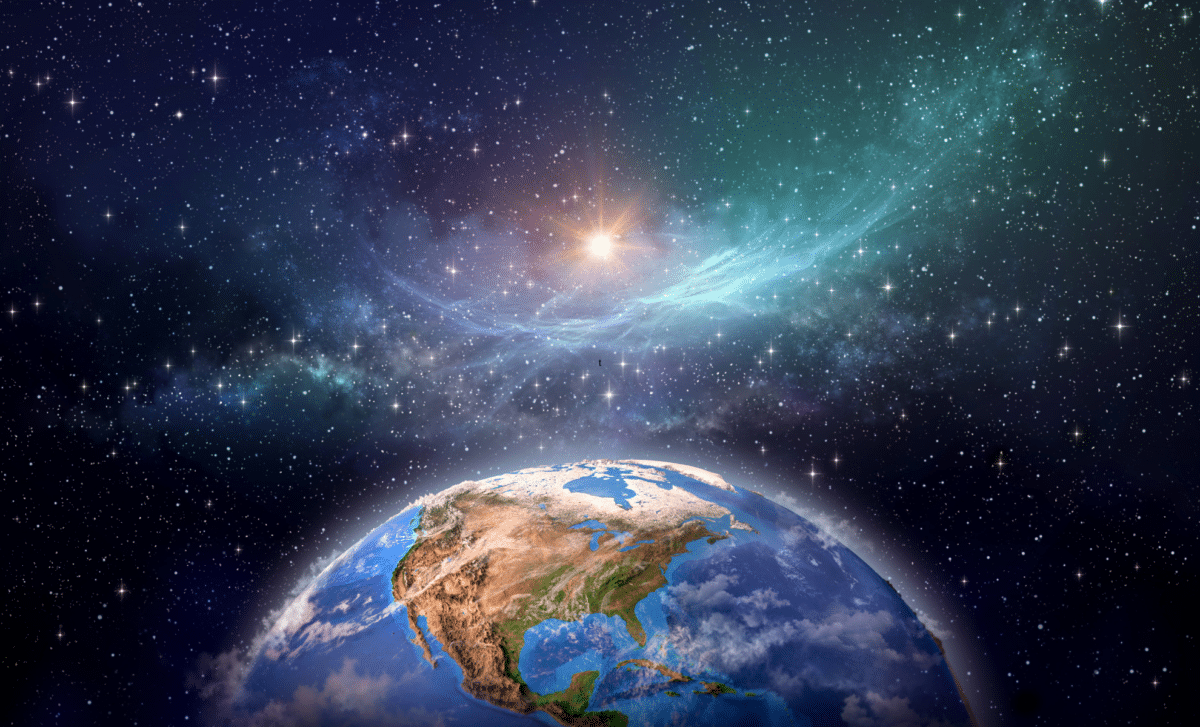
New research published in The Astrophysical Journal unveils a captivating episode in our Solar System’s past. Approximately 4 to 5 million years ago, our Sun passed near two colossal stars, leaving a lasting impact on the ionization of nearby interstellar gas clouds. This discovery offers valuable clues into the cosmic influences that sculpted our galactic neighborhood.
How Two Massive Stars Influenced Nearby Interstellar Gas
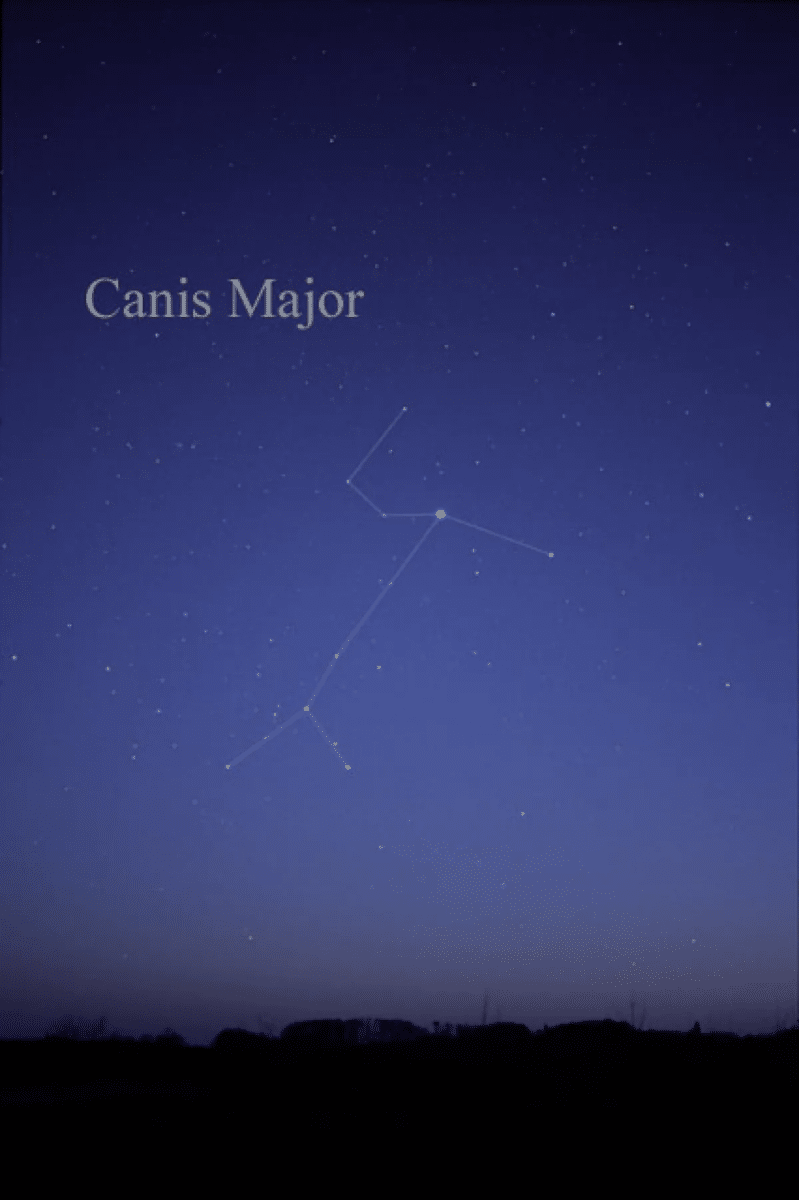
More than 4 million years ago, the Sun had a close encounter with two bright celestial giants: Epsilon and Beta Canis Majoris, among the most luminous stars in the Canis Major constellation. These stars, vastly hotter and more radiant than the Sun, would have dominated the ancient night sky.
“If you think back 4.4 million years, these two stars would have been anywhere from four to six times brighter than Sirius is today, far and away the brightest stars in the sky,” said Professor Michael Shull, one of the study’s authors.
Add Cosmo Herald as a Preferred Source

This cosmic encounter not only created an awe-inspiring spectacle for any early Earth observers but also profoundly affected the local interstellar medium—the diffuse mixture of gas and dust between the stars. According to the findings published in The Astrophysical Journal, the intense radiation emitted by these stars ionized the surrounding gas clouds significantly.
The affected gas clouds, spanning roughly 30 light-years, still exhibit signs of this ionization today. This phenomenon clarifies why these clouds carry unexpected electric charges and opens doors to better understanding the Solar System’s place within our galaxy’s history.
The Influence of Stellar Radiation on Gas Clouds
The primary driver of this ionization was the energetic emission from Epsilon and Beta Canis Majoris. Classified as B-type stars, they are about four times hotter than the Sun and emit high-energy radiation, such as ultraviolet and X-rays. This radiation stripped electrons from hydrogen and helium atoms in the nearby gas clouds, leading to an abnormally high level of ionization. As a result, the local interstellar gas remains more electrically charged compared to regions affected by less intense cosmic activity.
Understanding this stellar radiation’s impact is crucial not only for explaining the current state of these gas clouds but also for piecing together our galactic past.
“A supernova blowing up that close will light up the sky,” Shull said, hinting at the possible future fate of these stars. “It’ll be very, very bright but far enough away that it won’t be lethal.”
At distances of around 400 and 500 light-years, these stars are expected to eventually explode as supernovae. Although spectacular, these outward cataclysms will be distant enough to avoid posing any significant danger to Earth.
Unraveling the Mystery of Local Interstellar Clouds
The characteristics of the local interstellar clouds have intrigued scientists, especially due to their unusually high ionization levels. These clouds are made up of sparse gas and dust occupying space between stars, playing a vital role in star and planetary formation. For years, astronomers struggled to explain the unexpectedly high charge within these clouds.
This current research demonstrates that the radiation from Epsilon and Beta Canis Majoris ionized about 20% of hydrogen and 40% of helium contained in these clouds—far exceeding typical background levels. Although this ionization is temporary because electrons gradually recombine, its effects have persisted for millions of years, altering the characteristics of the local cosmic environment around our Solar System.
Supernovae and Their Galactic Influence
Though the encounter occurred in the distant past, the legacy of these stars continues. Their eventual supernova explosions, anticipated millions of years in the future, will send shockwaves through the interstellar medium, reshaping gas clouds and potentially impacting nearby systems. The prior ionization caused by their radiation means the clouds will absorb more cosmic rays, providing a degree of protection to Earth.
While this future event lies far ahead, it highlights the constantly shifting nature of our galaxy. The passage of Epsilon and Beta Canis Majoris has not only transformed interstellar gas but also created a cosmic shield that safeguards our planetary system from harsh cosmic radiation.
- Categories:
- Space




0 comments
Sign in to Comment