
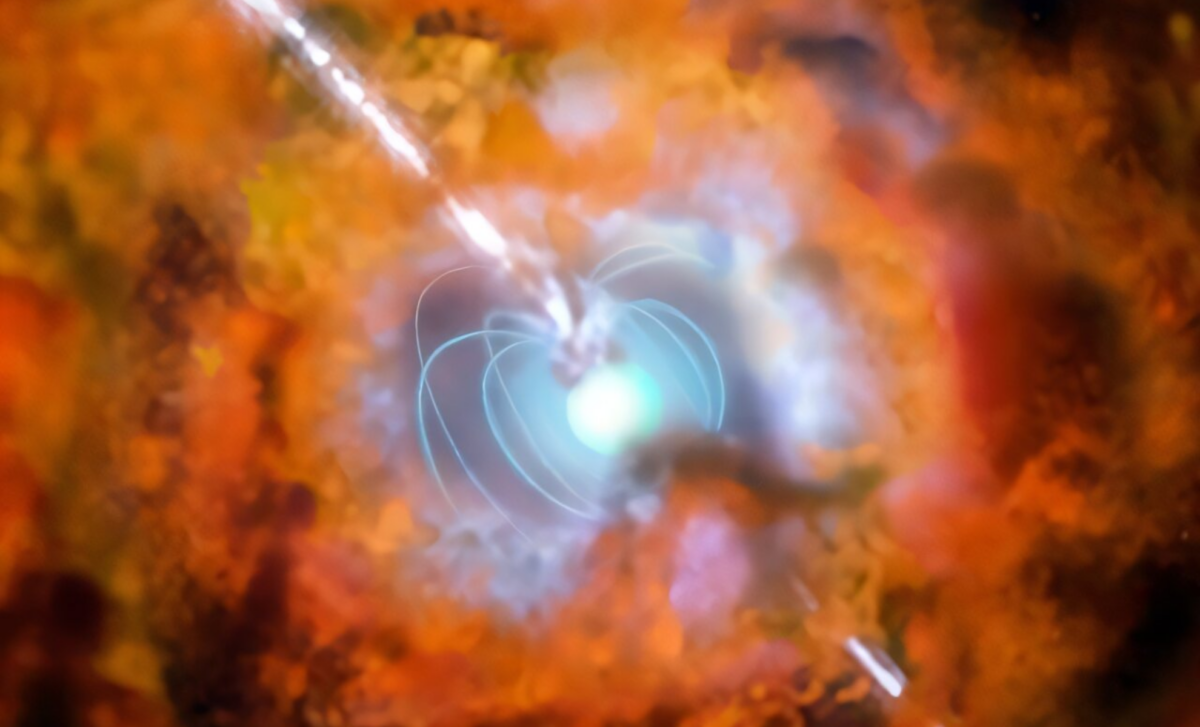
An innovative rapid-response system has enabled astronomers to observe a gamma-ray burst at millimeter and submillimeter wavelengths mere minutes after its initial detection, setting a new record for the earliest observations at these wavelengths. Published in The Astrophysical Journal Letters, this breakthrough highlights how automation at the Submillimeter Array (SMA) on Maunakea is revolutionizing the study of the universe’s most energetic explosions by capturing data before these transient phenomena diminish.
A Critical Sprint Culminates in a Landmark Observation
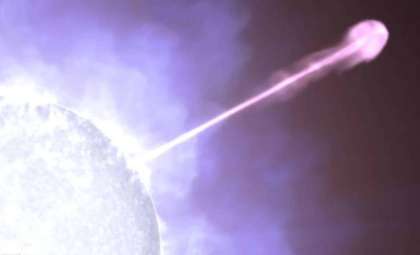
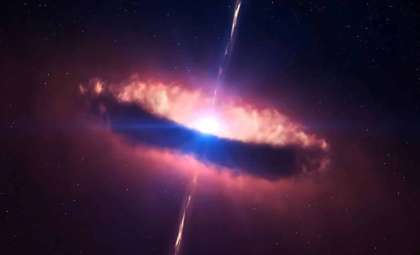
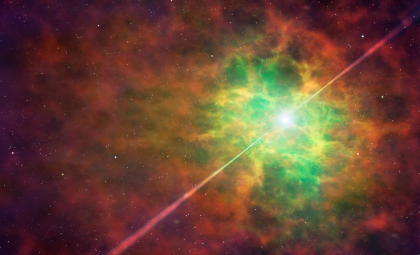
On January 26, 2026, the Submillimeter Array, managed by the Center for Astrophysics | Harvard & Smithsonian (CfA), achieved a long-sought goal. Gamma-ray bursts are among the universe's most luminous and powerful occurrences, generated by massive star collapses or collisions between neutron stars. These explosions release jets traveling near light speed, followed by fleeting afterglows holding essential clues about the event. While optical and X-ray observatories could respond rapidly, millimeter and submillimeter telescopes typically experienced delays of hours to days before beginning observations.
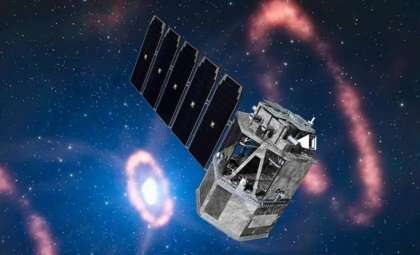
This lag often caused scientists to miss crucial early phases of such explosions. The situation changed when NASA’s Neil Gehrels Swift Observatory flagged a gamma-ray burst and instantaneously sent an alert. The on-duty operator received the notification within 90 seconds, and the SMA was already repositioning to observe the target just four minutes afterward. This nearly fully autonomous operation represented a significant departure from prior observational methods.

“It was an incredible thing to watch in real time,” said Garrett Keating, an astrophysicist at CfA and deputy director of the SMA, who led the rapid-response effort. “Being able to react and process data this quickly is a big departure from how SMA usually operates, but it was absolutely critical for capturing an event where minutes matter. This was the first time we had the full system online. We learned a lot from the experience and think we can get the response time down to as little as two to three minutes.”
Data Collected While The Explosion Was Still Active
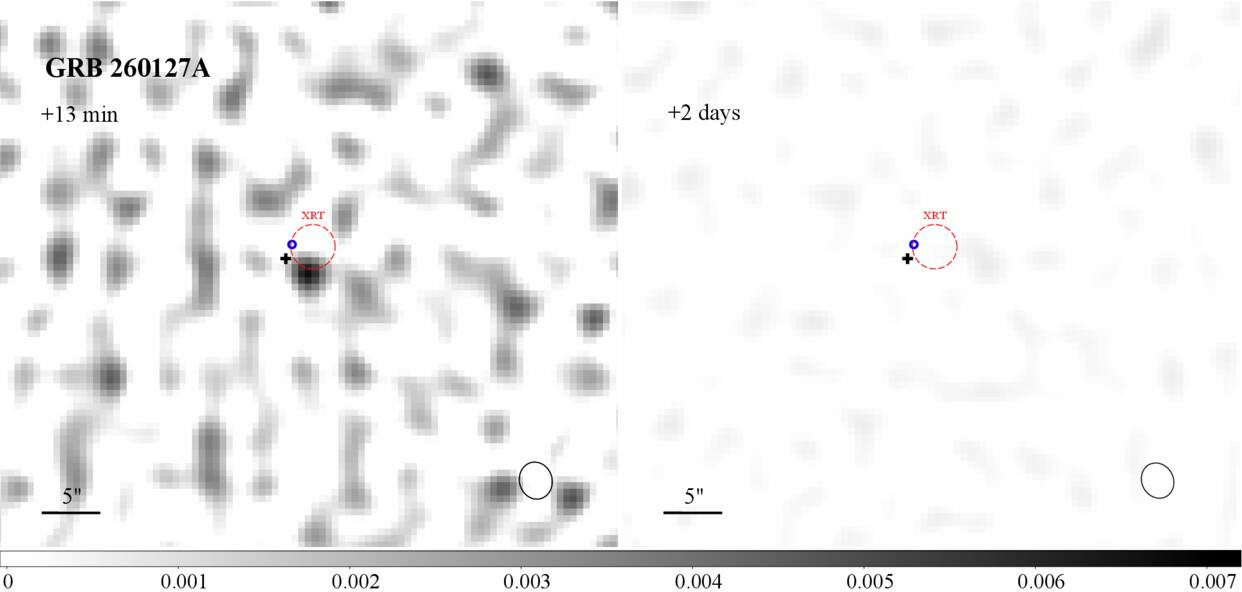
Rapid telescope repositioning was just part of the success. Within 13 minutes of the gamma-ray burst detection, the array was already gathering data, while an automated processing pipeline converted interferometric signals into scientific images in real-time. This marked a significant improvement over conventional millimeter astronomy, which often requires hours to produce accessible data products. Since interferometry involves synthesizing information from multiple antennas rather than direct imaging, this automation removed a major bottleneck, enabling near-instant assessment of the event.
“With interferometry, we don’t get direct images from the telescope,” said Ranjani Srinavasan, acting director of the SMA. “Usually that process takes a long time.”
Thanks to the new workflow, response times decreased by about two orders of magnitude compared to traditional millimeter and submillimeter observations. Astronomers were now able to witness the afterglow’s earliest phases, when physical conditions near the explosion shift most rapidly.
Significance of the Discovery for Future Astrophysics
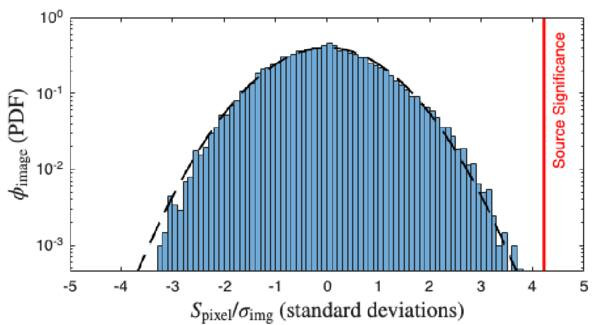
The study, featured in The Astrophysical Journal Letters, represents more than a technological achievement. Early millimeter measurements offer unique insights into gamma-ray burst energetics, jet architecture, and the characteristics of expelled material from these extraordinary events. Despite their recognized importance, such observations had been hindered by technical challenges until now. This advancement eliminates a key hurdle, enabling deeper investigations into the universe’s most extreme transient phenomena with unparalleled alacrity. Follow-up imaging performed two days post-event confirmed the source’s expected fading, reinforcing the conclusion that the SMA had captured the genuine transient afterglow rather than an unrelated background source.
“The SMA’s new capability is a game changer for the field,” remarked Edo Berger, astronomy professor at Harvard and co-author of the paper.
Getting Ready for a Surge of Upcoming Cosmic Events
This accomplishment inaugurates the SMA Sub/millimeter Program to Rapidly Investigate Novel Time-domain Sources (SMA SPRINTS), aimed at delivering swift follow-up observations of transient phenomena across the sky. The program melds the rapid-response system with the enhanced wSMA wideband features, boosting sensitivity and adaptability as astronomy enters an era dominated by constant sky monitoring. This advancement is increasingly critical given forthcoming projects such as the Vera C. Rubin Observatory’s Legacy Survey of Space and Time (LSST) and the anticipated Nancy Grace Roman Space Telescope, which will produce vast numbers of transient alerts nightly. Without automated, near-instant response capabilities, many ephemeral events would remain insufficiently explored.
“This new capability opens a unique window into the physics behind some of the most powerful stellar explosions,” said Tanmoy Laskar, assistant professor of physics and astronomy at the University of Utah and a co-author of the study. “With the SMA, we can now probe the structure and composition of the ejecta in unprecedented detail, bringing us closer to understanding how these explosions launch their powerful jets.”
This successful trial confirms that rapid-response millimeter astronomy has moved from concept to a reliable scientific tool. As next-generation observatories begin nonstop sky surveillance, the ability to react in minutes may soon become a hallmark of contemporary astronomy, enabling unprecedented views into the universe’s earliest high-energy explosions.
- Categories:
- Astronomy


0 comments
Sign in to Comment