
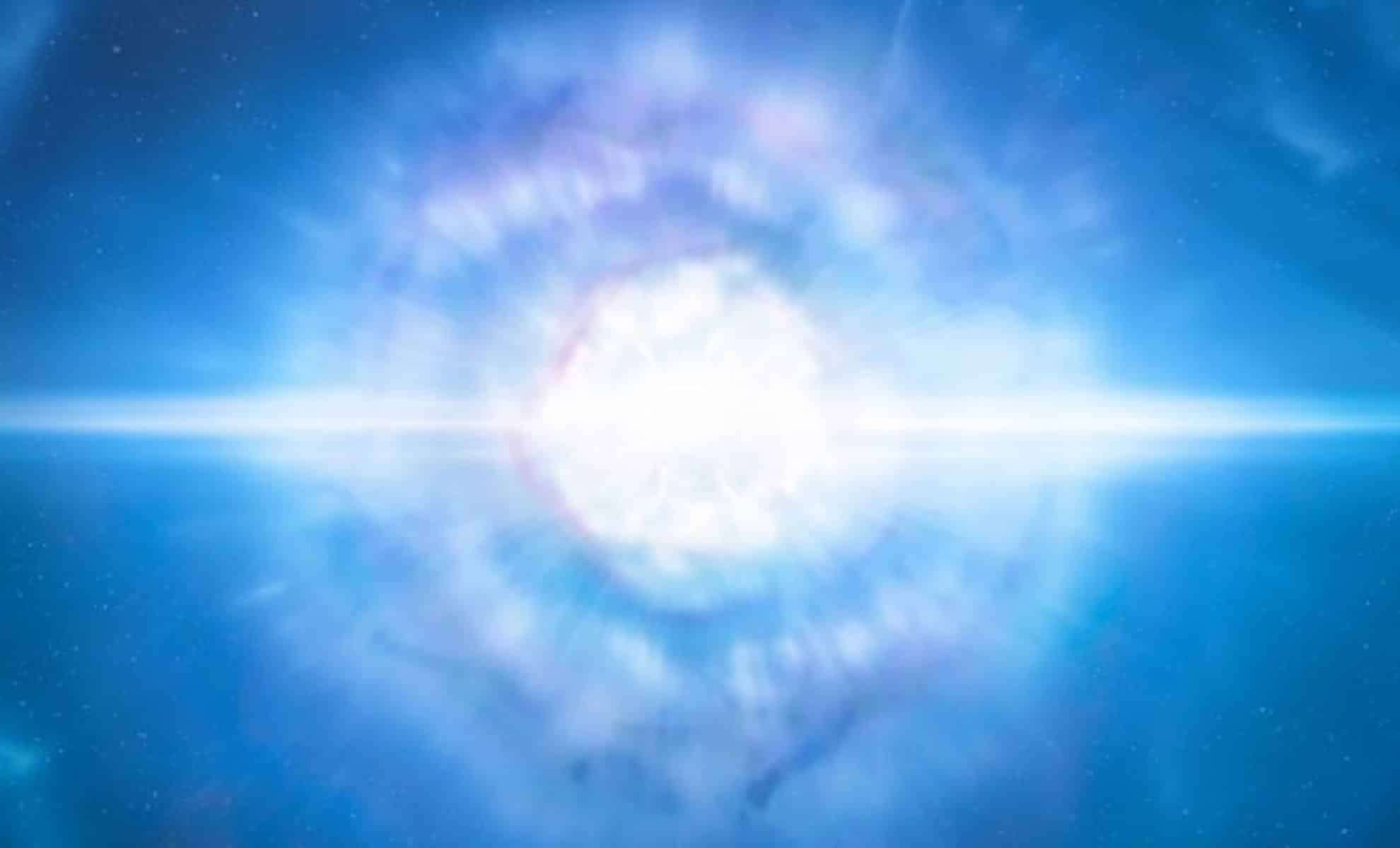
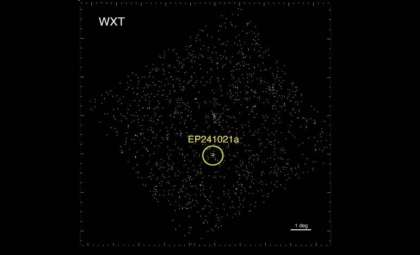
Scientists have identified a gamma-ray burst (GRB) exhibiting features that defy longstanding conceptions of these powerful cosmic events. A recent article in The Astrophysical Journal Letters reveals a GRB characterized by repeated, potentially cyclical eruptions of gamma-ray radiation from a single origin. Such behavior has never been documented before and challenges standard interpretations of GRB mechanisms, presenting a remarkable new mystery for astrophysicists.
Distinctive Cycle of Gamma-Ray Eruptions
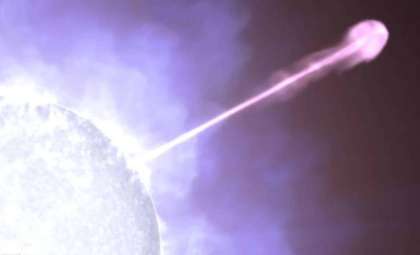
Conventionally, gamma-ray bursts rank among the universe's most intense energy releases, typically triggered by either the collapse of massive stars or the collision of dense stellar remnants like neutron stars. These are generally one-time, catastrophic flashes unleashing massive energy within seconds or minutes. What sets this GRB apart is the recurrence of intense bursts from a solitary source, a phenomenon previously deemed impossible. As lead author Martin-Carrillo elaborates:
“GRBs are catastrophic events so they are expected to go off just once because the source that produced them does not survive the dramatic explosion. This event baffled us not only because it showed repeated powerful activity but also because it seemed to be periodic, which has never been seen before.”

The fact that this GRB keeps producing bursts indicates a core mechanism that remains active post-explosion, directly opposing existing theories. This observation could prompt a reevaluation of how extreme cosmic environments store and emit energy.
Unconventional Stellar Deaths and Black Hole Interactions
One avenue for explaining the observed periodic nature involves atypical stellar collapses. Regular GRBs emerge from stars roughly 40 times the Sun's mass ending their lives, generating a solitary burst. Nevertheless, Martin-Carrillo proposes other possibilities:
“If a massive star – about 40 times the mass of the Sun – had died, like in typical GRBs, then it had to be a special type of death where some material kept powering the central engine. Alternatively, the periodicity of the flashes of gamma-ray radiation could be caused by a star being ripped apart by a black hole, a phenomenon known as a tidal disruption event (TDE).”
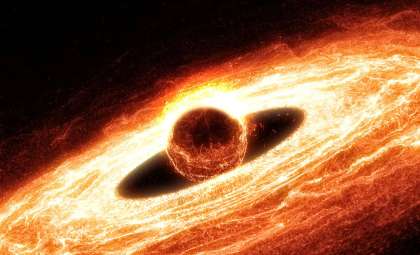
Tidal disruption events occur when a star ventures too near a black hole’s gravitational grip and is torn apart, emitting powerful radiation. While such events have been observed previously, the repetitive and ordered nature of this GRB is unprecedented, possibly involving a rare kind of star or an exotic black hole.
Searching for Intermediate Mass Black Holes
If the GRB is linked to a tidal disruption event, it implies the involvement of an intermediate mass black hole (IMBH), a theoretical class of black holes with masses between those of stellar and supermassive black holes. These elusive objects have remained undetected for years, so this discovery could be revolutionary. According to Martin-Carrillo:
“However, unlike more typical TDEs, to explain the properties of this explosion would require an unusual star being destroyed by an even more unusual black hole, likely the long-sought ‘intermediate mass black hole’. Either option would be a first, making this event extremely unique.”
Such a finding would provide one of the earliest indirect observations of an IMBH, enriching our understanding of black hole formation and galactic evolution.
Advancing Our Grasp of Explosive Cosmic Phenomena
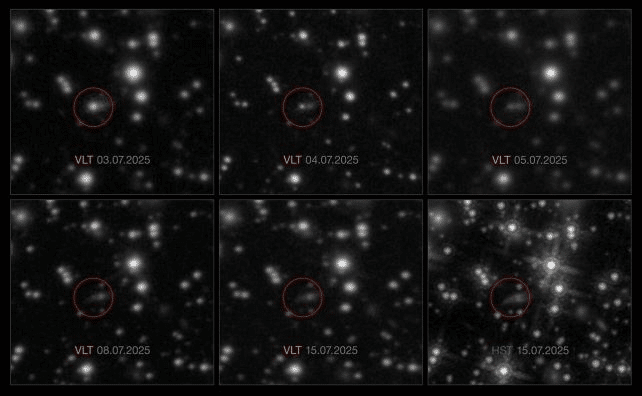
While many questions remain, researchers are encouraged by the progress this discovery represents. Data collected from numerous telescopes worldwide has detailed the burst’s timing, energy characteristics, and hints of periodicity. Martin-Carrillo remarks:
“We are still not sure what produced this or if we can ever really find out, but with this research, we have made a huge step forward towards understanding this extremely unusual and exciting object.”
This finding highlights the universe’s unpredictability and underscores the importance of persistent observation of high-energy cosmic events. Each unexpected detection helps scientists refine models and deepen insight into the universe’s most violent processes.
- Categories:
- News





0 comments
Sign in to Comment