
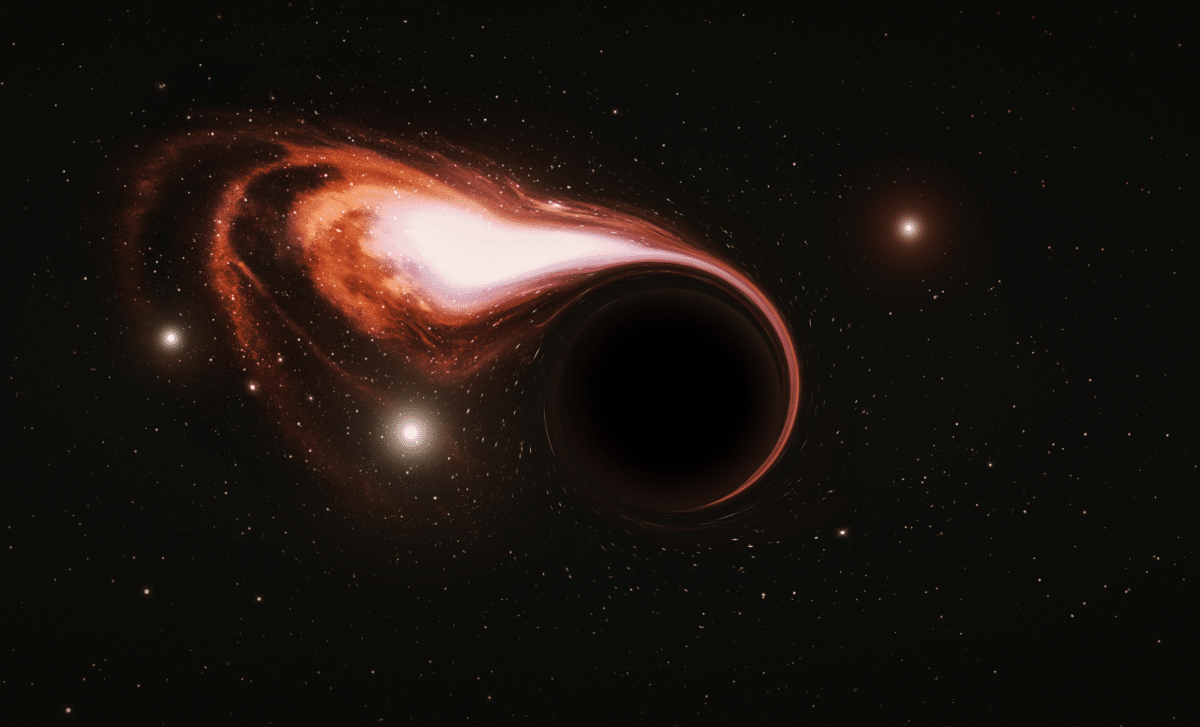
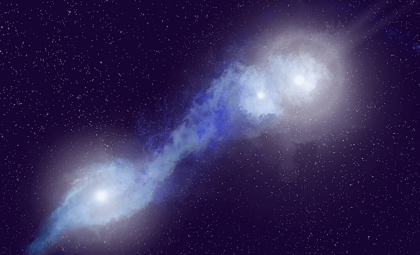
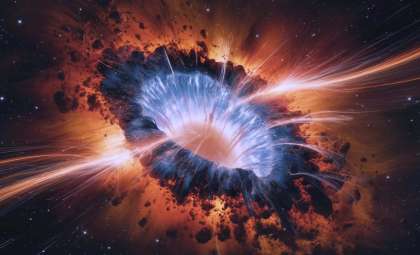
A global collaboration of astronomers has observed a remarkable cosmic phenomenon that may revolutionize how we perceive black hole mergers. In November 2024, for the first time, a merging pair of black holes was associated with a short gamma-ray burst (GRB), a connection once considered implausible. This groundbreaking discovery, reported in The Astrophysical Journal, opens new horizons in multi-messenger astronomy by uniting gravitational wave signals with bursts of high-energy electromagnetic radiation.
An Unexpected Cosmic Convergence
The LIGO-Virgo-KAGRA network registered a powerful gravitational wave event, dubbed S241125n, in November 2024. Unusually, a gamma-ray burst was detected just 11 seconds after the gravitational wave signal. Traditionally, GRBs have been tied to neutron star mergers, not black holes, as black hole collisions were believed to lack electromagnetic counterparts. This novel finding overturns that expectation, indicating that under certain rare conditions, black hole mergers can emit detectable light.
“This estimate is deliberately conservative, and the true probability of a chance alignment may be even lower,” said the research team. “However, in the interest of scientific rigor, we cannot yet draw a definitive conclusion. Regardless, this is clearly a very intriguing event.”
Add Cosmo Herald as a Preferred Source

The analysis implies this correlation between gravitational waves and the gamma-ray burst is unlikely to be coincidental, representing a rare but genuine phenomenon.
A High-Energy Event Observed in Multiple Spectra
Published in The Astrophysical Journal, the research presents strong evidence that S241125n represents a multi-messenger event, linking gravitational waves with electromagnetic signals such as gamma rays and X-rays. Gravitational waves arise from colossal collisions between massive bodies like black holes, and in this case, originated from a merger about 4.2 billion light-years away—placing it in the universe’s distant past.
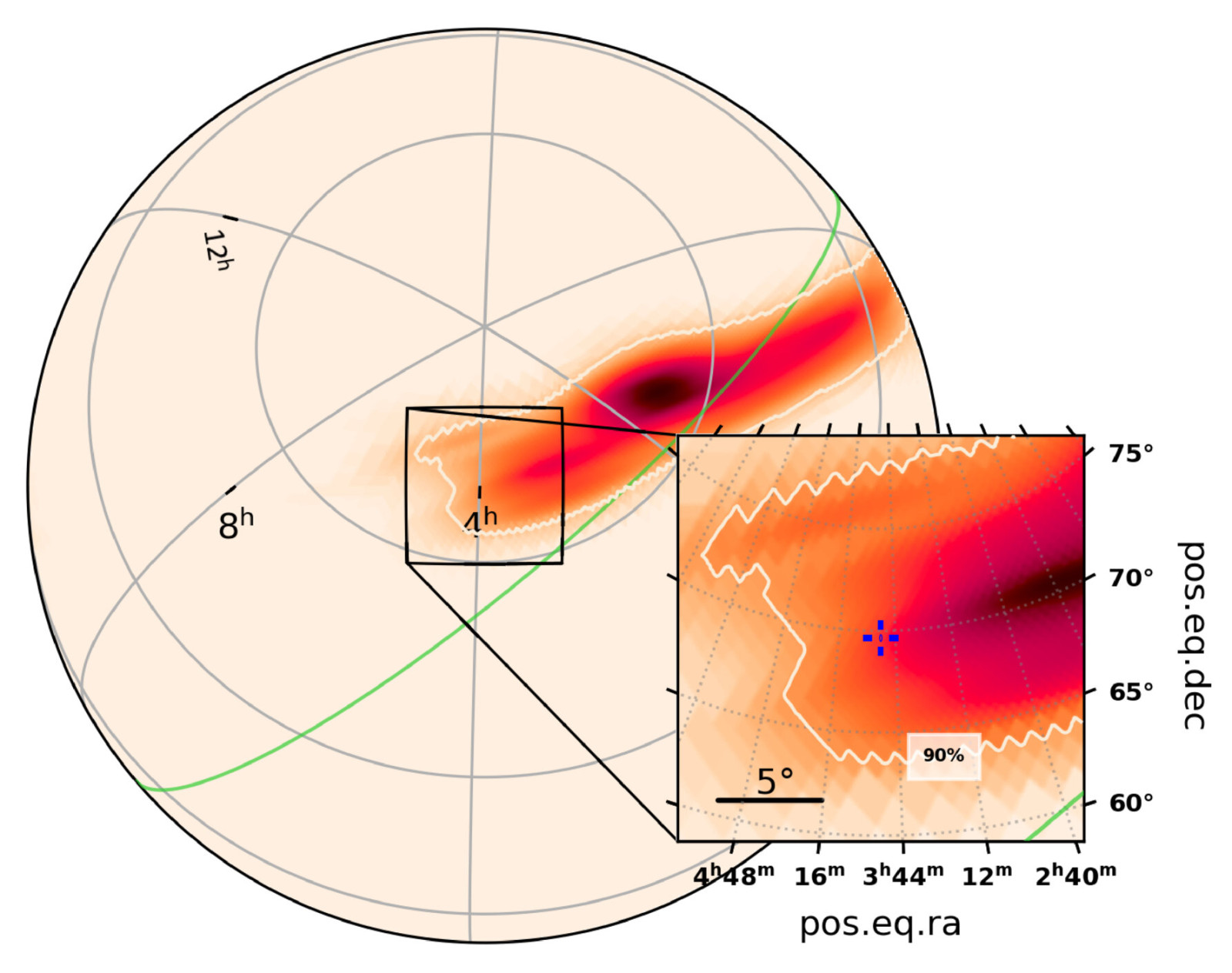
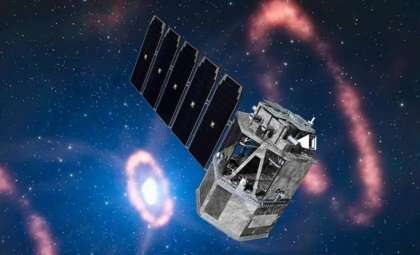
Soon after the gravitational wave detection, NASA’s Swift telescope identified a short GRB, followed by an X-ray afterglow observed by China’s Einstein Probe. Both signals emerged from the same region in the sky, making a random coincidence highly unlikely. Researchers estimate that such a spatial and temporal overlap would statistically occur only once every few decades.
Understanding the Origins of Massive Black Holes
A remarkable feature of S241125n is the enormous masses of the black holes involved. Each black hole is estimated to have a mass exceeding 100 times that of the Sun, which is significantly greater than typical black hole mergers recorded by LIGO, generally involving masses in the tens of solar masses. The presence of these colossal black holes raises compelling questions about their formation and evolutionary histories, suggesting they might have originated from previous mergers or unusual astrophysical pathways.
This discovery challenges current black hole formation models and indicates that such massive black holes exist in remote regions of the cosmos. The sheer scale of these mergers implies that similar events could be detected over vast distances, offering fresh insights into the growth and environment of black holes across cosmic time.
Deciphering the Gamma-Ray Burst Mechanism
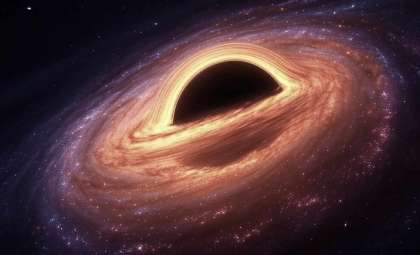
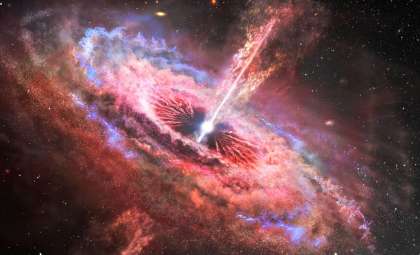
The research team proposes a novel scenario explaining how a black hole merger might produce a short gamma-ray burst. They hypothesize that the black holes merged within the dense accretion disk surrounding a galaxy’s central supermassive black hole—an environment known as an active galactic nucleus (AGN). In this gas-rich setting, the merger imparted a significant “kick” to the resulting black hole, propelling it through the surrounding material.
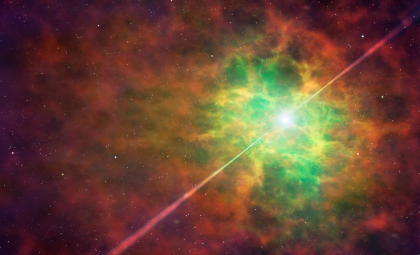
As the black hole traversed this dense environment, it rapidly consumed material at rates surpassing typical growth limits. This intense accretion likely generated powerful jets of high-energy radiation and particles that interacted with the gas, producing shockwaves. These shocks heated the surrounding matter, which then emitted the observed burst of gamma rays detected by Swift.
A Breakthrough in Multi-Messenger Astronomy
Should further investigations confirm the link between gravitational waves and the gamma-ray burst, it would represent a transformative advance in multi-messenger astronomy—the discipline that combines diverse cosmic signals to deepen our understanding of universal phenomena. Previously, black hole mergers were observed solely through gravitational waves, limiting our observational perspective. Detecting a gamma-ray counterpart expands the toolkit for studying these dramatic events, providing both gravitational and electromagnetic insights.
This discovery also opens the door to using gravitational-wave detections as “standard sirens” for measuring cosmic distances. The gamma-ray burst could serve as an indicator of the merger’s host galaxy, refining measurements of the universe’s expansion and offering a more precise gauge of cosmic growth.
- Categories:
- Astronomy

0 comments
Sign in to Comment