

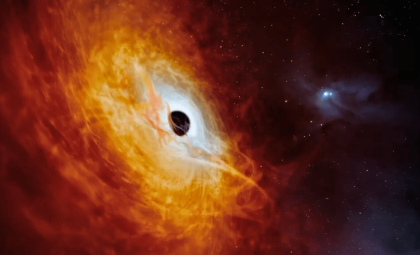
A far-off galaxy affectionately dubbed Red Potato is providing scientists with a unique window into the ways supermassive black holes impact galaxy growth and transformation. By leveraging data from the XRISM X-ray satellite along with other cutting-edge instruments, astronomers have uncovered strong indications that energetic emissions from the galaxy’s central black hole are disrupting the cold gas reservoirs essential for star creation. Published in Astronomy & Astrophysics, this research reveals that black hole feedback might inhibit star formation earlier in the universe’s timeline than previously documented, offering a pivotal insight into the forces shaping galactic development.
A Striking Galaxy Illuminates a Hidden Cosmic Influence
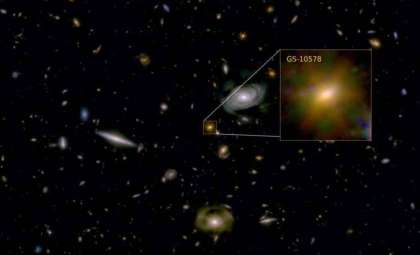
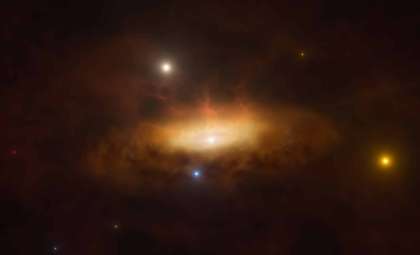
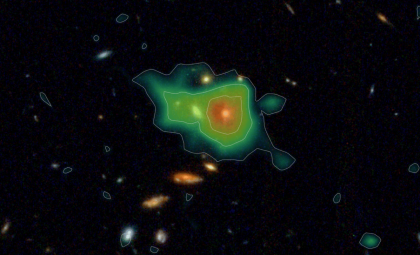
Known by its scientific designation PLCK G244.8+54.9, this galaxy stands out for its distinctive elongated form, earning it the playful moniker Red Potato. Situated over 11 billion light-years away, it dates to an epoch when most galaxies were rapidly generating stars. However, despite abundant gas supplies, Red Potato’s star formation rate is surprisingly low, raising questions about what might be inhibiting its stellar birth. Scientists set out to determine if internal forces within the galaxy were compromising its star-making potential.
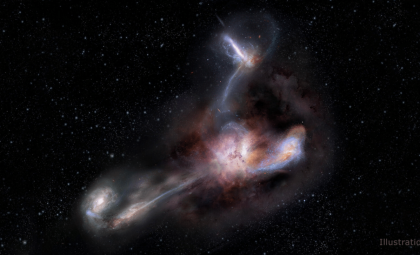
Combining observations from XRISM, the Atacama Large Millimeter/submillimeter Array (ALMA), and the Very Large Telescope (VLT), the team created one of the clearest portraits yet of the galaxy’s inner workings. Their results point to a powerful outflow linked to the central supermassive black hole, stirring massive gas reservoirs throughout the galaxy. The published study in Astronomy & Astrophysics offers solid proof that black hole-driven phenomena can suppress star formation even in the early universe. Far from simply drawing in gas, the black hole energizes its environment, altering the galaxy’s evolutionary trajectory.

XRISM Reveals Evidence of a Dynamic Black Hole Jet
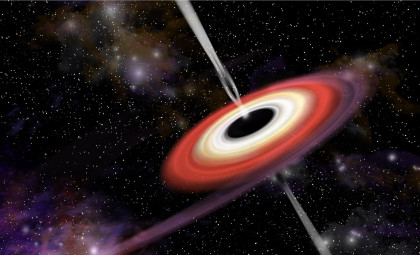
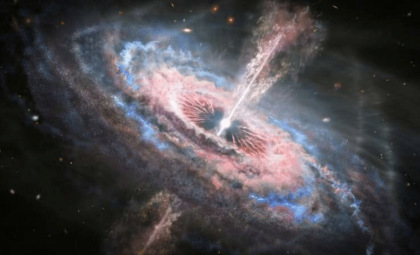
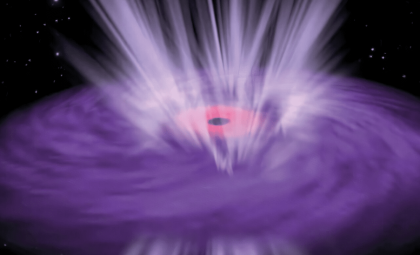
Key support for this interpretation came from XRISM, a state-of-the-art X-ray observatory launched by JAXA, NASA, and the European Space Agency. The instrument detected exceptionally hot gas tracing turbulent flows consistent with energy injected by jets streaming from the supermassive black hole. These jets appear to keep the gas in motion, preventing it from cooling and collapsing to form stars. This turbulence dramatically slows star formation despite the presence of abundant gas.
Lead researcher Weichen Wang from the University of Milan-Bicocca highlighted the discovery’s importance: “Stars aren’t forming as we expected, prompting us to look for the cause. It seems there’s a ‘chef’ stirring the pot in this cosmic kitchen.” This vivid metaphor underlines a growing recognition that black holes do more than consume matter—they actively regulate galactic environments by heating and agitating star-forming gas. Although suspected previously, catching this process in action at such a distant epoch confirms feedback was influencing galaxy growth early on.
Mechanisms Behind a Black Hole’s Control Over Star Formation
The research demonstrates that the black hole’s reach extends far beyond its immediate vicinity. Jets emitted from the core can channel enormous kinetic energy over thousands of light-years, inducing turbulence that inhibits gas cooling. Without sufficiently cold, dense gas clouds, star formation slows, leaving the galaxy unable to produce stars at the robust rates typical for its era. Instead of ejecting gas, the black hole keeps it in a chaotic state unsuitable for stellar birth.
Co-author Sebastiano Cantalupo also from the University of Milan-Bicocca elaborated: “If the black hole’s jet is constantly agitating the gas within the Red Potato, it could drastically slow the galaxy’s ability to gather fresh gas for star formation. This energy injection effectively starves the galaxy, reducing star production below expectations for comparable galaxies at that cosmic time.” This insight helps clarify why some massive galaxies stop forming stars sooner than others despite abundant gas, reinforcing theoretical frameworks that assign critical roles to black hole feedback in shaping galactic evolution.
Insights From the Red Potato: A Window Into Galactic Lifecycles
The Red Potato is not just a curious object but a key to understanding a crucial transition from active star formation to galactic quiescence. It presents an invaluable natural laboratory to explore how galaxies evolve under the influence of their central black holes. Each new observation enhances the comparison between theoretical models and real evidence, deepening our grasp of the interplay between supermassive black holes and their host galaxies. As next-generation observatories continue to examine similar systems, scientists hope to determine whether Red Potato exemplifies an unusual case or a typical stage in the evolution of massive galaxies.
Andrea Travascio, a collaborator, emphasized the broader impact: “This red potato is shedding clues that could unlock answers to fundamental questions about galaxy formation. Quite the important role for a galactic spud.” These clues may ultimately reveal how black holes have shaped the universe as we see it today. With XRISM now active, the astronomical community eagerly anticipates many more findings that will shed light on the complex connections between black holes, galactic gas, and star creation over cosmic time.
- Categories:
- Astronomy


0 comments
Sign in to Comment