
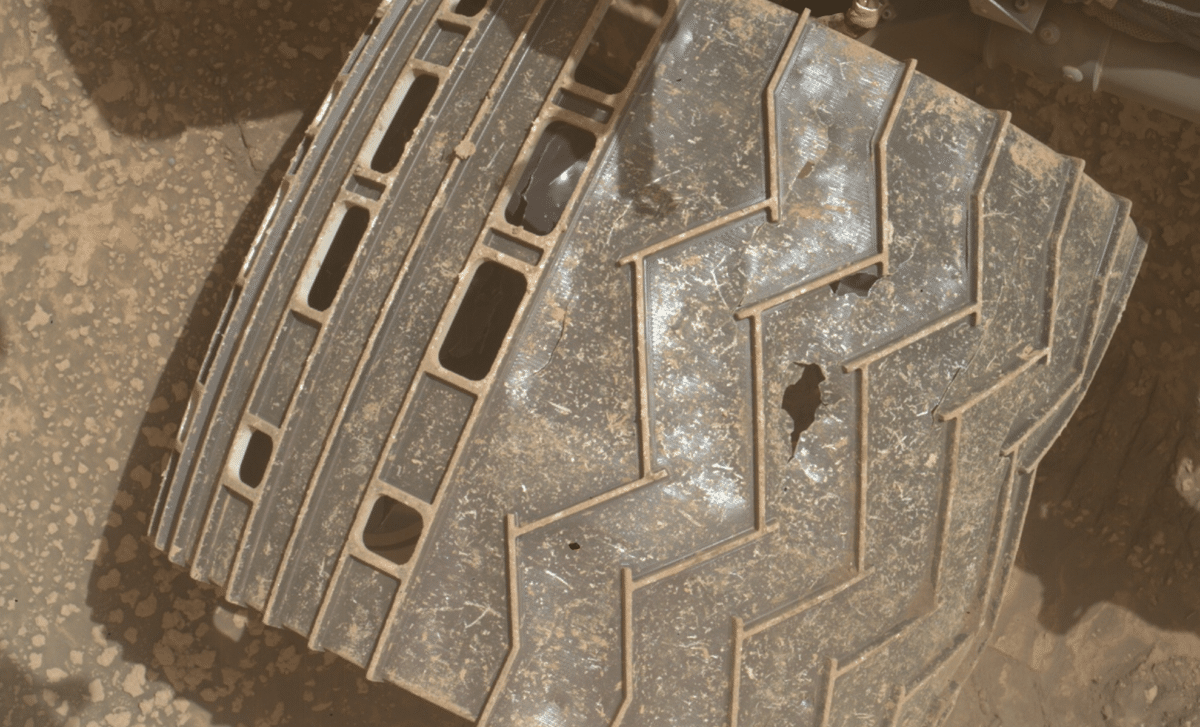
For over ten years, NASA’s Curiosity rover has traversed the challenging terrain of Mars, uncovering findings that have revolutionized our understanding of the Red Planet. Recently, NASA released a detailed image showcasing one of the rover’s most iconic features: a significantly cracked aluminum wheel that continues to function despite relentless exposure to the planet’s jagged rocks. Rather than indicating failure, this image highlights the impressive toughness of one of humanity’s most enduring robotic explorers.
Detailed Look Reveals Extensive Damage Yet Unwavering Functionality
The newly shared photo shows Curiosity inspecting its own battered wheel while still conducting science operations within Gale Crater. The rover’s aluminum wheels have endured thousands of journeys across Martian surfaces that proved rougher than anticipated before the rover’s 2011 launch. Sharp rocks frequently punctured and tore the thin aluminum, causing the characteristic cracks and holes familiar to the mission team. Despite this, the wheel remains operational, thanks to the rover’s solid internal framework and expertly planned driving techniques.
Engineers have constantly refined navigation routes to limit further damage while enabling the rover to access valuable scientific sites. This image acts as both a technical audit and a visual reminder of the tough environments faced by robotic explorers tens of millions of miles away. Each scar tells a story of successful travels through uncharted Martian landscape. The damaged wheel stands not as a flaw, but as a testament to robust engineering and strategic mission planning, proving how conservative design and adaptable operations can greatly prolong the lifespan of deep-space missions.

The Rover’s Many Trials Across Mars’ Diverse Terrains
Since its touchdown on Mars in August 2012, Curiosity has logged extensive mileage navigating varied geological terrains, including climbing the base slopes of Mount Sharp while analyzing rocks that hold clues to Mars’ distant past. Each trip exposed the rover’s wheels to abrasive surfaces capable of inflicting damage. Early on, mission teams identified areas with unexpectedly sharp rocks that accelerated wear beyond what was initially forecasted, prompting adjustments in path planning to prioritize safer trails without sacrificing scientific goals.
Software tweaks and operational changes minimized undue strain without limiting access to crucial research locations. Despite ongoing wheel deterioration, the rover continues to deliver groundbreaking results about ancient lakes, organic compounds, and potential habitats for past microbial life. Consequently, the scars on the wheels have become part of the mission’s narrative of resilience rather than hindrances. Every extra mile boosts confidence in Curiosity’s remarkable endurance and the foresight of its engineering design that has kept it productive well past its initial mission timeline.
Ongoing Health Assessments Keep the Rover on Track
NASA reports that routine imaging of Curiosity’s wheels is a key component of long-term health checks. Engineers regularly monitor the development of cracks, holes, and structural shifts to inform plans for future travel. These evaluations help balance the scientific ambitions of the mission with the imperative to conserve the rover’s operational capability for as long as possible.
The most recent close-up offers another critical update, affirming that despite evident wear, the wheel still supports full rover operations across Mars’ surface. Such vigilance is crucial for extending the lifespan of robotic explorers functioning in punishing environments where repairs are not feasible. The continuity of these inspections embodies decades of engineering expertise and deliberate mission management. Each image adds to a comprehensive record detailing how spacecraft components age under Martian conditions, important knowledge for designing next-generation planetary rovers.
One Wheel Reflects the Broader Journey of Martian Exploration
This intimate image of the damaged wheel conveys more than machinery wear; it captures the essence of planetary exploration, where each scientific breakthrough comes with the challenge of enduring one of the Solar System’s most unforgiving landscapes. Curiosity continues to ascend, study rocks, drill samples, and send valuable information back to Earth despite bearing nearly fourteen years’ worth of visible wear from Mars.
The wheel’s blemishes distinguish superficial damage from mission-critical failures, demonstrating how meticulous engineering has enabled the rover to surpass expectations and stay productive. As NASA prepares for upcoming robotic and human ventures to the Red Planet, lessons from Curiosity will be fundamental to crafting machines capable of surviving even more prolonged expeditions. The rover’s weathered wheel has evolved into a lasting symbol of determination, creativity, and the extraordinary progress made possible through sustained exploration.
- Categories:
- Nasa




0 comments
Sign in to Comment