
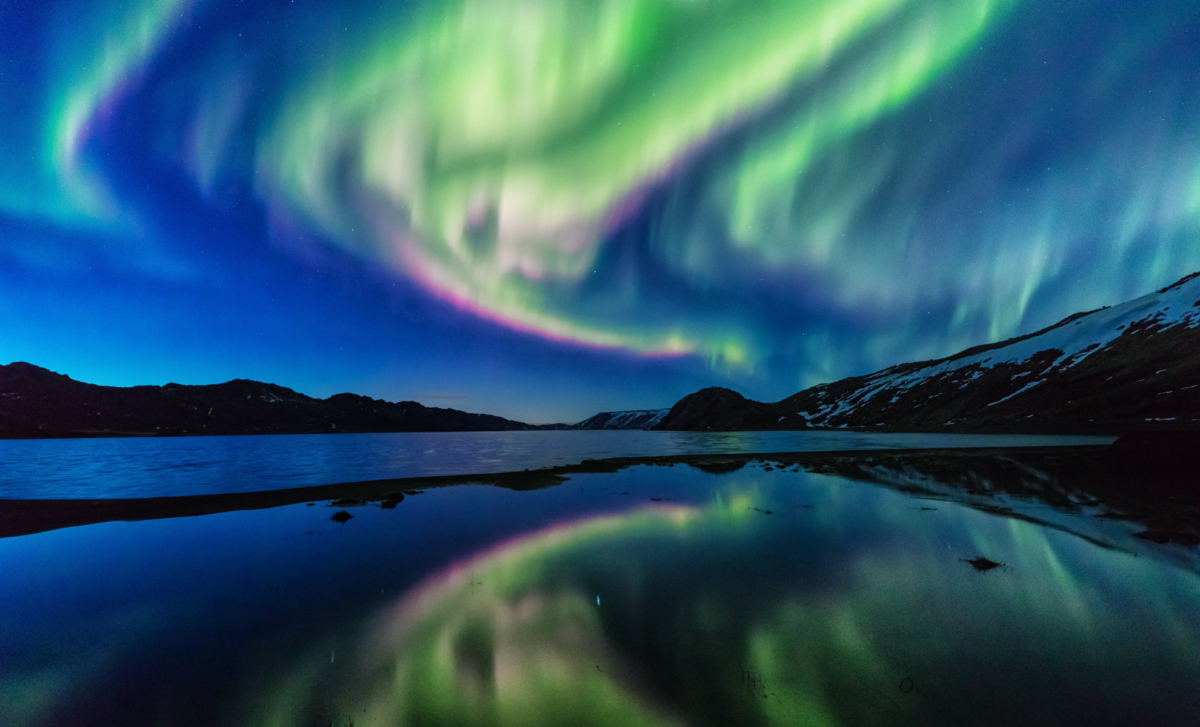
On the evening of March 9, 2026, several regions in the United States will have a chance to witness the northern lights illuminating the night sky. These vibrant auroras, which result from the sun’s charged particles interacting with Earth's magnetic forces, will be notably visible in northern states. The National Oceanic and Atmospheric Administration’s Space Weather Prediction Center (SWPC) reports that areas such as Alaska, Washington, and Maine are prime viewing spots. If you find yourself in these locations tonight, it's ideal for catching the celestial performance, with additional viewing prospects expected later in the month.
Exploring Aurora Borealis: Nature’s Luminous Performance
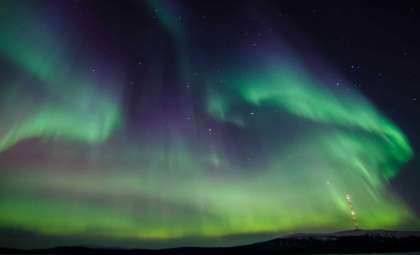
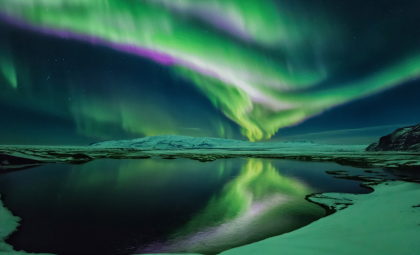
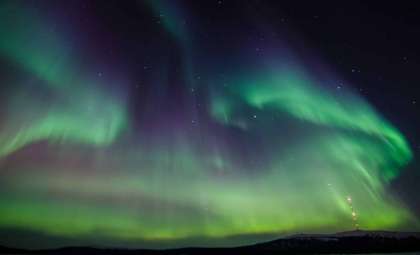
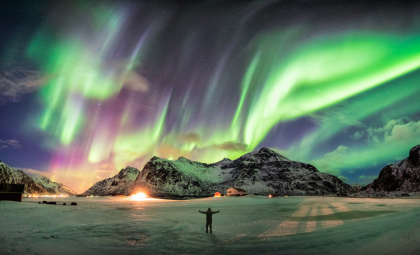
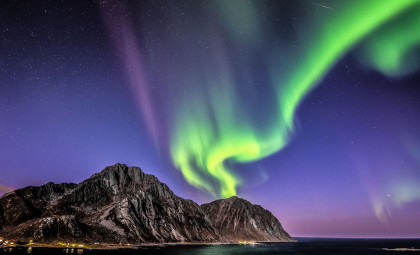
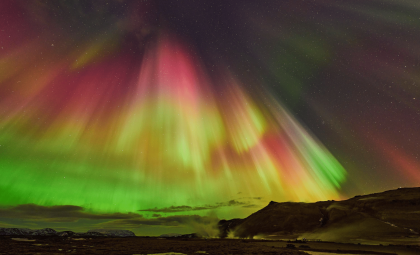
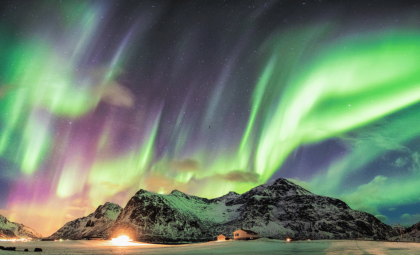
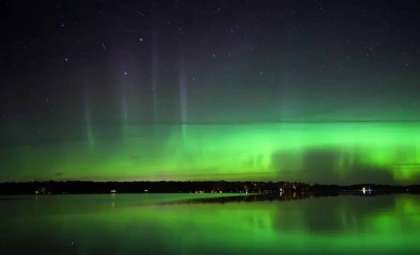
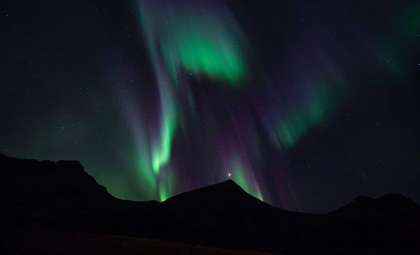
Aurora borealis, or the northern lights, stand as one of Earth’s most stunning natural displays. These lights emerge when energetic particles from solar winds collide with our planet’s magnetic field, triggering glowing curtains of light that often appear in shades of green, purple, and pink across the twilight sky. While predominantly visible nearer the poles, significant solar events can cause the auroras to extend to lower latitudes.
As solar winds approach Earth, they deliver charged particles that meet atmospheric gases like oxygen and nitrogen. These encounters emit colorful lights. Oxygen at higher altitudes produces red and green hues, whereas nitrogen generates shades of blue, purple, and pink.

Impact of Solar Winds on Aurora Sightings
The visibility of the northern lights is heavily influenced by solar winds—swift flows of charged particles ejected by the sun. These winds interact with Earth’s magnetosphere, inciting geomagnetic disturbances. Stronger solar wind activity increases the chances of auroras being seen farther south. Monitoring the intensity and timing of these solar wind bursts is critical for forecasting aurora events.
Due to recent heightened solar wind activity, forecasts predict auroral displays for March 9. As detailed by NOAA’s Space Weather Prediction Center, the residual effects of these fast-moving solar winds are expected to maintain elevated geomagnetic conditions. Resultantly, northern U.S. regions should experience visible auroras tonight. The SWPC utilizes satellite and terrestrial sensors to analyze solar wind patterns, enhancing aurora forecasts.
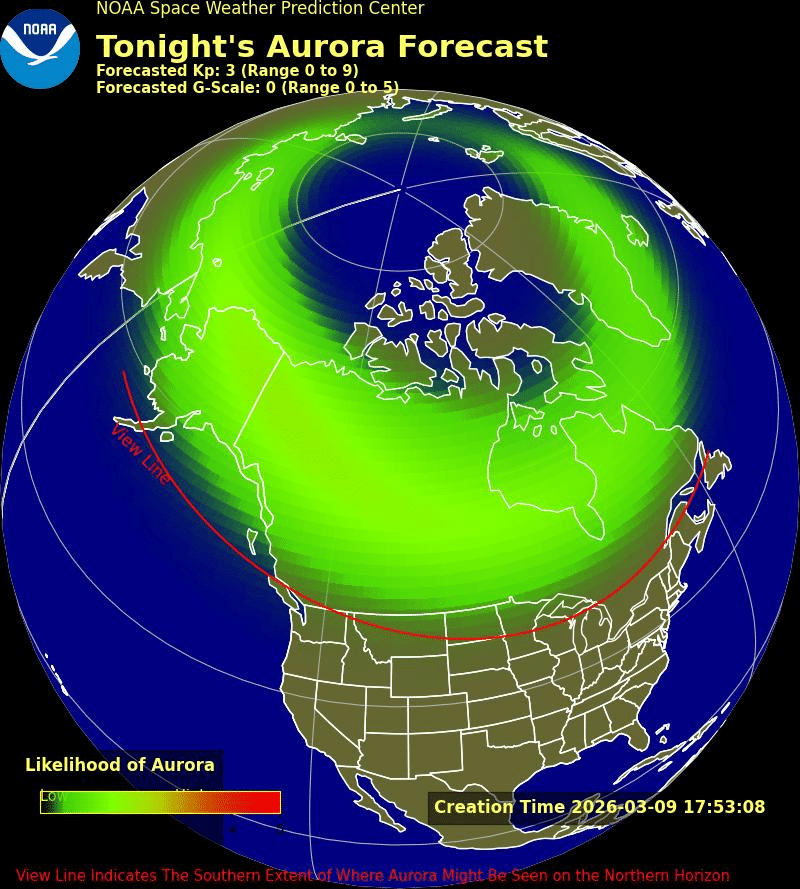
Best Locations to View Tonight’s Aurora
Tonight, northern parts of the U.S. spanning 10 states will have favorable conditions for spotting the aurora. The most promising viewing will be in Alaska, Washington, Idaho, Montana, North Dakota, South Dakota, Minnesota, Wisconsin, Michigan, and Maine. These states fall within the optimal aurora visibility zone.
To increase your chances of witnessing the lights, seek an open area with a clear sightline to the northern sky. Urban light pollution can hinder visibility, so rural or secluded locations offer the best opportunities. Peak viewing hours typically run from 10 p.m. to 2 a.m. local time, though auroras may appear outside this range depending on atmospheric conditions. Allow your eyes time to adjust in the dark, and consider using your phone camera to help detect fainter auroras.
Solar Storms Fueling Aurora Activity: The Influence of a CME
Adding to the solar wind impact, a recent coronal mass ejection (CME), an immense burst of solar plasma and magnetic fields ejected from the sun, may further amplify geomagnetic activity tonight or today. This CME, which erupted on March 6, is expected to skim near Earth, potentially triggering a slight boost in aurora displays and possibly minor G1-class geomagnetic storms.
Although the CME’s effects are presumed mild, space weather analysts, including those at the SWPC, are monitoring its influence as it could enhance auroral intensity. Should the CME’s impact exceed expectations, the northern lights might extend beyond the usual northern U.S. zones. Even if the CME's impact remains subtle, the persistent solar wind will maintain tonight’s aurora visibility in the forecasted locations.
Upcoming Opportunities for Aurora Enthusiasts
Tonight, March 9, represents one of the prime nights to catch the northern lights in the U.S. during this solar cycle. For those who miss this event, another opportunity arises near the spring equinox on March 20. Around this date, Earth's magnetic field aligns more directly with the solar wind, which often increases aurora activity. Combined with ongoing solar wind events, the weeks ahead look promising for northern lights observers.
While tonight is a key viewing period, staying informed about solar weather is essential. The SWPC continuously tracks solar and geomagnetic conditions to provide up-to-date aurora forecasts. As solar activity heightens over the next years, both the frequency and brilliance of aurora spectacles are projected to grow, offering more chances for unforgettable skywatching experiences.
- Categories:
- News


0 comments
Sign in to Comment