
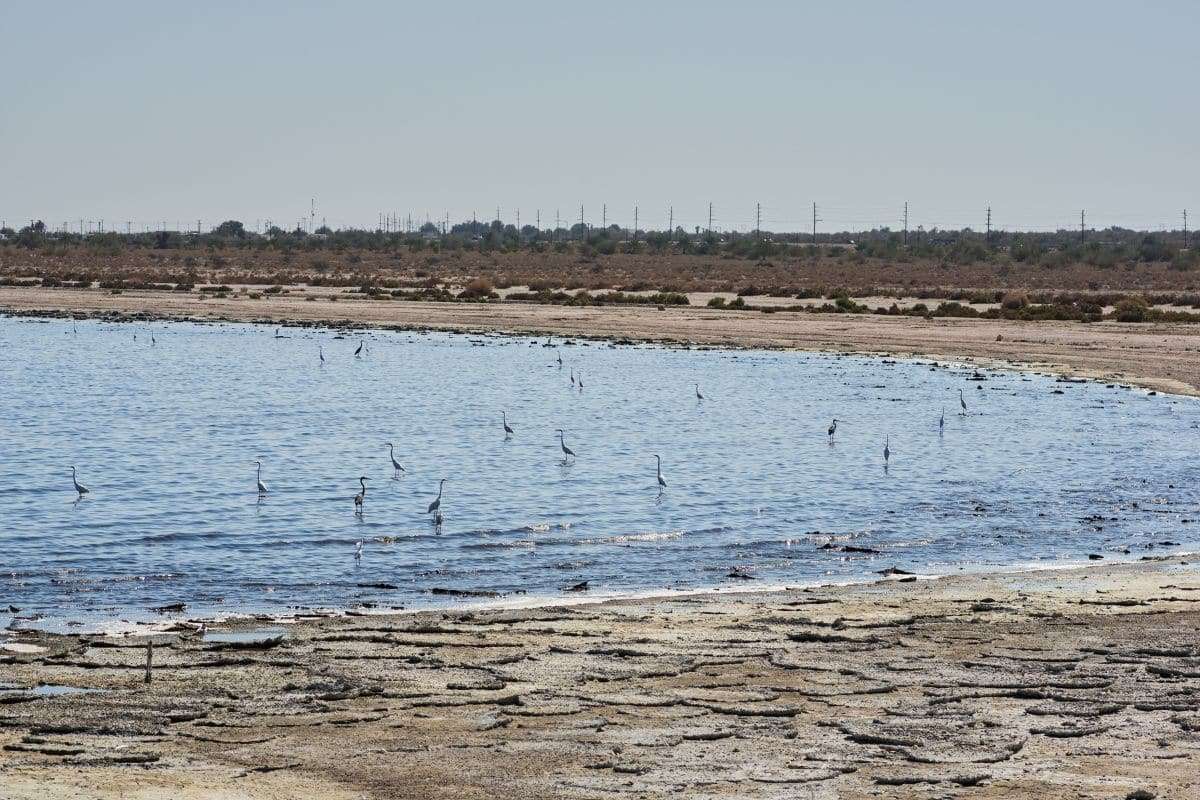
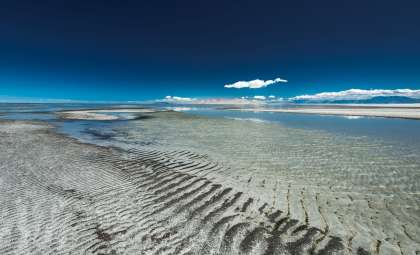
California’s largest lake by surface area, the Salton Sea, is rapidly shrinking. Recent research highlights that shifts in water management policies have sped up this decline, revealing an exposed lakebed that threatens both the environment and public health.
Accelerated Decline of the Salton Sea
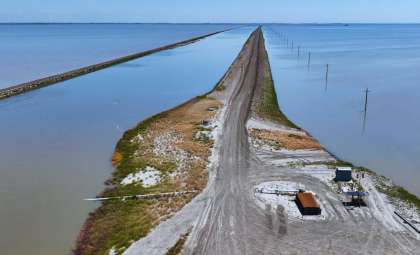
The Salton Sea originated in 1905 due to an engineering mishap that channeled Colorado River water into a natural depression. Historically, agricultural runoff has been the primary water source for the lake.
Yet, recent reallocation of Colorado River water toward urban demands such as San Diego has dramatically curtailed its input, causing the shoreline to retreat more quickly.
The study reports that the North Shore of the Salton Sea could recede by about 150 meters by 2030 and another 172 meters by 2041 if current patterns persist. Shoreline loss accelerated from an average of 12.5 meters per year between 2002 and 2017 to approximately 38.5 meters per year after 2018.

Environmental and Health Implications of Dust Exposure
As the Salton Sea’s lakebed dries, it exposes a dusty landscape filled with toxic residues from years of farming. These sediments release fine particles known as PM10, which disperse through the air and pose significant health dangers.
Residents in neighboring Imperial and Riverside counties have reported increasing cases of asthma and other respiratory illnesses. The dust carries remnants of fertilizers, pesticides, and heavy metals that exacerbate breathing problems, particularly affecting vulnerable groups like children and seniors.
If no action is taken, pollution is expected to worsen as the lake continues to shrink, making health risks more severe.
Innovative Community-Driven Balloon Imaging
To monitor the ongoing changes, investigators at Loma Linda University have adopted balloon mapping, a novel approach that uses helium balloons equipped with cameras to capture expansive aerial images of the receding shoreline.
This technique offers a cost-effective, large-area alternative to drones, which require frequent recharging. Under the guidance of Dr. Ryan Sinclair, the project engaged local youth and community members, fostering a collaborative effort to understand how the lake is changing.
“This research was a direct response to a request from the community, which wanted to be involved in impactful research questions to understand shoreline reduction,” said Dr. Sinclair, ”The community wants to be able to live next to a Salton Sea that they’re proud of.”
Restoration Prospects for the Salton Sea
Authorities like the Salton Sea Authority and various California state agencies are evaluating restoration initiatives, though significant obstacles remain. Some potential solutions being considered include:
- Water diversion: Importing water from the Sea of Cortez or other adjacent water bodies.
- Man-made wetlands: Establishing artificial wetland areas to reduce dust emissions and improve air quality.
- Managing salinity: Extracting excess salts to sustain aquatic life.
These projects demand considerable investment and political commitment. Experts warn that without swift measures, this ecosystem could face a collapse reminiscent of the Aral Sea disaster in Central Asia.
- Categories:
- Climate change











0 comments
Sign in to Comment