
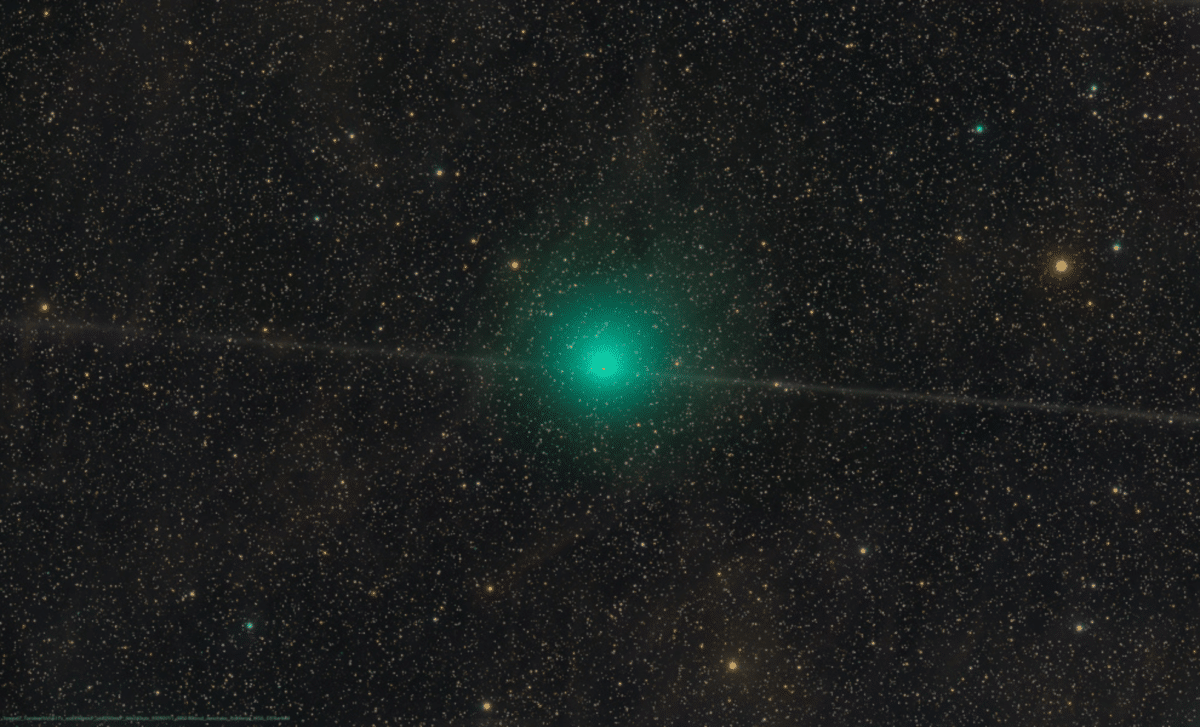
NASA has announced the return of comet 10P/Tempel, a well-known periodic comet traveling once more through the inner regions of our solar system. This event offers both astronomers and stargazers a unique chance to observe a fascinating relic of the solar system as it makes another orbit around the Sun.
Often referred to as Tempel 2, this comet is part of a class of short-period comets that repeatedly pass close to Earth's orbit. Its current passage allows researchers to study a celestial body that has completed numerous solar orbits since its initial discovery in the 19th century.
Unlike the dazzling, bright comets that capture public attention with their long visible tails, 10P/Tempel is a subtler target. Detecting it usually requires telescopes or binoculars and a clear, dark sky. These infrequent viewing opportunities are especially important for scientists tracking how such comets transform with each return near the Sun.

The Storied Past of Comet 10P/Tempel
Initially spotted in 1873 by German astronomer Wilhelm Tempel at the Marseille Observatory in France, comet 10P/Tempel has since been monitored through many revolutions around the Sun.
This comet follows a shorter orbital period compared to the lengthy journeys of many long-period comets that can take thousands of years to return. Its frequent visits provide scientists with valuable data to track changes caused by repeated exposure to solar radiation, helping to understand the evolution of icy comet nuclei over time.
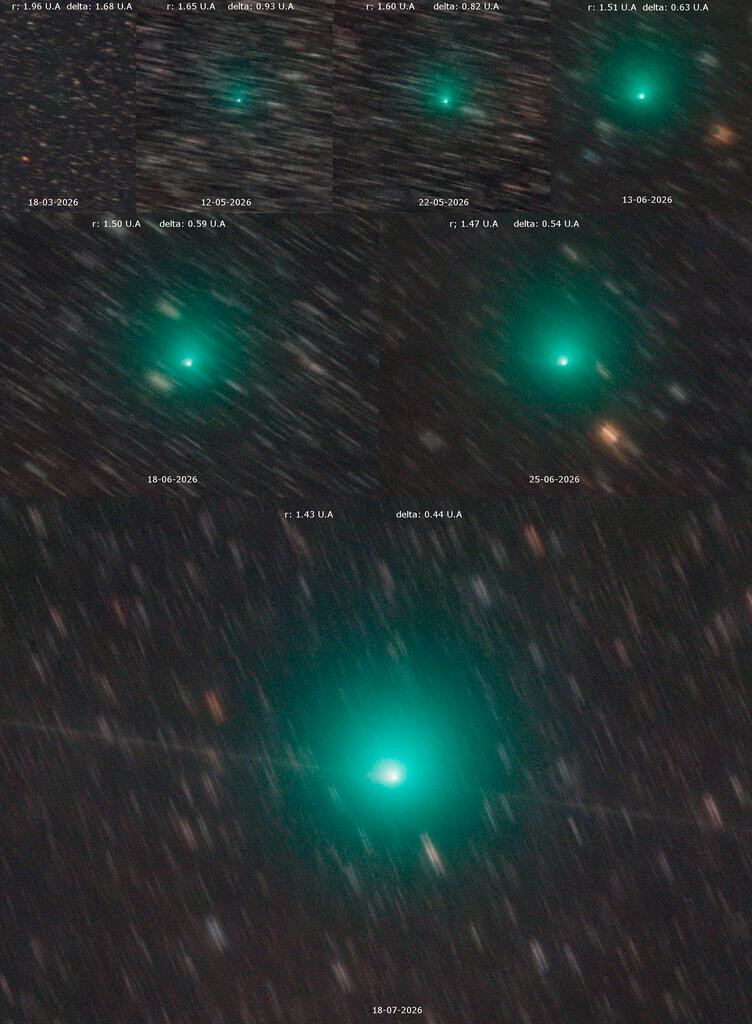
As 10P/Tempel approaches the Sun, subsurface frozen materials sublime into gas, forming the glowing coma and faint tail typical of active comets. Over successive orbits, these processes alter the comet’s surface composition and gradually diminish its volatile content.
Studying periodic comets like 10P/Tempel offers insight into the gradual transformation of small, primordial objects originating from the early solar system.
NASA Observes the Comet’s Latest Passage
NASA emphasizes the importance of monitoring returning comets, as each observation yields crucial information regarding their physical traits and behavior. Agencies and observatories globally track such objects because they contain preserved remnants from the solar system’s earliest epoch.
NASA’s past comet studies—some involving spacecraft visits—have led to detailed knowledge about comet nuclei and their activity patterns. Though 10P/Tempel has yet to be targeted by a spacecraft, ongoing ground-based observations contribute significantly to the broader cometary science field.
This monitoring effort enables scientists to track fluctuations in brightness, activity levels, and orbital changes over time, aiding in the development of more accurate models for how comets respond to sunlight and evolve.
Amateur astronomers can access guidance from NASA and astronomy organizations on where to look and when to catch visible comets under the best viewing conditions.
The Optimal Viewing Window for Comet 10P/Tempel in 2026
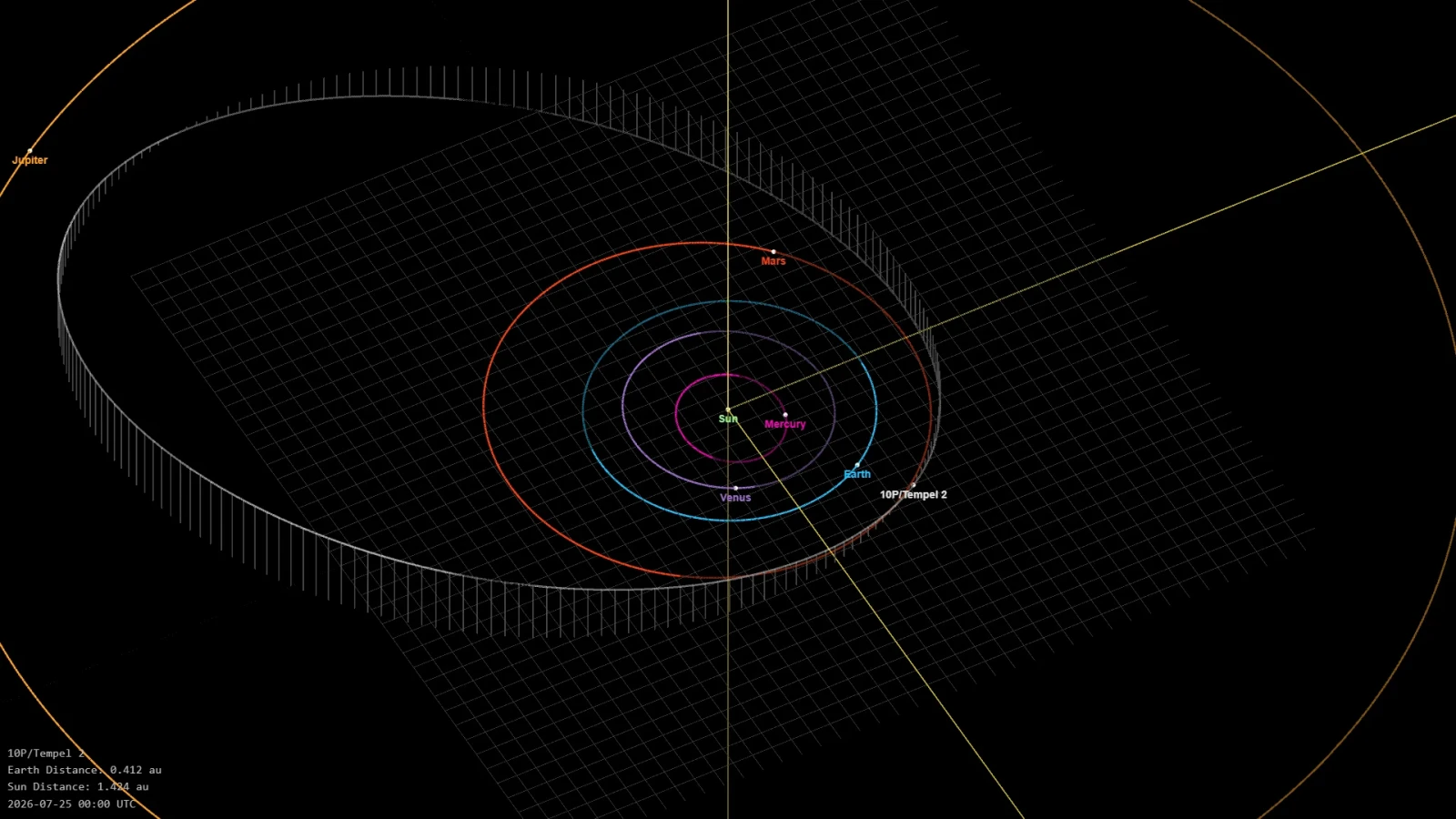
The prime time to observe comet 10P/Tempel will be in late July through early August 2026, coinciding with its closest approach to Earth. On August 3, 2026, the comet is expected to pass approximately 0.414 astronomical units (about 62 million kilometers) away, shortly after reaching its perihelion on August 2, the point in its orbit nearest to the Sun. During this window, 10P/Tempel could brighten to around magnitude +8, making it accessible to observers using binoculars or small telescopes, though it will remain too dim for unaided eyes. It will appear in the pre-dawn sky, tracking through the constellations Capricornus and then Piscis Austrinus. Post-peak, the comet will gradually dim, dropping below magnitude +10 by mid-September 2026. Those intending to track this celestial visitor should plan for late July to early August for the best results.
Significance of 10P/Tempel’s Return for Observers
The reappearance of 10P/Tempel serves as a vivid reminder of our dynamic solar system, where countless small objects orbit predictably, yet often unnoticed. Although it won’t dazzle as a bright naked-eye spectacle, this comet presents an enriching viewing opportunity for enthusiasts passionate about planetary science.
Locating the comet demands preparation and patience, including access to detailed star charts, observing during correct times, and choosing dark skies away from light pollution. With adequate optical aids, viewers can witness the faint object slowly moving against the starry backdrop.
For seasoned skywatchers, observing this periodic comet offers a connection to the historical astronomical records, linking modern observations to those made more than a century ago as the comet continues its journey through space.
- Categories:
- News










0 comments
Sign in to Comment