
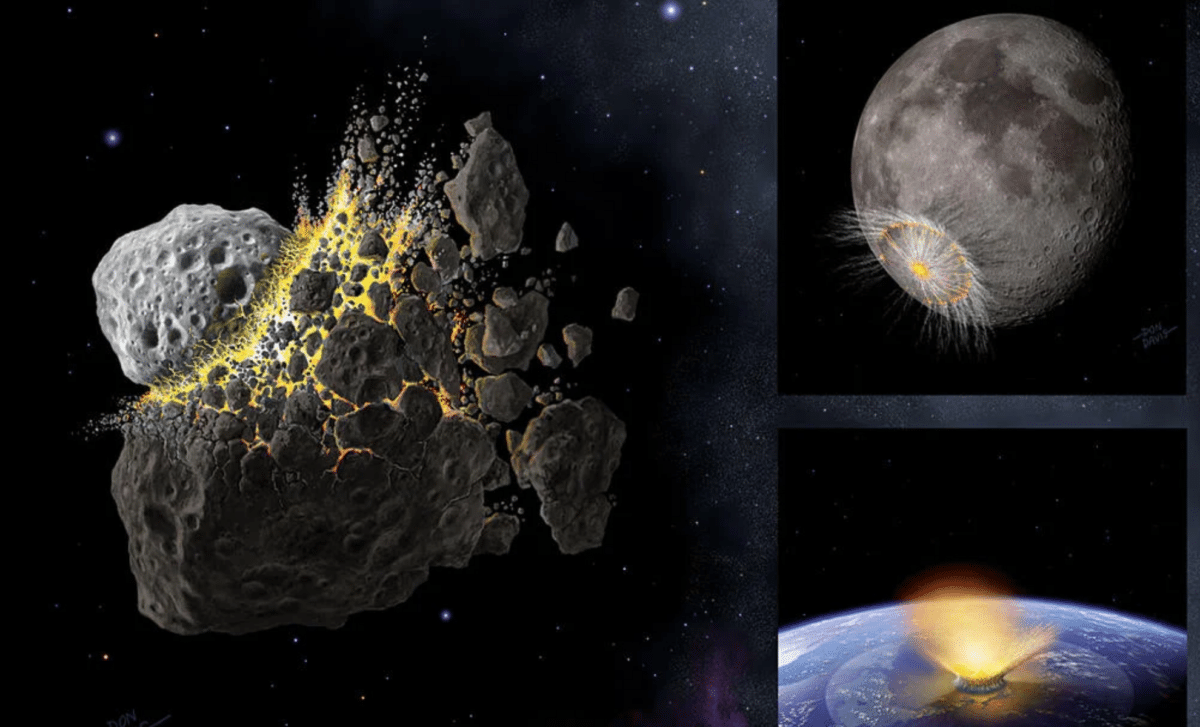
Researchers propose that a significant asteroid collision in the main asteroid belt sparked a prolonged phase of impacts on Earth, the Moon, and Mars around 800 million years ago. This event, linked to fragments from the Eulalia asteroid family, might explain an increase in ancient lunar craters and potentially influenced key transformations on terrestrial planets in the inner solar system.
Hidden Clues on the Lunar Surface Uncover an Ancient Asteroid Surge
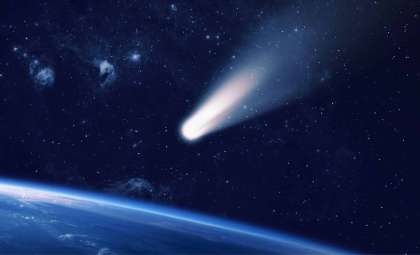
This study investigates a timeframe when the inner solar system possibly experienced a notable spike in asteroid collisions. The cause is thought to be the breakup of a primitive asteroid within the main belt, generating fragments that migrated into orbits crossing those of inner planets.
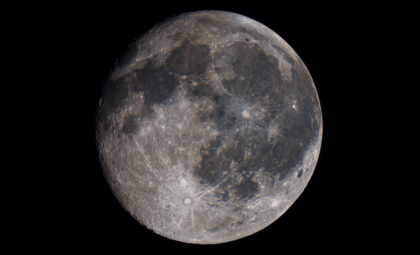
Lunar evidence is crucial because the Moon’s surface retains impact records much longer than Earth’s ever-changing environment. Without oceans, plate tectonics, or atmospheric erosion, impact craters remain preserved for billions of years, enabling scientists to explore events erased from Earth’s geological layers.

Previous research identified increased impact frequency about 800 million years ago by studying lunar crater counts and impact glass samples gathered during the Apollo missions. These glassy materials formed when asteroid impacts melted lunar rock, preserving timing details of collisions.
The current analysis connects these lunar findings to a specific asteroid cluster. Using collision and orbital simulations, researchers traced how debris from the Eulalia family might have entered the inner solar system.
“The role impacts have played in shaping the origin and evolution of life in our solar system is poorly understood,” said Dr. William Bottke, an executive director in SwRI’s Solar System Science and Exploration Division in Boulder, Colorado. He also directs the Center for Lunar Origin and Evolution (CLOE), SwRI’s team in NASA’s Solar System Exploration Research Virtual Institute, and is lead author of a paper describing this research. “The heavily cratered surface of the Moon serves as a reminder of the large impacts in Earth’s past, but so far, only the Chicxulub impact event 66 million years ago has been strongly linked to a specific effect on life, namely the mass extinction of the dinosaurs.”
Jupiter’s Gravitational Influence Guided Debris Toward the Inner Planets
The location of the original asteroid break was crucial to the event’s extent. The parent body was situated near the powerful 3:1 mean motion resonance with Jupiter, a region where Jupiter’s gravity can destabilize asteroid orbits.
Following the breakup, many fragments were quickly pushed into this gravitational resonance, which acted like a conveyor belt funneling debris inward toward Mercury, Venus, Earth, the Moon, and Mars.
“Our cosmic forensics team used collisional and dynamical models to link these to the formation of the Eulalia asteroid family, when a primitive carbonaceous chondrite-like object collided with another object,” Bottke said. “The location of the parent asteroid was key — it broke up on the brink of the gravitational 3:1 mean motion resonance with Jupiter.”
The influx of fragments wasn’t a sudden occurrence but spanned millions of years. Models indicate that about half the material entered resonance quickly, while the rest migrated gradually due to the Yarkovsky effect.
This effect stems from asteroids absorbing sunlight and emitting heat unevenly, producing a subtle but steady push that modifies their paths over extended timeframes, eventually steering them onto collision courses with planets.
“These rare events, triggered by large, well-positioned collisions in the main asteroid belt, bombard all inner solar system worlds,” Bottke said. “So, evidence preserved on the Moon’s static surface can be used to infer what happened on Earth and Mars in ancient times.”
Earth Likely Endured a More Intense Impact Phase
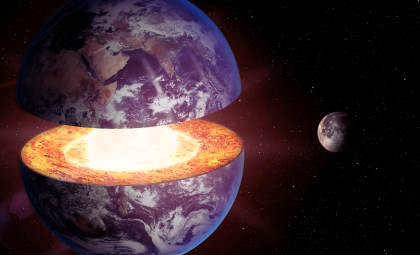
While the Moon’s surface offers the clearest record, Earth probably sustained a much higher number of impacts during this episode. Because of its larger size and stronger gravity, the planet collects about twenty times more large impactors than the Moon.
Most traces of these collisions on Earth have vanished over time due to continual geological activity: volcanism creates new surfaces, tectonics recycles crust, and erosion wears away old evidence.
The timing of this bombardment coincides with a phase of global cooling and significant biosphere changes on Earth. Although the study does not establish a direct connection, the overlap suggests that further exploration into the links between impacts and environmental shifts is warranted.
This discovery opens new avenues to examine how extraterrestrial events influenced planetary development. By integrating lunar data and asteroid behavior models, scientists can piece together ancient solar system episodes that Earth’s record alone cannot reveal.
Impact Events Possibly Shaped Mars and Inner Planet Evolution
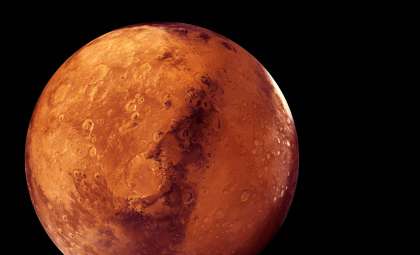
The asteroid debris might have also affected Mars, potentially causing profound geological repercussions. Unlike Earth, Mars preserves many old surface features due to the absence of active plate tectonics.
Researchers hypothesize that the impact period may correspond with eruptions of volcanic activity and enhanced seismic events on Mars, providing further insights into how asteroid collisions influenced rocky planet histories.
“Given that the peak of this barrage coincides with a period of widespread cooling and major shifts in our biosphere, it is tempting to suggest that the former produced the latter,” Bottke said. “On Mars, these impacts would have triggered substantial episodes of seismic shaking and can be linked in time with a surge in volcanic activity. Together, this showcases how certain catastrophic collisions in the main belt could have had far-reaching consequences for the history of the terrestrial planets.”
Published in The Planetary Science Journal , these findings emphasize how asteroid collisions are interconnected events that affect multiple worlds. A single breakup can disperse material across the solar system, leaving enduring marks on the Moon even when terrestrial evidence has faded.
Future investigations combining lunar analysis, asteroid tracking, and planetary simulations may determine whether this ancient spike in collisions was exceptional or part of a recurring solar system pattern influencing planetary evolution.
- Categories:
- News

0 comments
Sign in to Comment