
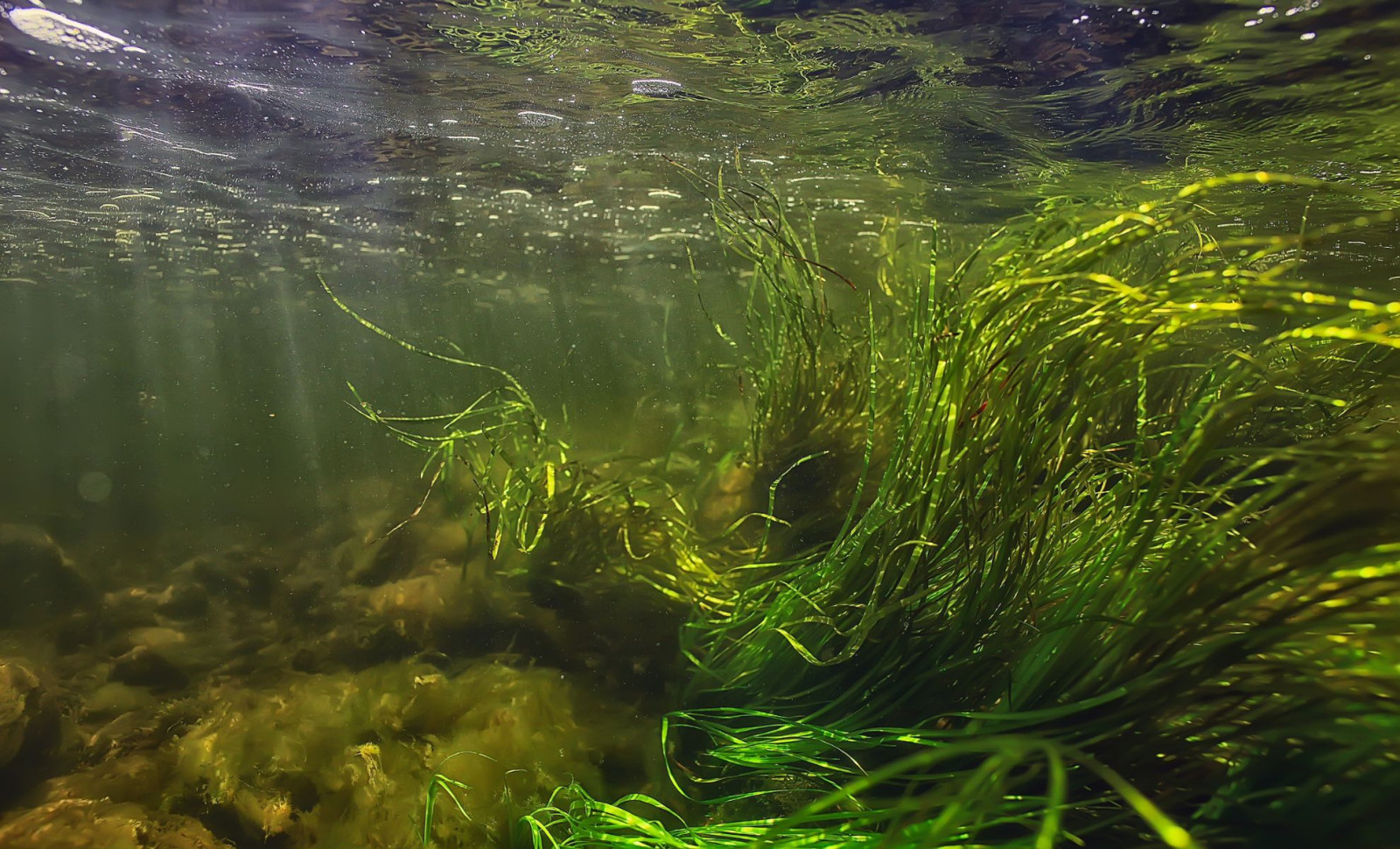
An extraordinary sight is emerging once again in the swift, shadowy currents of Sweden’s Göta River: a prehistoric giant fish, often called a “living relic.” After being absent for over 100 years, this enormous ancient species has quietly returned to these waters.
This revival is the result of a carefully coordinated scientific initiative aimed at reintroducing a species that vanished from the river early in the 1900s.
For millennia, this fish thrived in rivers across Northern Europe but vanished due to overharvesting, pollution, and modifications to rivers. Conservationists and scientists are now working together to restore its presence by releasing young Atlantic sturgeons into the Göta River.

An Ancient Colossus That Has Remained Mostly Unchanged
The species making its return is the Atlantic sturgeon, a fish with a lineage stretching far back into prehistoric times. Discover Wildlife reports that this species has been around for at least 70 million years, while its sturgeon relatives may date as far back as 200 million years ago, living alongside dinosaurs.
Sturgeons are often dubbed “living fossils” because their physical form has changed little over eons. Their bodies are shielded by rows of tough, bony plates called scutes instead of scales, acting as natural armor. Additionally, they possess barbels, which are whisker-like sensors that assist them in finding food along the river bottom.
They are impressive in size and longevity, capable of reaching lengths of over four meters, weighing more than 350 kilograms, and living beyond 90 years, as detailed by Discover Wildlife. Their reproduction is notably slow: males usually begin spawning at 8 to 12 years old, whereas females may wait until they are around 20 years old.
A Museum Find Verifying the River’s History
Before starting the sturgeon reintroduction, scientists needed definitive proof the species had historically reproduced in the Göta River. Until then, only fishermen's tales hinted at their past presence.
The breakthrough came in 2016 when researchers at the Gothenburg Museum of Natural History uncovered three juvenile Atlantic sturgeons preserved in the museum archives. These specimens were caught in the Göta River in the mid-19th century.
“As they were juveniles – and juvenile sturgeon are unable to survive in saltwater – this proved that the fish hatched in the river. It was the breakthrough we were looking for,” explained biologist Dan Calderon, who came up with the idea of reintroducing Atlantic sturgeon to the Göta River in 2014.
Sturgeons Making Their Way Back
The restoration project began steadily, with an initial release of 100 juvenile sturgeons about ten months old into the Göta River in 2024. Each fish measured roughly 60 centimeters and weighed about 700 grams.
The following year, efforts intensified with another release of 140 young sturgeons plus approximately 2,000 newly hatched fry into the river.
“Moving forwards, it’s important we release fish every year, because a lot of them – especially the smaller ones – will be eaten by predators,” said Linnéa Jägrud, a freshwater expert at Sportfiskarna, the Swedish Anglers Association.
Several of the released fish carry acoustic tags, which enable scientists to monitor their journeys throughout the river. Because Atlantic sturgeons take many years to mature, rebuilding a sustainable population is a gradual process.
“We’re striking a balance by releasing larger and smaller fish at the same time. The smaller fish are more vulnerable, but those that do survive will probably have a stronger instinct to return and spawn here. Given the time it takes for Atlantic sturgeon to reach breeding age, it might be 14 or 15 years before we reach that point,” she added.
- Categories:
- News








0 comments
Sign in to Comment