
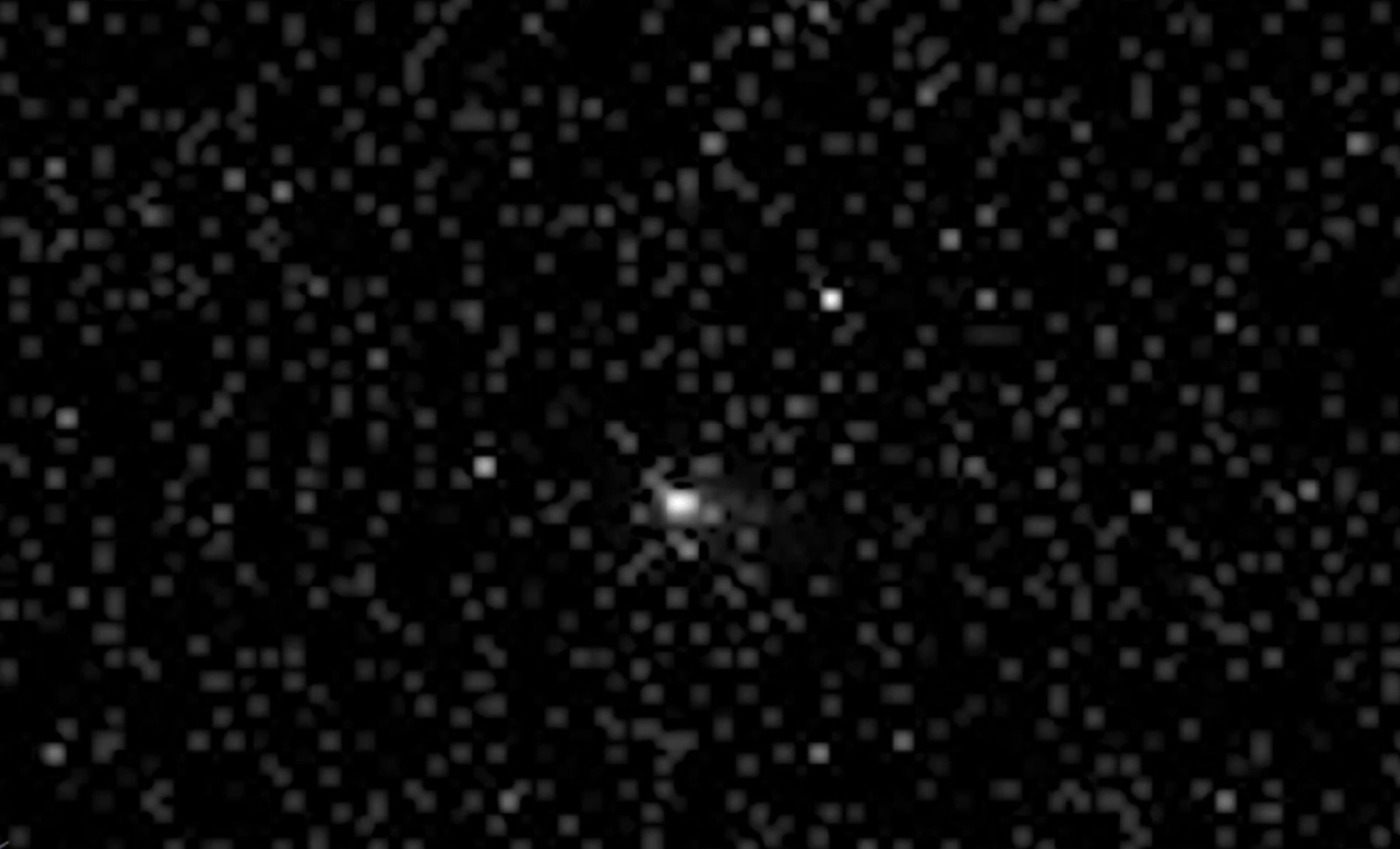
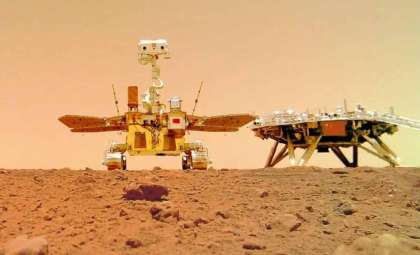
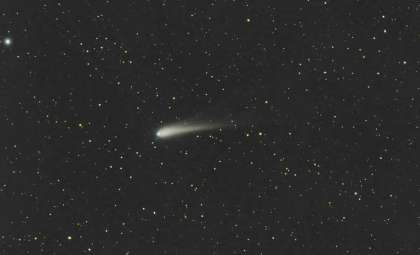
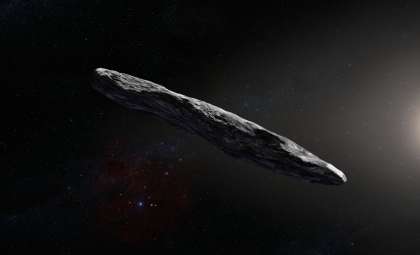
The Tianwen-1 Mars orbiter from China has successfully captured striking images of the interstellar comet 3I/ATLAS as it travels across the Martian sky. Initially spotted in July 2023, this comet is only the third recognized interstellar visitor identified by researchers, joining the ranks of ʻOumuamua and 2I/Borisov.
Although Tianwen-1 was designed with Mars observation in mind, the images it has provided bring new understanding of 3I/ATLAS, a cosmic traveler believed to have journeyed through space for billions of years before entering our Solar System. This unexpected achievement underscores the adaptability of the spacecraft’s cameras in capturing a faint and distant object.
A Glimpse into 3I/ATLAS: A Spacefaring Relic
The first sighting of 3I/ATLAS occurred on July 1, 2023, through the Asteroid Terrestrial-impact Last Alert System (ATLAS). Moving at an impressive speed of about 58 kilometers per second (36 miles per second), this comet quickly drew attention as astronomers confirmed its nature. Because of its interstellar origin, 3I/ATLAS offers a rare chance to study material from outside our own stellar neighborhood, likely originating from a distant star system.

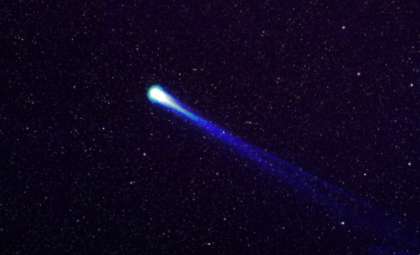
What sets 3I/ATLAS apart are its peculiar chemical makeup and behaviors. Researchers have observed an unique anti-tail phenomenon—caused by solar wind interactions that differ from usual cometary tails. Furthermore, its surface chemistry varies distinctly from known Solar System comets, sparking curiosity about its formation and odyssey through the galaxy.
Tianwen-1 Outperforms Expectations with Comet Imagery
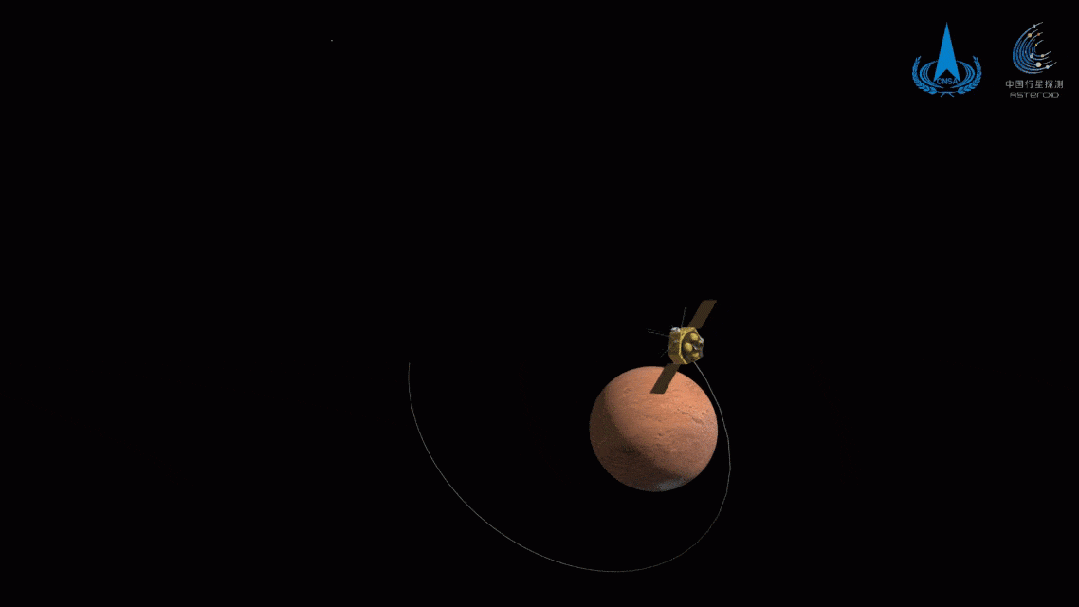
Tianwen-1, orbiting Mars since February 2021, was not originally tasked with observing faint interstellar entities like 3I/ATLAS. The China National Space Administration (CNSA) explains that the orbiter’s advanced cameras were tailored for detailed Martian surface imaging. Through precise calculations and innovative adjustments, mission engineers recalibrated the instruments to focus on this elusive comet.
The endeavor was challenging because 3I/ATLAS is estimated to be 10,000 to 100,000 times fainter than typical features on Mars’ surface. Yet, by optimizing imaging techniques and orbital trajectories, the team succeeded in obtaining crisp images that reveal the comet’s nucleus—the solid icy-rock core—and its glowing coma, created by sublimation as the comet nears the Sun.
Probing the Mysteries of an Interstellar Visitor
Tianwen-1’s observations are part of a global effort to deepen our knowledge of interstellar objects and their interactions within the Solar System. Particular interest lies in how solar wind alters these visitors and affects their evolution.
Earth-based observatories alongside space platforms such as the European Space Agency’s Mars Express and ExoMars Trace Gas Orbiter are continuing to track the comet. These coordinated efforts will help scientists piece together how interstellar objects behave and change under the influence of our Sun’s forces. Despite its brief journey through our cosmic environment, 3I/ATLAS is proving to be a priceless subject for astronomical research.
- Categories:
- Space






0 comments
Sign in to Comment