
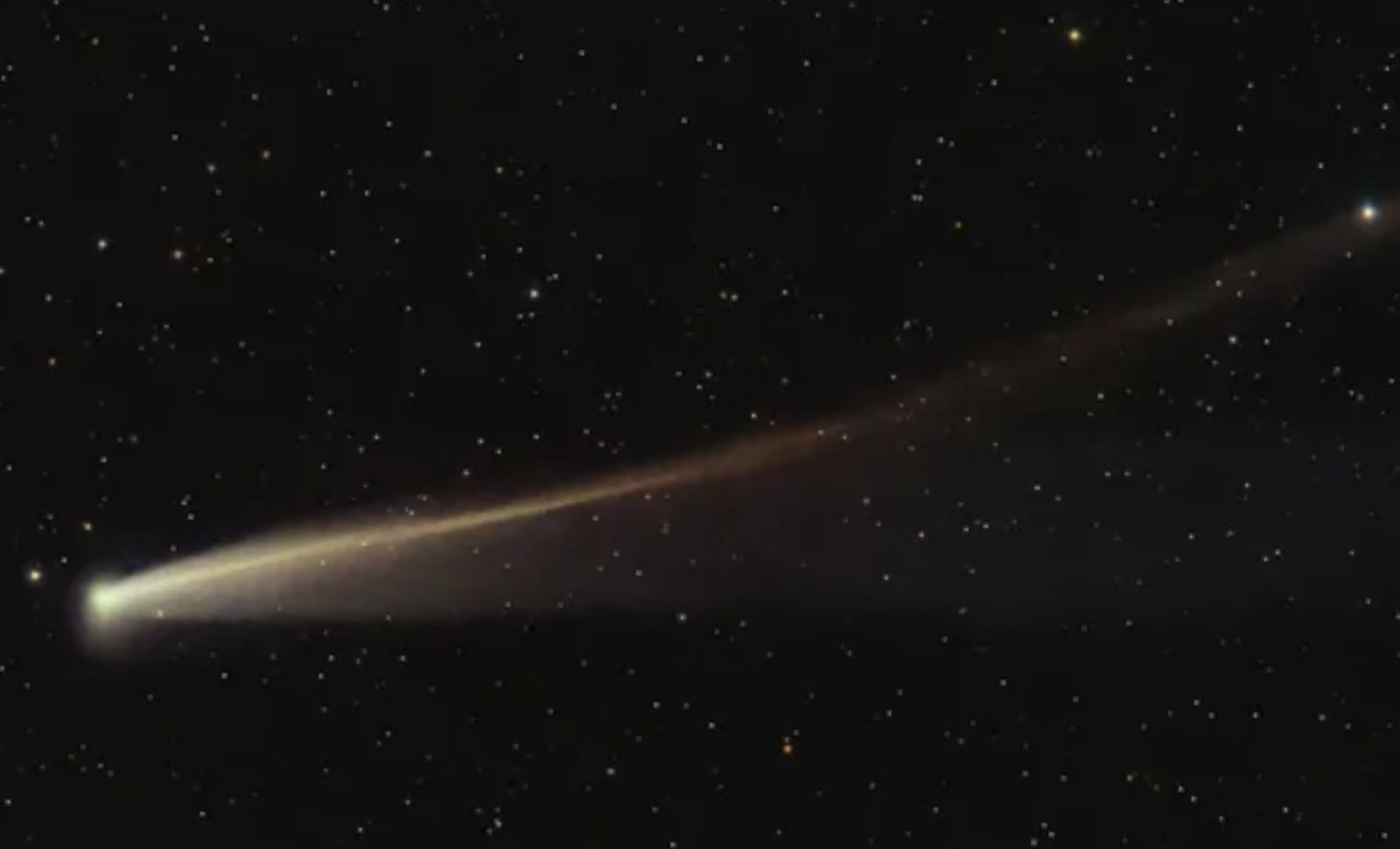
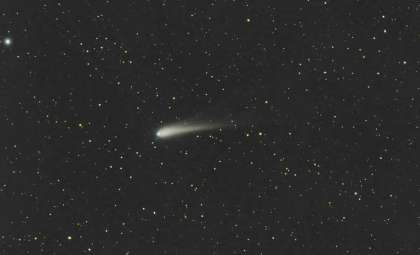
First discovered in July 2025, comet 3I/ATLAS stands out as the third known interstellar visitor passing through our cosmic neighborhood. With its hyperbolic orbit—indicating it’s a fleeting passerby that won't return—this comet has already captivated astronomers and enthusiasts alike.
Although it poses no threat to Earth, 3I/ATLAS presents a rare chance for scientists to explore an object originating beyond our solar system. As it journeys around the Sun later this year, NASA’s suite of observatories and space probes will continue monitoring its path, aiming to unravel the comet’s mysterious properties and origins.
A Cosmic Traveler’s Mysterious Background
Comet 3I/ATLAS is unlike typical comets orbiting our Sun. Notably, its hyperbolic trajectory reveals it is not gravitationally tethered to our star, confirming it as an interstellar visitor likely ejected from its home star system millions or even billions of years ago, drifting through the vastness of space.

The discovery was made by NASA’s ATLAS telescope in Chile, with initial sightings reported to the Minor Planet Center on July 1, 2025. Subsequent analysis of archival telescope data worldwide helped reconstruct its past journey.
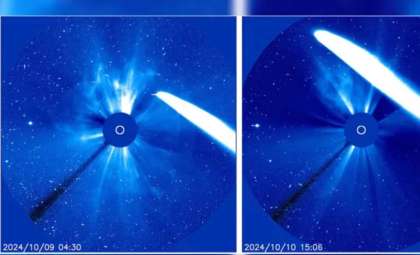
NASA’s Advanced Observatories Investigate the Comet
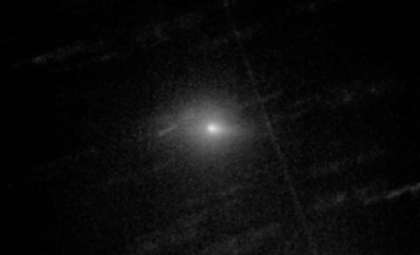
NASA is deploying its top-tier instruments to analyze 3I/ATLAS. The comet is currently under observation by the Hubble Space Telescope and the James Webb Space Telescope. These powerful tools examine everything from the comet’s frozen core to its surrounding dust and gas envelope, known as the coma. Hubble’s recent data indicates the nucleus may span anywhere between 440 meters and 5.6 kilometers, though precise measurements remain challenging.
Additional NASA missions, including the Perseverance rover on Mars and the Mars Reconnaissance Orbiter, are also contributing observational data as the comet nears the Sun. These spacecraft will continue collecting detailed information, revealing insights into the comet’s structure, velocity, and response to solar heating.
A Wonder to Watch, Not a Danger
Despite the excitement surrounding 3I/ATLAS, there is no cause for alarm. The comet will not approach Earth closely. NASA confirms its nearest point to Earth will be approximately 270 million kilometers, safely outside Mars’ orbit. Its closest approach is expected on December 19, 2025, at roughly 170 million kilometers. Following this, it will pass near Jupiter in March 2026 before continuing onward into interstellar space.
Notably, Anna Paulina Luna, an American congresswoman, has formally requested that NASA release additional images and data gathered from various missions. Her October 2025 letter highlights the scientific community’s eagerness to access this valuable information. Researchers anticipate these findings will deepen understanding of comet formation, behavior, and what they reveal about other star systems.
.@SeanDuffyWI can you please see letter below. We would like to see images of 3IATLAS. pic.twitter.com/dBL9An9YjP
— Rep. Anna Paulina Luna (@RepLuna) November 3, 2025
- Categories:
- Space






0 comments
Sign in to Comment