
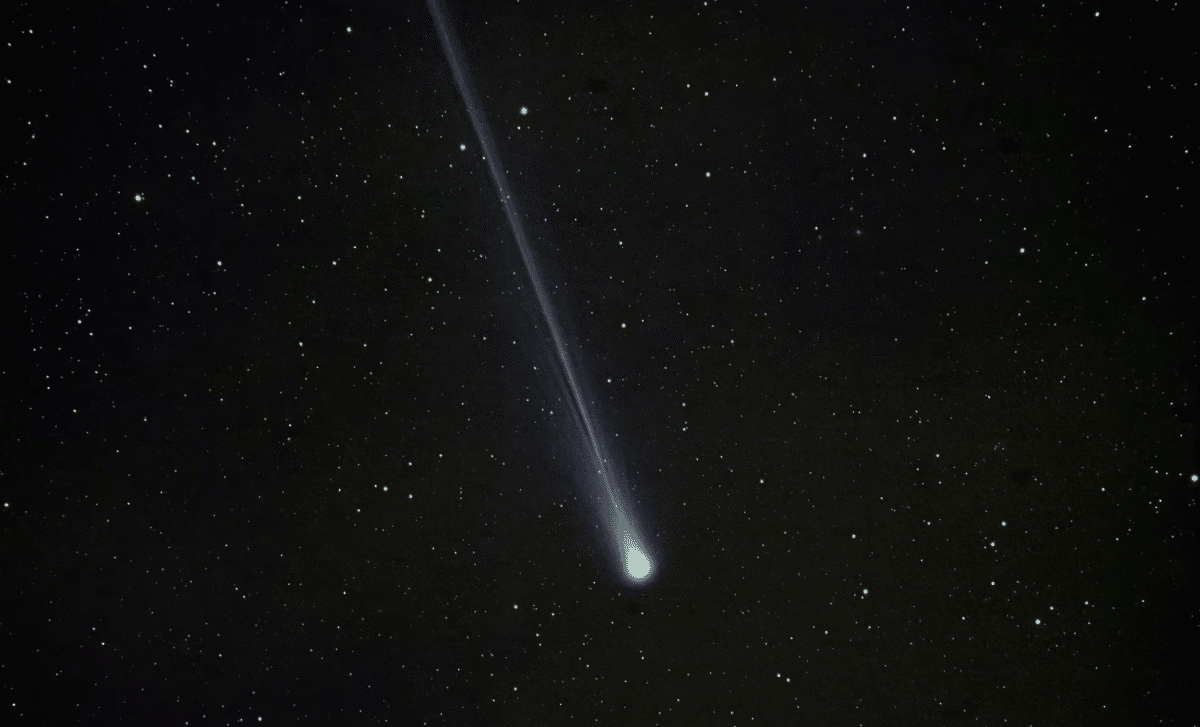
A rapidly brightening celestial visitor, Comet C/2025 R3 (PanSTARRS), is making a remarkable journey through the inner solar system, coming closest to Earth on April 26, as revealed by NASA data. Having just braved a severe solar encounter, this comet is now observable in real-time space imagery, offering a rare chance to witness its path between the Sun and Earth.
An Icy Survivor of Solar Fury
The voyage of Comet PanSTARRS has been nothing short of dramatic. It passed perihelion—its nearest point to the Sun—on April 19, withstanding intense heat and solar radiation that typically disintegrate fragile comets. Remarkably, it remained intact and even brightened, moving outward through the solar system.
At approximately 45 million miles from Earth during its closest approach, the comet poses no danger but has captured attention due to its increased brightness and durability. According to NASA, it has brightened to about magnitude +4.5, visible to the naked eye under dark southern skies, with binoculars revealing intricate details of its glowing coma.

Observed Through Solar Telescopes
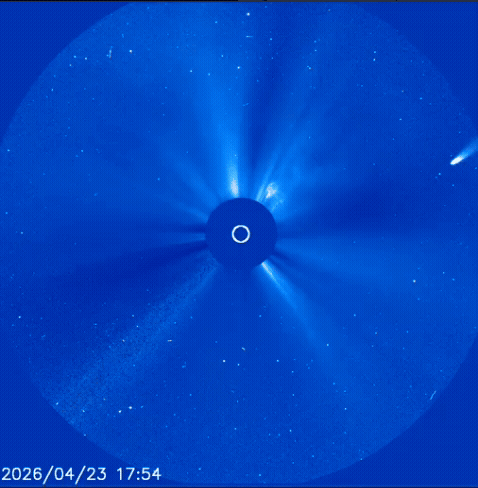
This event stands out because the comet can be tracked using space-based solar observatories. It has entered the viewing field of the LASCO coronagraph on the SOHO spacecraft, a collaborative NASA and ESA mission positioned at the L1 Lagrange Point, approximately 930,000 miles from Earth.
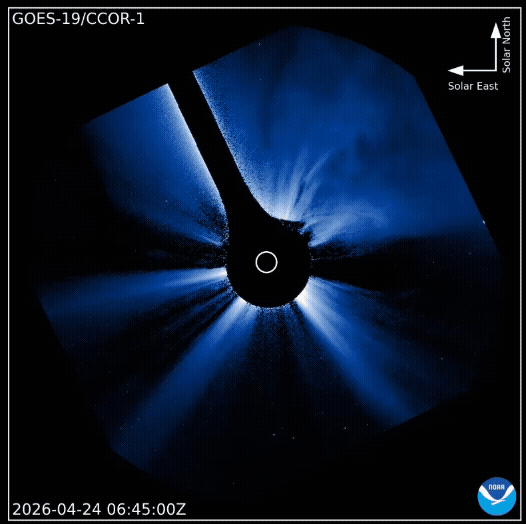
This device blocks out the Sun's overwhelming brightness, enabling faint nearby objects like comets to be seen. In this instance, PanSTARRS appears as a streak of light moving across a vast field that spans 32 solar diameters. Supplementary images from NOAA’s GOES-19 satellite further capture the comet’s arc as it traverses space.
This unique outlook allows continuous tracking of the comet against solar phenomena, an observation method that ground-based telescopes cannot achieve.
An Active Solar Environment
The comet’s timing coincides with heightened solar activity. In recent days, the Sun has emitted several intense X-class solar flares, the most powerful type of solar explosions. These eruptions caused radio disruptions on Earth and released large clouds of charged particles known as coronal mass ejections.
Amid this energetic environment, PanSTARRS glides silently, providing a striking contrast in spacecraft footage between the comet’s steady progress and the Sun’s volatile outbursts, merging two distinct cosmic events in one view.
Tracking the Comet Today
Those interested in watching Comet PanSTARRS can access live data from public sources. Images from the SOHO LASCO instrument are regularly updated, while the NOAA Space Weather Prediction Center offers additional satellite observations.
Viewers will see the comet move from the upper-right to lower areas of the frame in a smooth path over the upcoming days. This steady motion makes the comet distinguishable from the flickering solar flares nearby.
Observers in the southern hemisphere may also spot the comet as a faint, diffuse glow in the night sky. Although subtle to the unaided eye, its visibility improves considerably through binoculars or small telescopes.
A Brief Encounter with a Solar System Relic
Comets such as C/2025 R3 (PanSTARRS) originate from the far reaches of the solar system, preserving materials from its earliest era. Each solar approach triggers outgassing, producing the luminous tails for which comets are known.
This visitor will soon dim as it moves away from both the Earth and the Sun. Its short visibility period combined with the unique vantage of solar space observatories creates a remarkable opportunity for both scientific study and public viewing.
For several days, this ancient object from the solar system's distant past is traversing the gaze of humanity’s most sophisticated solar observers, offering anyone the chance to witness this cosmic passage.
- Categories:
- News










0 comments
Sign in to Comment