
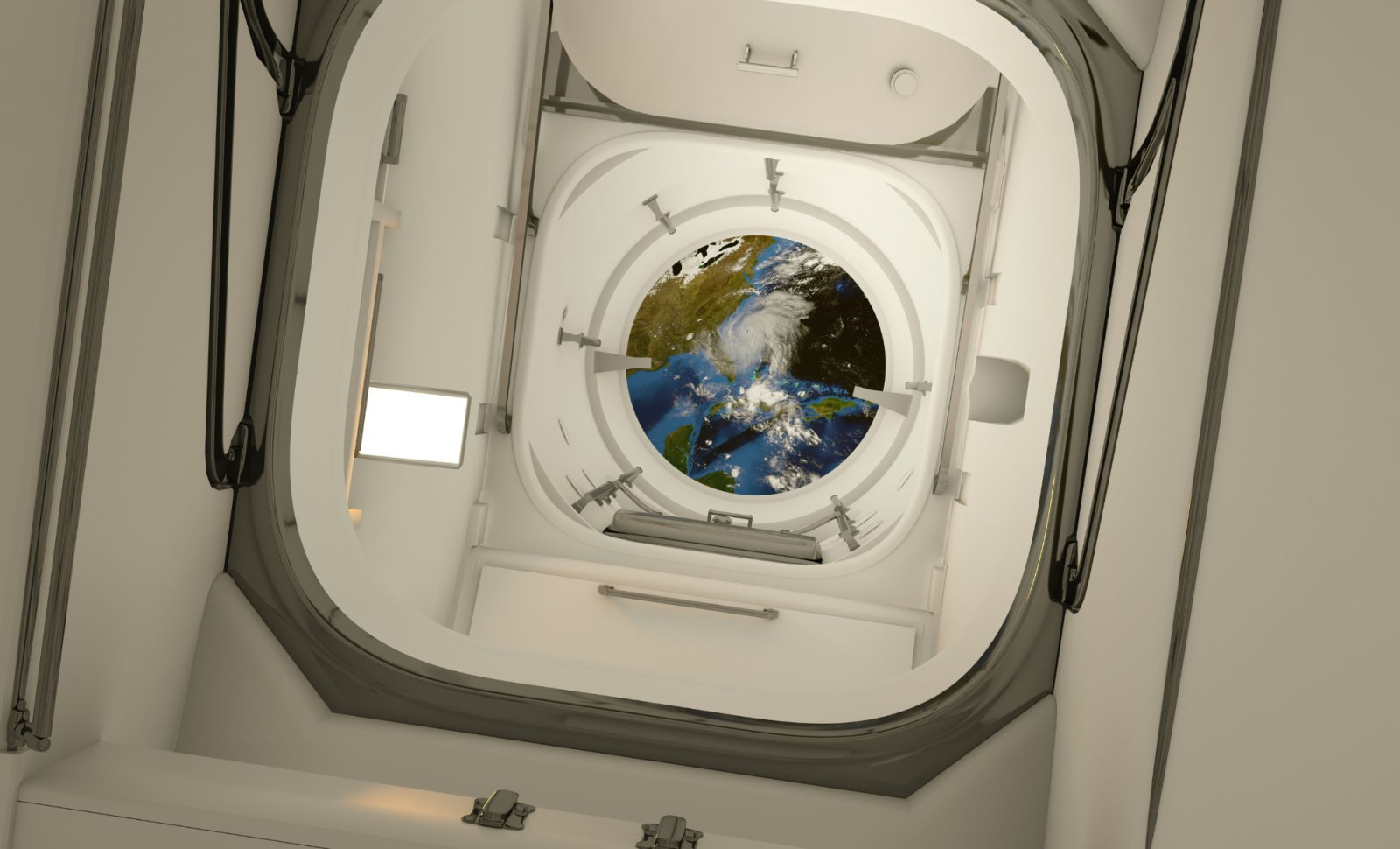
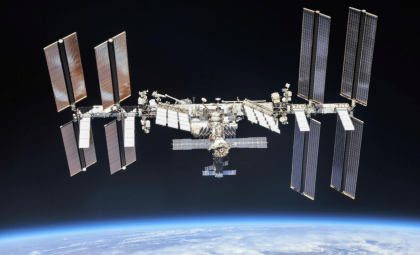
The International Space Station (ISS) might appear spotless, yet its surfaces harbor a diverse array of bacteria, fungi, and chemical residues deposited by the astronauts onboard. A recent investigation has generated the inaugural three-dimensional map detailing the distribution of these unseen microbial communities throughout the orbiting outpost.
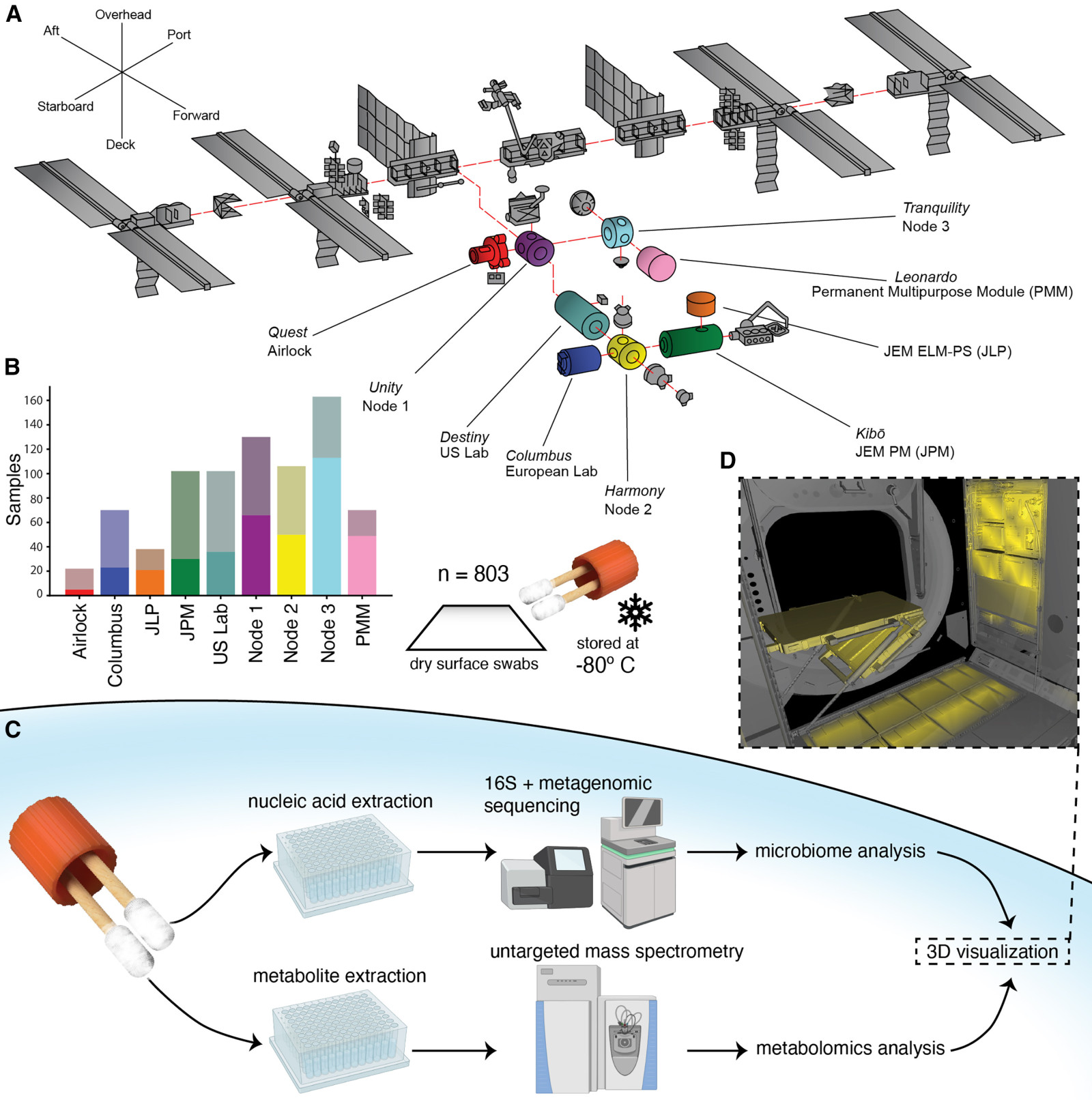
Utilizing samples gathered from 803 locations spanning nine ISS modules, the study demonstrates that in microgravity, microorganisms do not disperse randomly. Rather, they establish unique patterns tied to routine human influences, similar to patterns observed in terrestrial living environments.
For many years, researchers have understood that human occupants transport their microbes wherever they travel. Space missions are no exception, with astronauts carrying billions of microbial cells on their skin and within their bodies, inevitably seeding the station’s internal ecosystem.

To uncover insights into this concealed biosphere, a team from the University of California, San Diego and NASA’s Jet Propulsion Laboratory (JPL) examined hundreds of swab samples collected over time as part of an ongoing microbiological assessment of the ISS.
Everyday Human Activities Leave Molecular Footprints on the Station
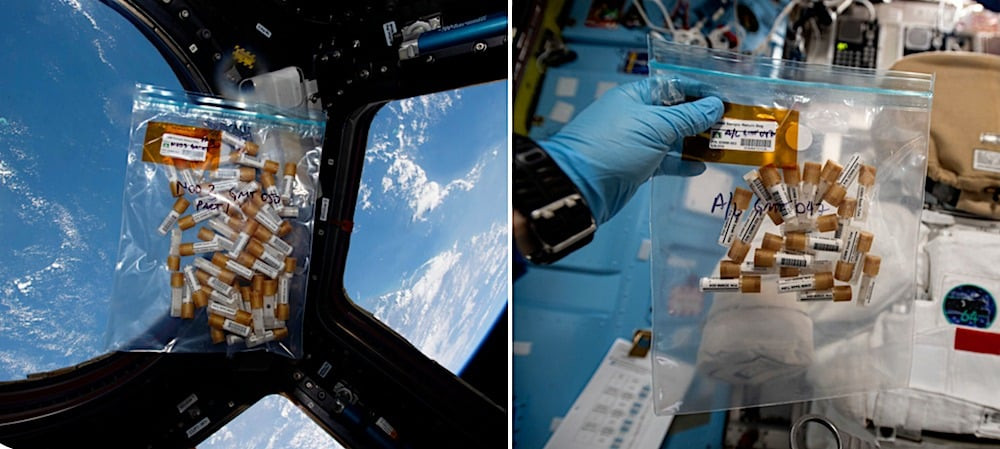
Swabs were taken from various parts of the ISS, including walls, handrails, work surfaces, toilets, and air circulation panels. These samples were then analyzed on Earth using untargeted mass spectrometry, enabling detection of thousands of molecular compounds simultaneously.
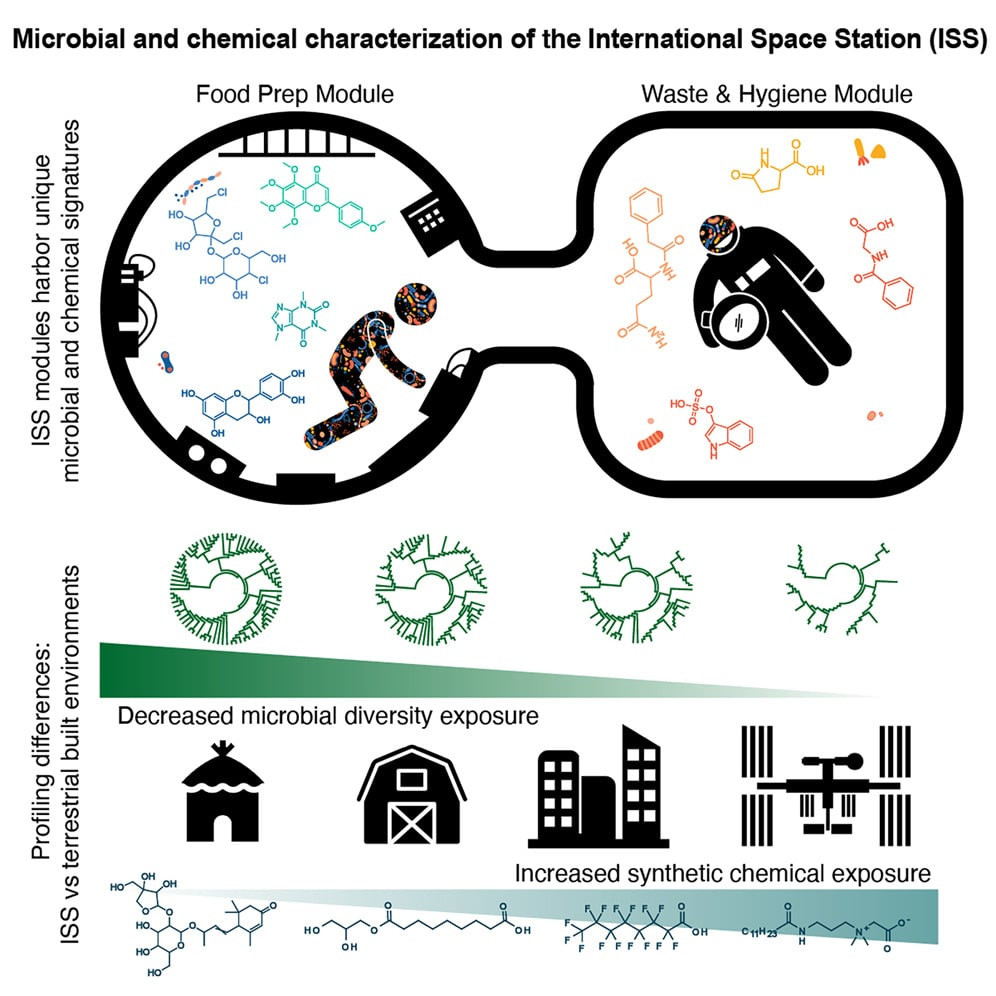
As reported in the study featured in Cell, the findings revealed clear associations between certain areas and their characteristic chemical markers. For example, the galley showed compounds indicative of food and beverages, while restroom zones exhibited substances connected to human metabolic processes.
Postdoctoral researcher Nina Zhao from UC San Diego emphasized a remarkable observation: despite weightlessness, certain molecules and microbes remained localized.
“Basically, things stay on the surface,” said Zhao. “We were still able to see the impact of human activity on the surface chemistry of the space station, even under the zero gravity conditions.”
The analysis also determined that astronauts serve as the principal source of microbial presence inside the station. Approximately 80 percent of microbes originate from human skin.
Common Pathogens Persist and Adapt in Space
The research identified diverse microorganisms, including pathogens listed on the World Health Organization’s ESKAPE list, which are notorious for causing challenging infections in healthcare environments.
Notable among these were Klebsiella pneumoniae and Pseudomonas, bacteria harboring numerous antibiotic resistance genes. Resistance was especially prevalent against beta-lactam antibiotics, extensively used in medical treatments.
A recurring microorganism, Pantoea pearsonii, previously observed aboard the ISS, was again detected in 2022 samples.
“We haven’t been able to clean it up,” Kasthuri Venkateswaran from NASA’s Jet Propulsion Laboratory explained.
Experts suggest that the station’s environment, with constant sanitation efforts, radiation exposure, and closed conditions, applies selective pressure that helps resilient microbes survive and thrive.
Jamie Foster, a space microbiologist at the University of Florida not participating in the study, remarked that the detection of these pathogens was noteworthy.
“I was surprised there were all these ESKAPE pathogens and viruses,” Foster said. “So there has to be a lot of monitoring to make sure good bacteria aren’t going bad.”
A Mystifying Chemical Discovery Remains Unresolved
The investigation also uncovered numerous chemical compounds that remain unidentified. As Foster pointed out, many metabolites from ISS surfaces lack clear categorization. Some were broadly classified as lipids or peptides, yet others showed no match to any known molecular signatures.
“Most of the recovered metabolites were unknown. They just have no idea what they are,” she said.
The researchers emphasize that these findings do not imply that the ISS is unsanitary. Rather, the station is considered highly clean, with a normal amount of microbial life that may be beneficial.
“If it’s too sterile, even minor pathogens become dangerous,” Venkateswaran said. “You need good microbes to balance the bad ones.”
- Categories:
- Science







0 comments
Sign in to Comment