
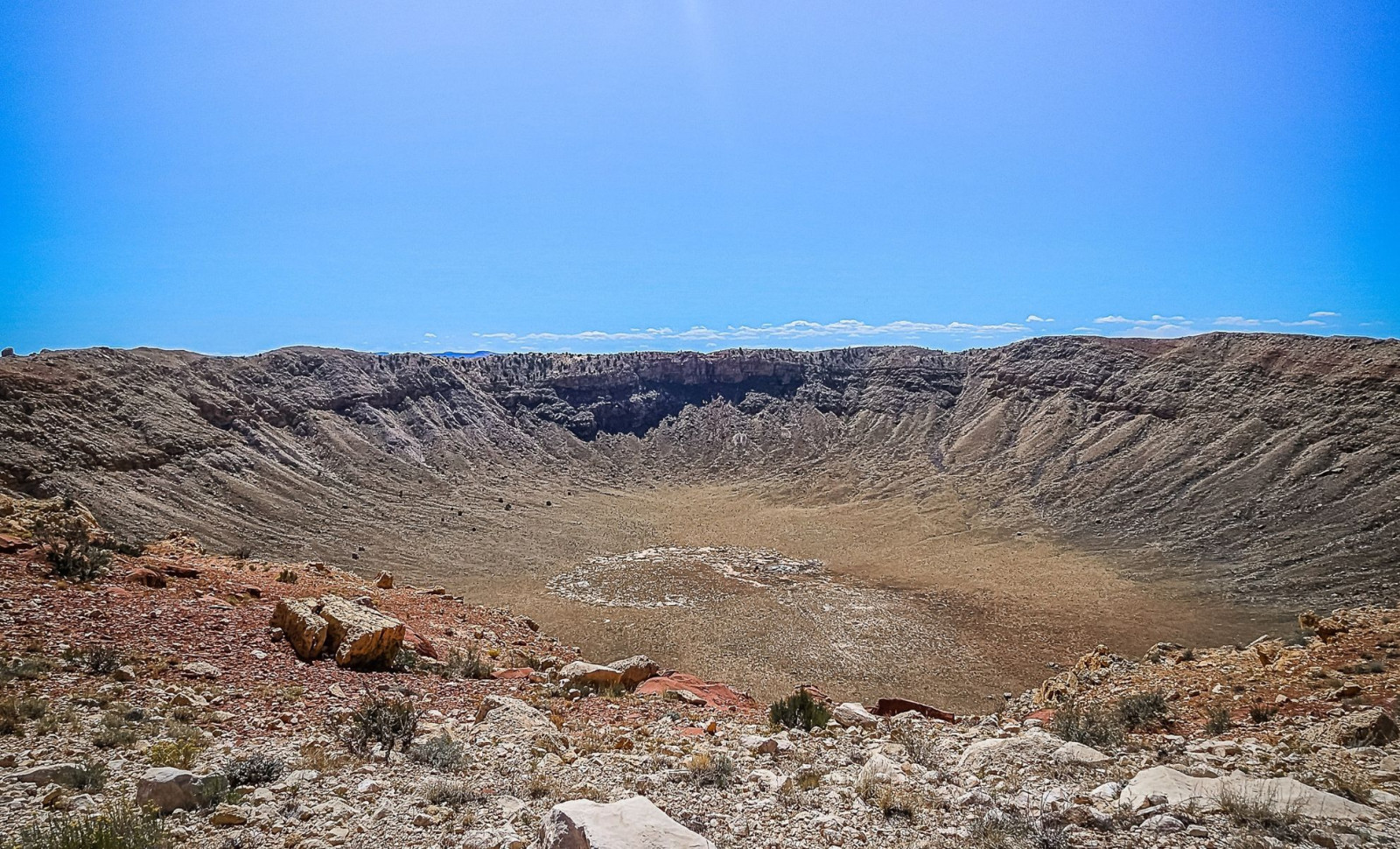
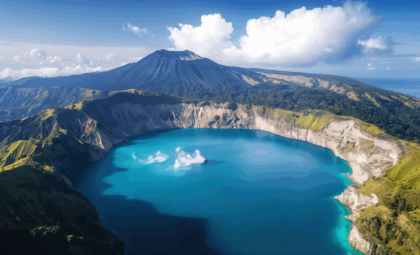
An ancient asteroid crater in South Korea has uncovered evidence of primordial microbial life thriving beneath its surface layers. This discovery supports the idea that heat from the impact generated a hydrothermal lake environment, fostering microbial growth afterward.
The key focus of the study is on stromatolites, which are layered mineral deposits formed by microbial mats and represent some of the earliest records of life on our planet. Researchers determined that these structures developed well after the asteroid impact but within the unique environment established as a result of it.
Scientists have long debated whether asteroid impacts solely cause destruction or if they can also create conditions supportive of life’s emergence or persistence. The site located in the Jeokjung-Chogye Basin near Hapcheon adds important evidence to this discussion. Although visually striking with a bowl-shaped depression, the crater was only recently confirmed as impact-related.

An Unexpected Biological Finding Within an Ancient Crater
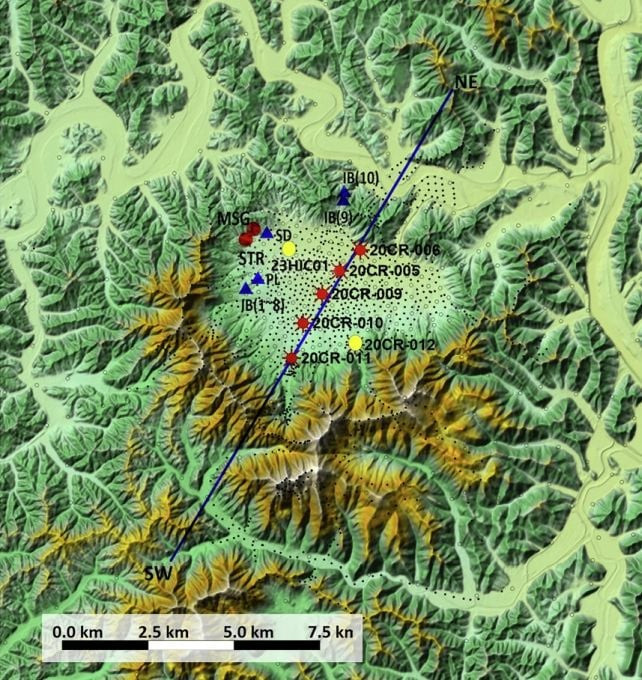
As detailed in the study published in Communications Earth & Environment, this basin was shaped by an asteroid strike dating back roughly 42,000 years. Earlier investigations identified meteoritic fragments mingled with local rocks inside the crater. Additionally, researchers reconstructed the impact’s geometry, discovering that the depression once held a substantial lake.
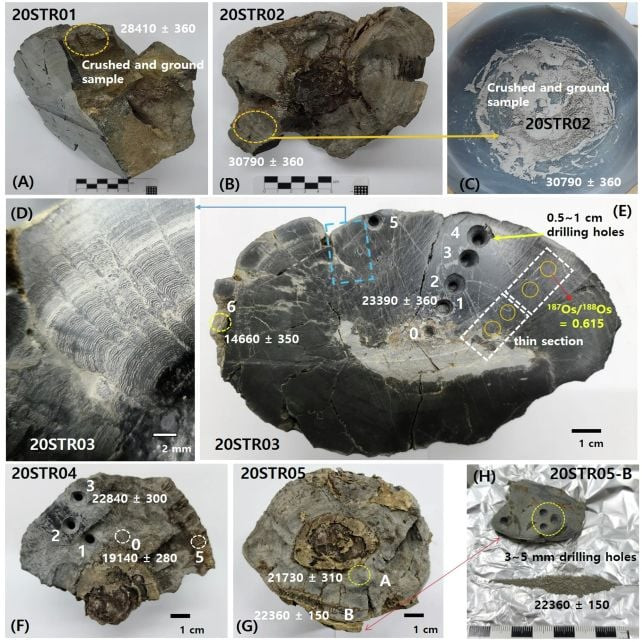
Focused on sediment samples from the crater’s northwest section, the team, led by geologist Jaesoo Lim of the Korea Institute of Geoscience and Mineral Resources (KIGAM), uncovered multiple stromatolites. These layered microbial formations, ranging in size from 10 to 20 centimeters, are well-known indicators of early microbial life.
Stromatolites form gradually as microbial communities trap sediments and minerals. Comparable fossils on Earth date back nearly 3.5 billion years, providing valuable insights into early life. At this site, evidence indicates the stromatolites formed in situ rather than being transported into the crater.
Chemical Clues Reveal Hydrothermal Lake Conditions
The researchers analyzed the mineral composition of the stromatolites and adjacent sediments to uncover the environmental conditions during their formation. One significant clue came from the abundance of europium, which is more soluble in hot hydrothermal fluids and indicates hydrothermal activity.
Elevated concentrations of calcium, calcite, and sulfur were also detected, consistent with microorganisms adapted to warm environments. These findings support the idea that the crater held a hydrothermal impact lake.
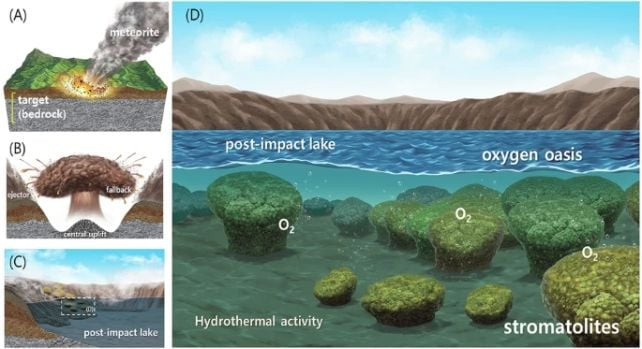
Hydrothermal lakes form when an asteroid impact fractures the Earth’s crust and generates residual heat. Water accumulated in the basin remains warm over long periods as this heat dissipates. Radiocarbon dating of one stromatolite sample showed ages between about 23,400 and 14,600 years ago, indicating that these hydrothermal conditions lasted for tens of thousands of years post-impact.
Advancing Our Understanding of Early Microbial Life
This research ties into larger questions about how microbial life originated and evolved. Stromatolites are prized because they capture microbial activity from ancient periods with limited direct evidence of life.
According to the research, this is the first documented case strongly indicating stromatolites formed in hydrothermal lakes generated by asteroid impacts.
“This is the first comprehensive evidence suggesting that stromatolites could form in hydrothermal lakes created by asteroid impacts,” said Jaesoo Lim. “Such environments may have provided favorable conditions for early microbial ecosystems.”
The study’s authors caution that their findings don’t confirm stromatolites played a direct role in oxygenating Earth’s atmosphere. Their work instead encourages further exploration of other impact craters on Earth and suggests that similar microbial fossils could exist inside impact structures on Mars.
- Categories:
- Science




0 comments
Sign in to Comment