
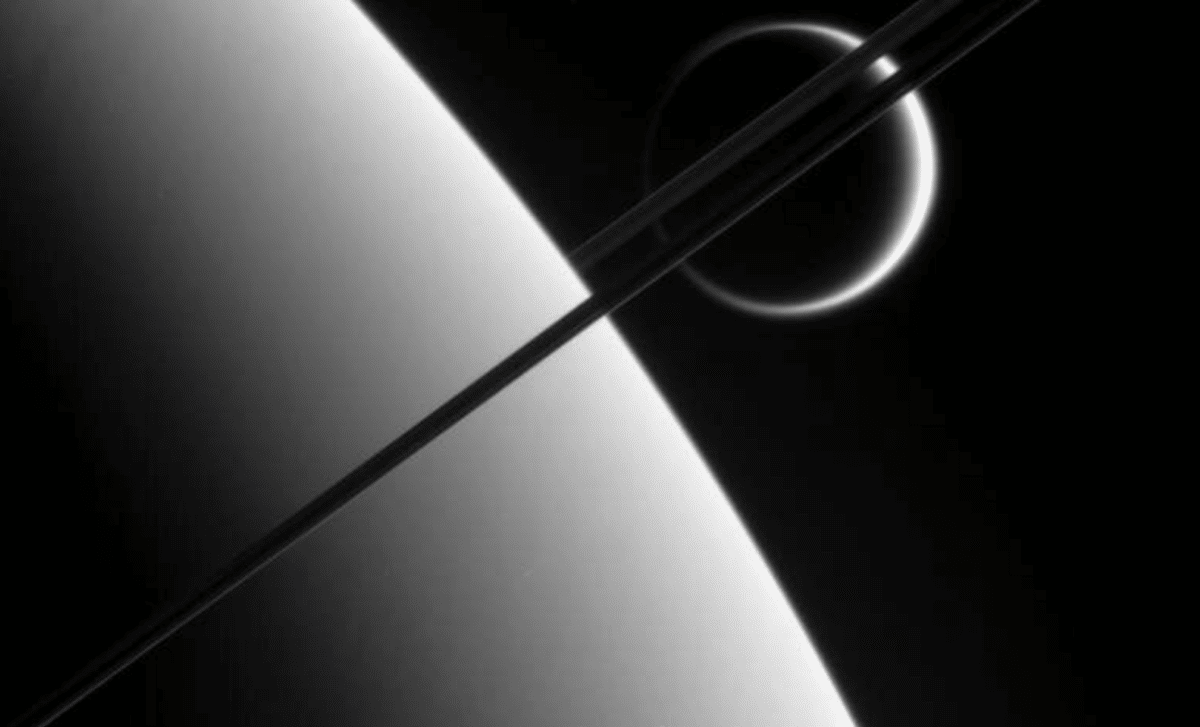
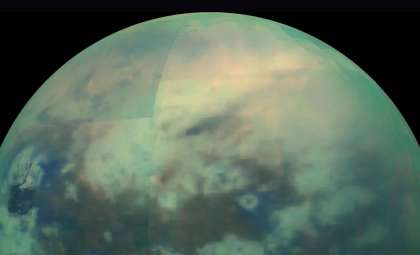
Researchers, led by Matija Ćuk from the SETI Institute, have introduced a captivating theory about the creation of Titan, Saturn's biggest moon. Their findings suggest that Titan might have formed when two primordial moons in Saturn’s orbit collided and combined. Published on the arXiv preprint platform, the research explores the cataclysmic processes behind Titan’s origin and its influence on the arrangement of Saturn’s moons and ring system. Leveraging computer modeling alongside data from NASA’s Cassini spacecraft, the study offers a revised perspective on Titan’s developmental history, attributing its unique traits to dramatic cosmic events.
Decoding the Origins of Titan
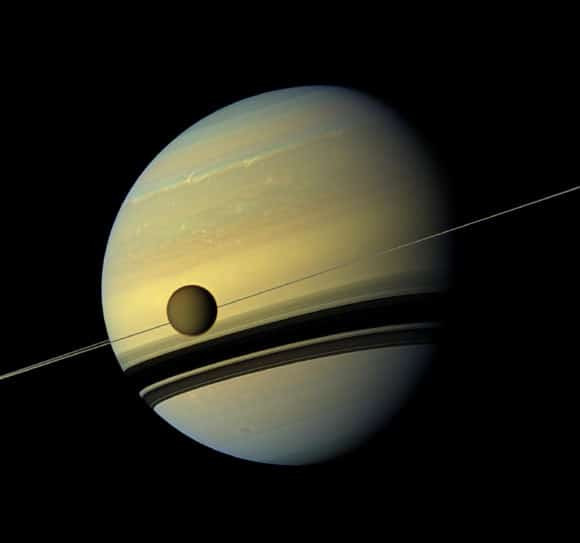
Titan has consistently fascinated scientists due to its thick atmosphere, extensive liquid methane seas, and surface that appears geologically young. Despite extensive research, the moon’s exact formation mechanism has been elusive. The new study, led by Ćuk, proposes a violent origin story in which Titan was born from the union of two earlier moons.
Using advanced simulations, the study suggests Titan’s current form may have emerged following a massive collision between two ancient satellites. Ćuk explains,

“Hyperion, the smallest among Saturn’s major moons provided us the most important clue about the history of the system.”
The modeling indicates that an additional moon in Saturn's orbit could have collided with Titan, creating a destructive event that spawned debris which ultimately coalesced into the Titan we observe today.
Hyperion’s Crucial Role in Titan’s Past
One of the strongest indications supporting this hypothesis involves Saturn’s moon Hyperion. Unlike its counterparts, Hyperion exhibits an irregular shape and erratic tumbling motion, mysteries that have challenged researchers. By conducting simulations, Ćuk’s team uncovered explanations for these peculiarities.
“In simulations where the extra moon became unstable, Hyperion was often lost and survived only in rare cases,” Ćuk explains. “We recognized that the Titan-Hyperion lock is relatively young, only a few hundred million years old. This dates to about the same period when the extra moon disappeared.”
The team’s results imply that Hyperion either did not endure the disturbances caused by this mysterious moon's destruction or was formed from the collision’s residual debris scattered along Titan’s orbit. This evidence suggests that Titan and Hyperion share a tumultuous, interconnected history dating back hundreds of millions of years.
The Link Between Titan’s Formation and Saturn’s Rings
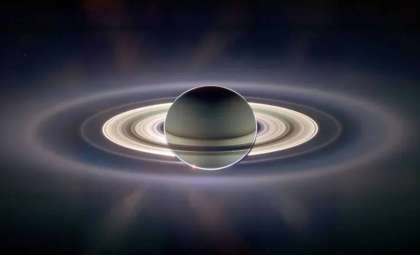
The moon merger theory is intimately connected to the broader story of Saturn’s iconic rings. The research proposes that Saturn’s rings arose from impacts involving medium-sized moons orbiting near the planet. These destructive encounters produced debris that eventually settled into the rings seen today. While earlier explanations credited solar forces with the rings' creation, this new view highlights Titan’s shifting orbit as crucial.
As Titan’s orbit stabilizes and expands, it can disrupt the paths of smaller moons, causing resonances that trigger collisions. This gravitational influence might have ignited the chain of events forming Saturn’s rings, with the debris stemming from these impacts. As detailed in Ćuk’s study on the arXiv preprint, Titan’s moon merger may have been the spark that set these processes in motion.
Broader Impact on Saturn’s Moon System Understanding
This collision-driven model not only redefines Titan’s origin story but also illuminates the complex dynamics among Saturn’s moons. By viewing Titan’s birth as a byproduct of a violent merger, the research challenges standing ideas about the moon’s beginnings and its relationship to neighboring satellites. It also provides plausible explanations for other peculiar features within Saturn’s moons, such as Hyperion’s chaotic rotation and Iapetus’ unusual orbital tilt, potentially influenced by the disruptive past events.
The findings underscore the dynamic and often turbulent environment that shaped Saturn’s moons, revealing how cosmic collisions and gravitational forces forged many of their characteristics over eons. The team hopes their work will encourage further investigations into the intertwined histories and developments of Saturn’s satellite system.
- Categories:
- News




0 comments
Sign in to Comment