
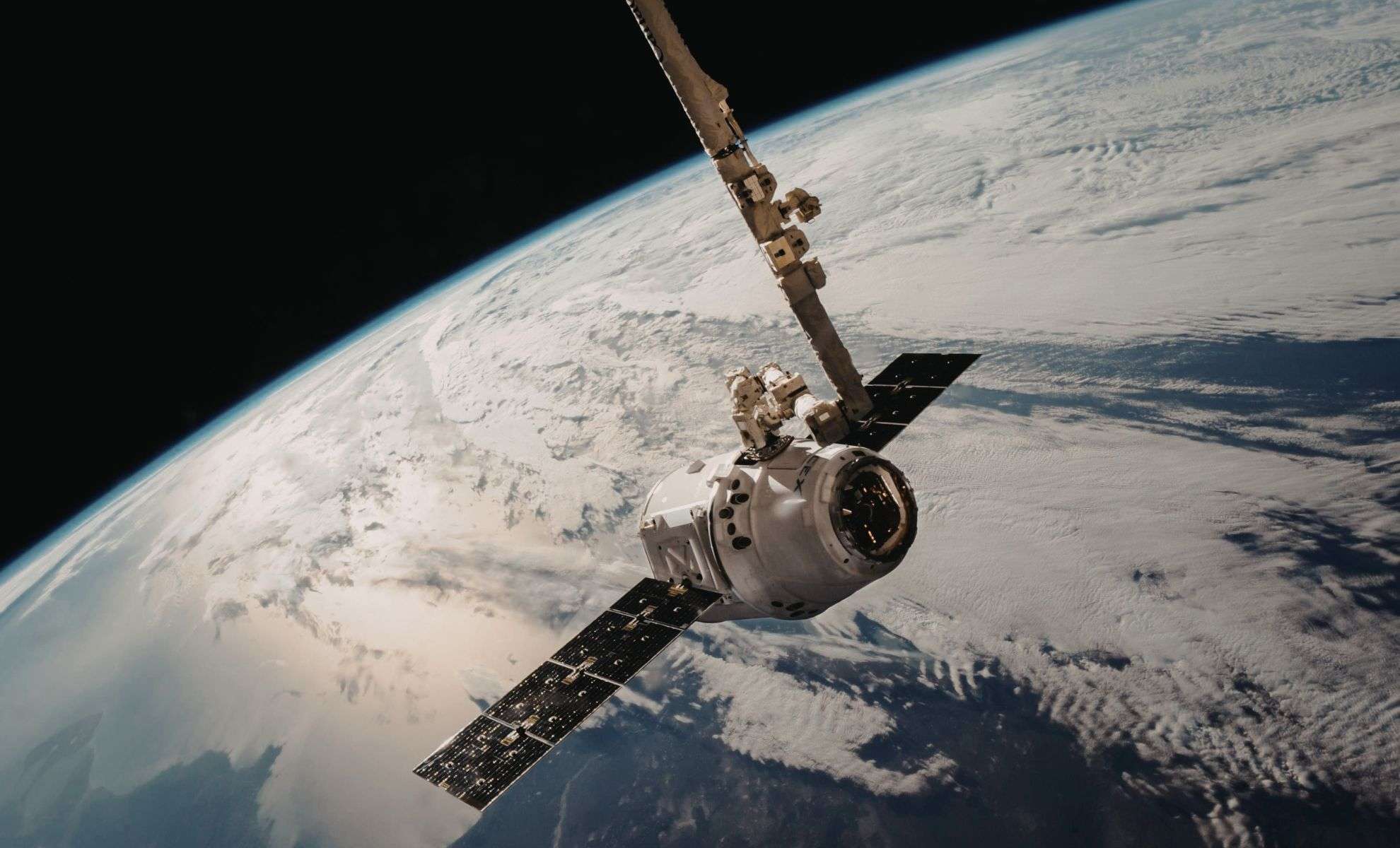
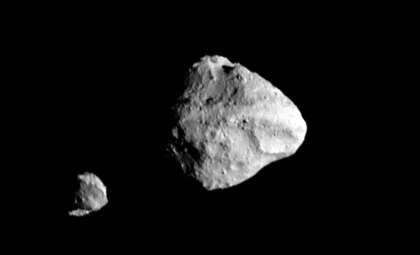
An unusual object recently caught in Earth's gravitational pull might not be a natural satellite. Harvard astrophysicist Avi Loeb suggests this enigmatic body, called 2025 PN7, could actually be relic debris from Soviet space exploration over six decades ago.
Discovered in August 2025, the object was first identified as a rare “mini moon,” a type of temporary satellite sharing Earth’s orbit. However, emerging evidence points to a different background: it may be linked to the USSR’s Zond 1 mission, a spacecraft launched toward Venus in 1964 that lost contact before its target arrival.
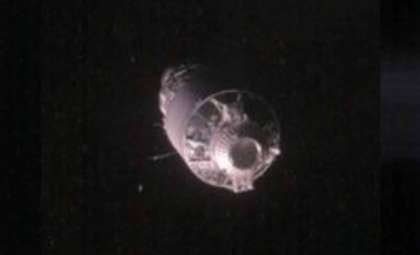
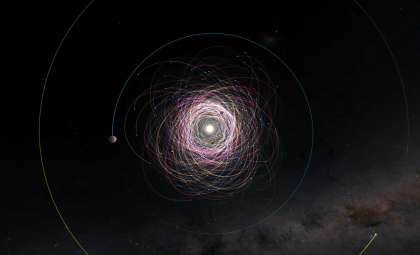
Collaborating with engineer Adam Hibberd from the Initiative for Interstellar Studies, Loeb proposes that 2025 PN7 could be either the original Zond 1 probe or the upper rocket stage that propelled it. This theory, detailed in a recent blog by Loeb, arises from analyzing the object’s orbit against available data on the Soviet mission’s trajectory.

Revisiting the Legacy of Zond 1
Loeb’s orbital analysis indicates that 2025 PN7’s path closely matches what would be expected if Zond 1 had missed Venus and entered into a prolonged heliocentric orbit instead. Launched in April 1964 as part of the Soviet Union’s planetary exploration efforts, Zond 1 was the second Soviet probe aimed at Venus and the first equipped for landing, but it suffered serious communication problems and was declared lost prior to arrival.
Loeb and Hibberd’s reconstruction suggests that rather than completing its Venus mission, the spacecraft might have lingered in an overlooked solar orbit for decades, only to be mistaken for a natural object upon its recent rediscovery.
Avi Loeb emphasized that the object’s orbital details suspiciously align with expectations if the probe failed to execute its final maneuvers.
Confirming the Origin Through Spectral Analysis
To validate their hypothesis, Loeb advocates for a comprehensive spectral study of 2025 PN7. Such measurements would reveal the object's surface composition, confirming whether it is composed of artificial materials or natural rock.
“A measurement of the spectrum… could potentially reveal its surface composition and test whether its origin is technological,” Loeb wrote.
This would not be an unprecedented discovery of human-made artifacts resurfacing after decades in space. In 2020, the Pan-STARRS telescope in Hawaii detected an object called 2020 SO—later identified as the upper stage of a Centaur rocket from NASA’s 1966 Surveyor 2 mission that had been orbiting the Sun unnoticed for over 50 years.
Drawing parallels with these instances, Loeb stresses that space debris from the dawn of planetary exploration continues to reappear unexpectedly, challenging scientists’ assumptions.
The Return of Space Age Launchers
While many experts maintain that 2025 PN7 is most likely a natural quasi-satellite, Loeb’s idea raises intriguing considerations. His attention to overlooked spacecraft remnants near Earth aligns with a growing scientific trend: reexamining our understanding of near-Earth orbital objects.
As reported by Futurism on October 30, 2025, the notion of 2025 PN7 being artificial is a testable scientific theory, not mere speculation. Through targeted observations, researchers could determine if this object is a piece of Cold War-era technology quietly orbiting the Sun for more than fifty years.
With advancements in Earth-based tracking and detection methods, scientists expect to identify an increasing number of unusual objects near our planet. Rediscoveries mistakenly labeled as natural may soon become a regular occurrence.
- Categories:
- Space




0 comments
Sign in to Comment