
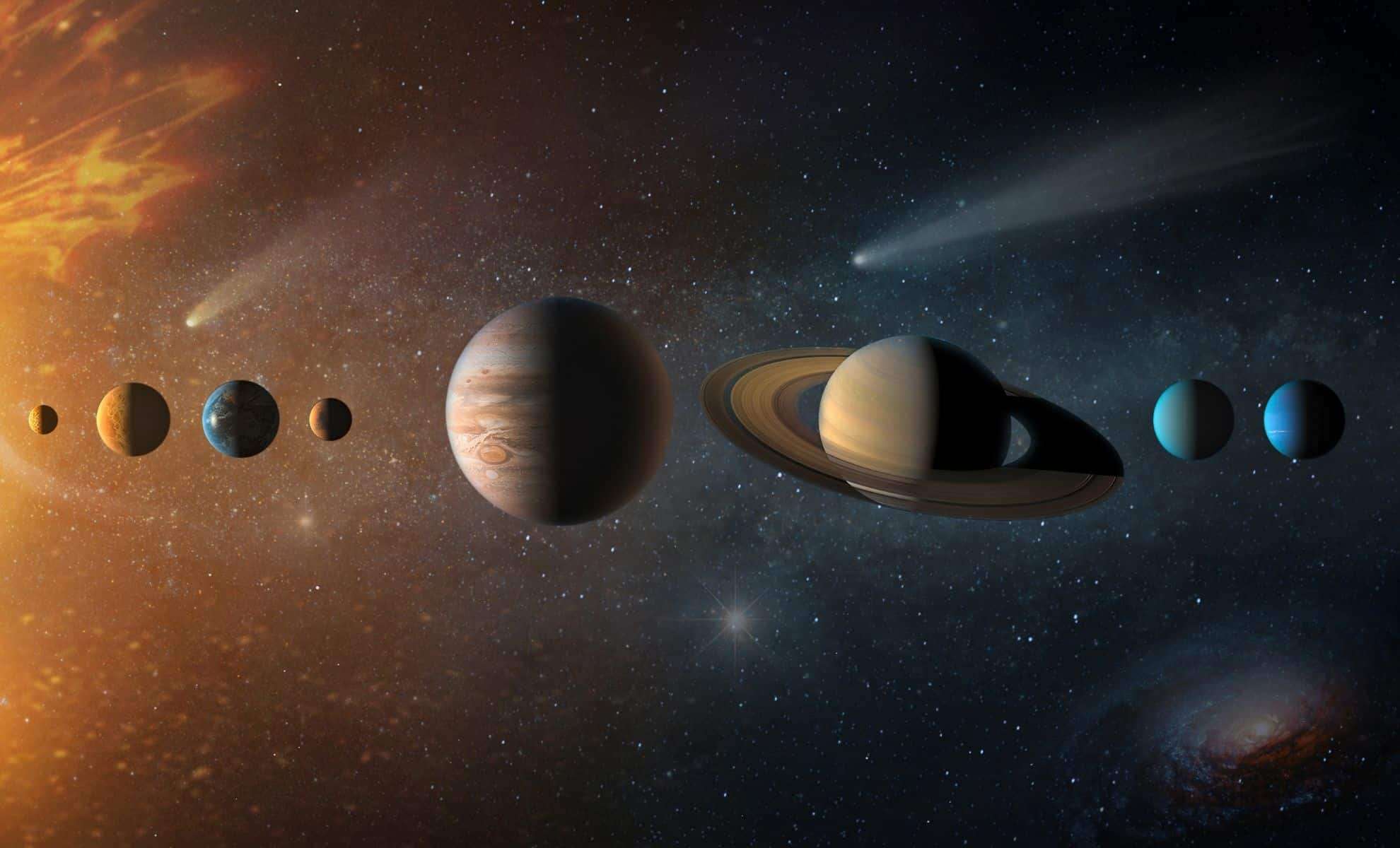
Recent astronomical research reveals the possibility that Earth might someday be forced out of the solar system—not because of the Sun’s life cycle, but due to the unpredictable path of a rogue star passing nearby. Although these events transpire over billions of years, scientists are now investigating how such stellar encounters might disrupt the orbits of planets, with results that raise significant concerns.
The Impact of Stellar Pass-By on Planetary Stability
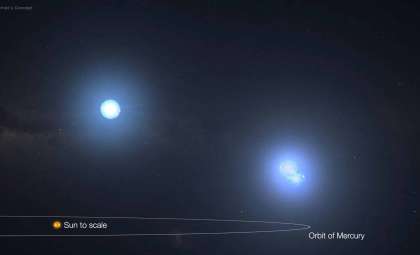
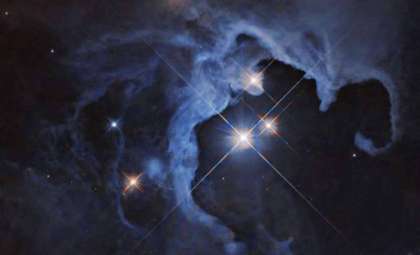
Previous models of the solar system’s future often assessed it as an isolated environment. However, the Milky Way is filled with stars, some of which occasionally drift close enough to influence our cosmic neighborhood. While these stellar flybys typically have minimal effects, they can disturb the gravitational equilibrium that keeps planets in their stable orbits.
A recent investigation published in Icarus employed 2,000 simulations using NASA's Horizons System, an advanced planetary tracking tool by the Solar System Dynamics Group. By including scenarios with stars passing near our solar system, researchers found that the overall orbital stability could decline by approximately 50%. This instability manifests unevenly across different planets, affecting some more severely than others.

Mercury: The Most Precarious Planet?
Of all the planets, Mercury emerges as the most susceptible. Its orbit is already becoming more elongated over time, prone to increased eccentricity. This natural orbital drift enhances the risk of Mercury crashing into Venus or spiraling into the Sun. The influence of a nearby rogue star could significantly escalate this danger.
The simulations frequently show Mercury being ejected, with Mars also facing considerable odds of orbit loss. Even Pluto, reclassified as a dwarf planet, holds a 3.9% likelihood of being expelled from the solar system. While Earth shows comparatively lower instability under these conditions, its orbit may be increasingly threatened if destabilized planets collide with it or alter its path.
Comparing Internal Chaos to External Stellar Effects
This work clearly differentiates between orbital instabilities arising from internal solar system dynamics versus those triggered by external stars. Researchers emphasize that “the nature of stellar-driven instabilities is more violent than internally driven ones.” Encounters with passing stars can result in the loss of multiple planets, often occurring in about half of such events. Internal gravitational perturbations, meanwhile, rarely cause this level of planetary loss.
A noteworthy conclusion of the study is that the probability of Earth experiencing orbital disturbances from external stellar encounters is hundreds of times greater than previously estimated. This discovery fundamentally shifts how astronomers understand the enduring stability of planetary systems.
Reflecting on Our Place in the Galactic Environment
Although these processes play out over the span of roughly five billion years, the findings highlight an additional dimension of existential risk on a cosmic scale. Earth might not have to wait for the Sun’s transformation into a red giant to face a cataclysmic end. Even a chance encounter with a passing field star could impart enough gravitational disruption to propel our planet into the cold vastness of interstellar space.
- Categories:
- Space



0 comments
Sign in to Comment