
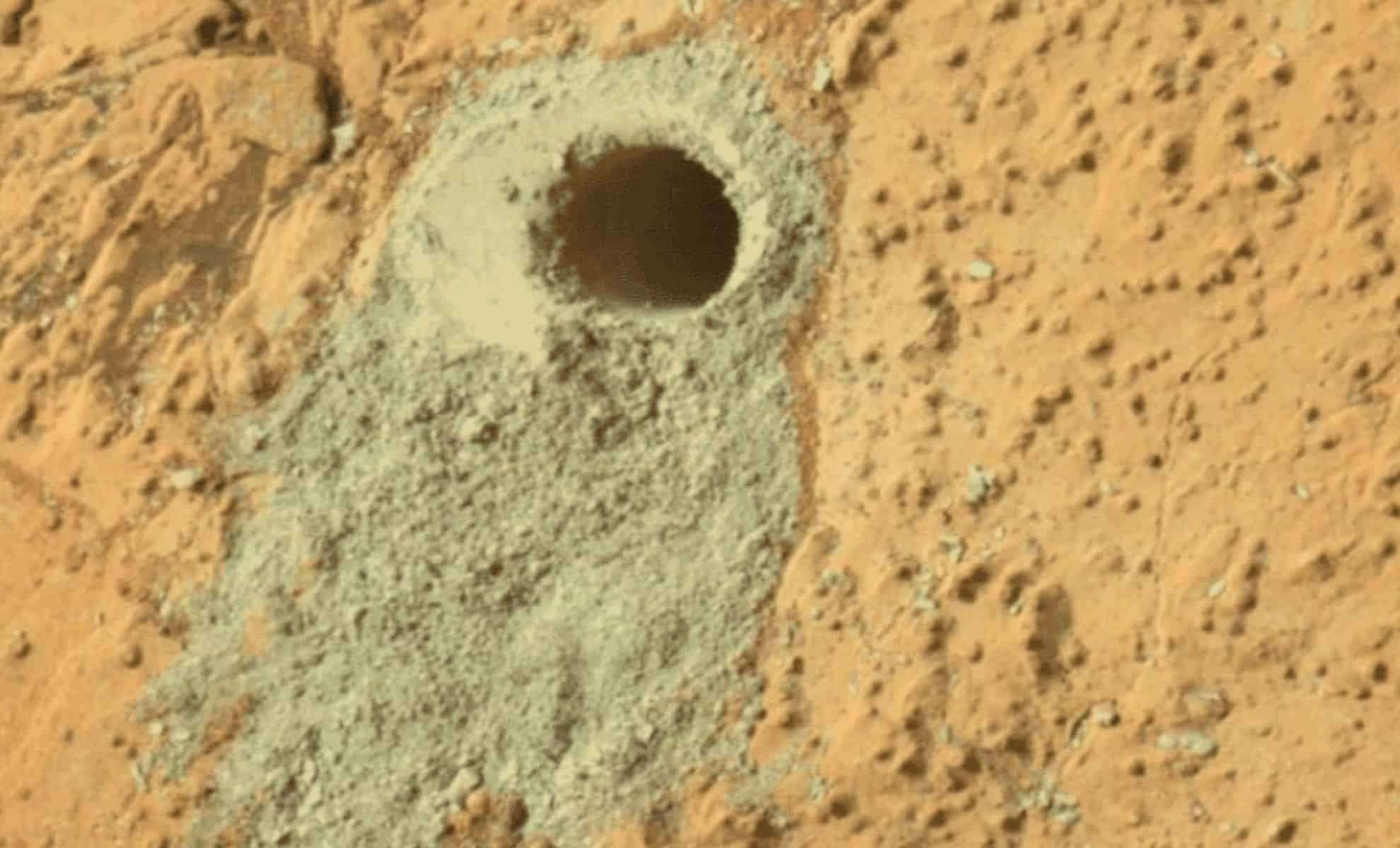
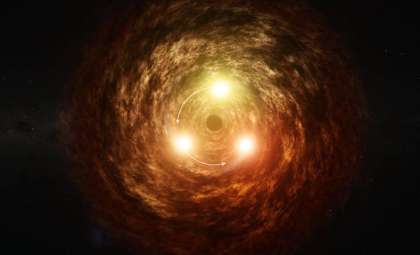
NASA’s Curiosity rover has identified the biggest organic compounds discovered so far on the surface of Mars. Meanwhile, the James Webb Space Telescope (JWST) has unveiled a striking new image revealing the intense outflows from a developing star. These findings highlight the vast range of phenomena occurring in the cosmos, from chemical evolution on a neighboring planet to stellar formation billions of light-years away.
Record-Breaking Organic Molecules Found by Curiosity on Mars
In an important study of a Martian rock sample named Cumberland, NASA’s Curiosity rover detected decane (C10), undecane (C11), and dodecane (C12)—long-chain organic molecules never before observed on Mars.
These compounds came to light through an experiment conducted by the rover’s Sample Analysis at Mars (SAM) instrument suite. Researchers propose that these molecules result from the thermal decomposition of longer fatty acids, such as undecanoic acid, dodecanoic acid, and tridecanoic acid.

Fatty acids are crucial components of life on Earth, supporting cell membrane formation and other vital biological roles.
While the Martian molecules may originate from non-biological processes—like reactions in hydrothermal vent environments or mineral interactions involving water—their structural complexity indicates conditions that could have supported or preserved organic chemistry relevant to life.
Clues From an Ancient Martian Lakebed
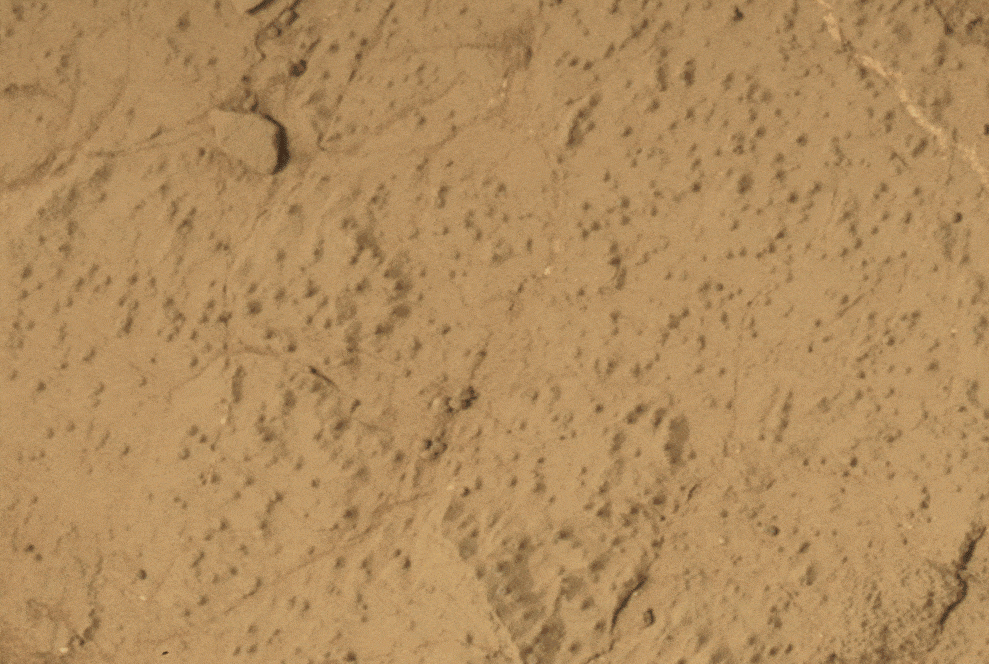
The Cumberland sample was extracted in 2013 from Yellowknife Bay within Mars’ Gale Crater, an area thought to represent an ancient lakebed. In this location, Curiosity has found abundant clay minerals, sulfur compounds, nitrates, and traces of methane — key ingredients for sustaining organic chemistry.
Notably, the organic molecules exhibited carbon chains longer than 12 atoms, which is unusual for compounds formed through strictly abiotic means, where fatty acids typically have short chains. This suggests that even more complex molecules, possibly linked to biological processes, could exist but remain undetected due to limitations of SAM’s analytical capabilities.
Lead researcher Caroline Freissinet from CNRS in France underscored that these results bolster the case for Mars Sample Return missions, which would allow Martian materials to be analyzed on Earth with sophisticated tools to search for definitive biosignatures.
Tracing Mars’ Molecular Evolution
Curiosity had previously detected smaller organic compounds, but this recent discovery—reported in the Proceedings of the National Academy of Sciences—pushes the envelope on Mars' organic molecular complexity, suggesting the planet once held the chemical ingredients necessary for life’s beginnings.
Daniel Glavin, NASA’s senior scientist on sample return, noted that Gale Crater’s longstanding presence of water — potentially lasting millions of years — would have provided a conducive environment for prebiotic chemical reactions.
The organic molecules were discovered quite unexpectedly during an unsuccessful search for amino acids. When the rock was heated inside SAM’s oven, hydrocarbons emerged instead of amino acids, making the find an important milestone.
Additional laboratory testing recreated the heating process, confirming that the fatty acids would break down to yield the complex molecules that Curiosity recorded.
- Categories:
- Space







0 comments
Sign in to Comment