
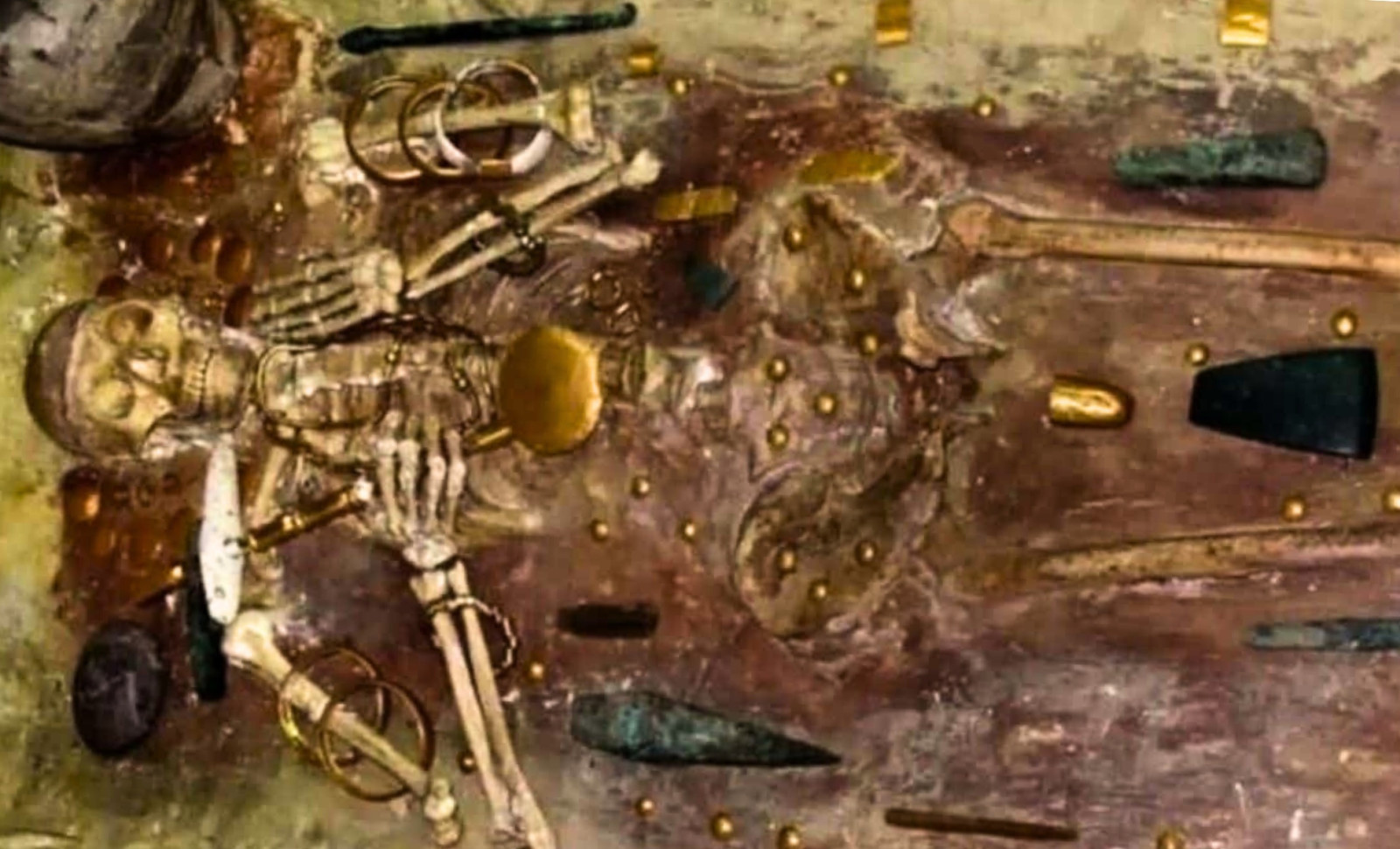
Back in 1972, a young excavation worker near Varna spotted a glint in the soil. Upon digging, he uncovered a bracelet and several other artifacts, which were then passed through a retired teacher to the local museum. Alexander Minchev later reminisced, “We took them in that same shoebox straight back to Varna.”
This encounter marked the unveiling of the Varna Chalcolithic Necropolis, a pivotal prehistoric burial site in Europe. As archaeologists continued excavations along the trench, they found an unusual pattern: while some graves were simple, others were richly adorned with gold, prestigious objects, and status symbols.
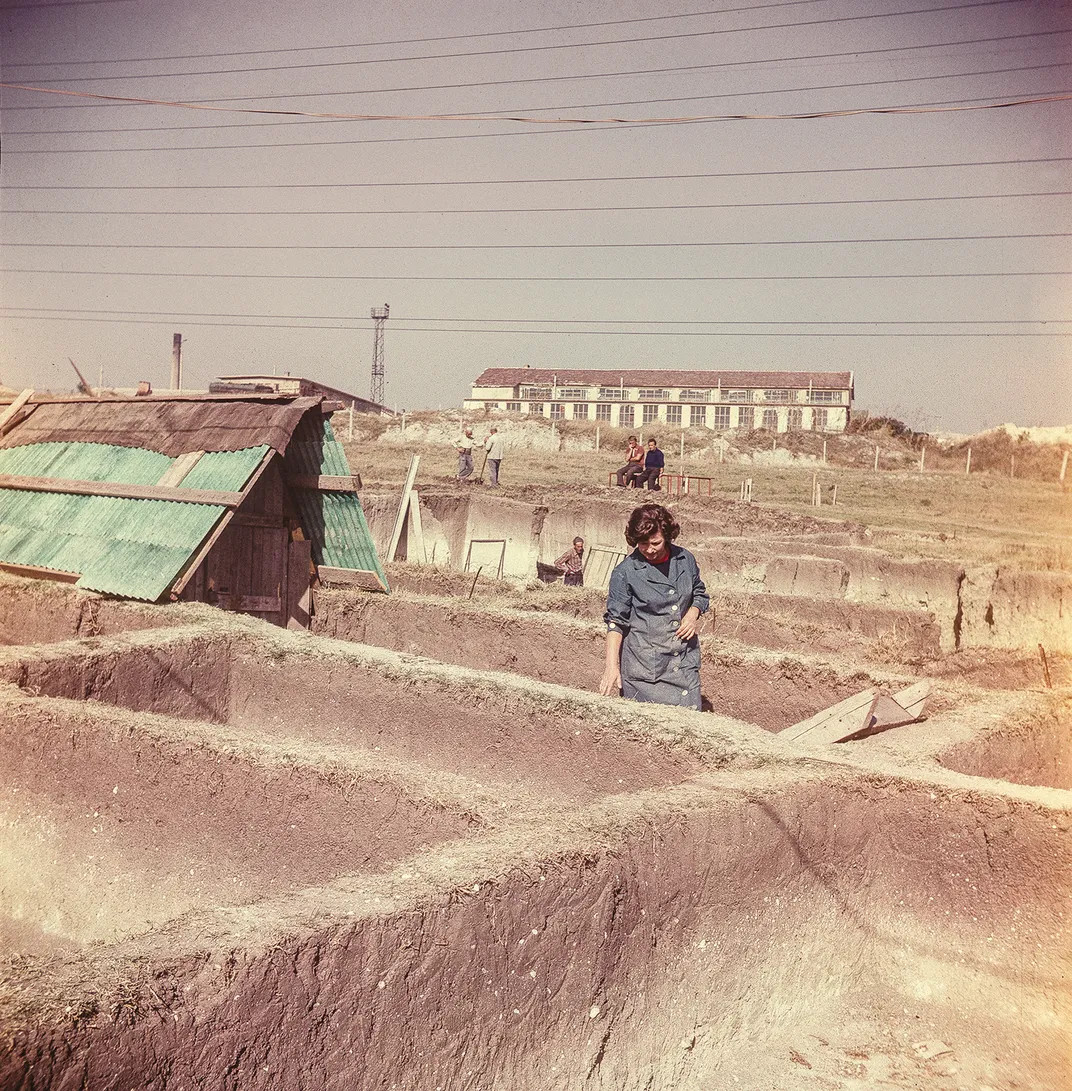
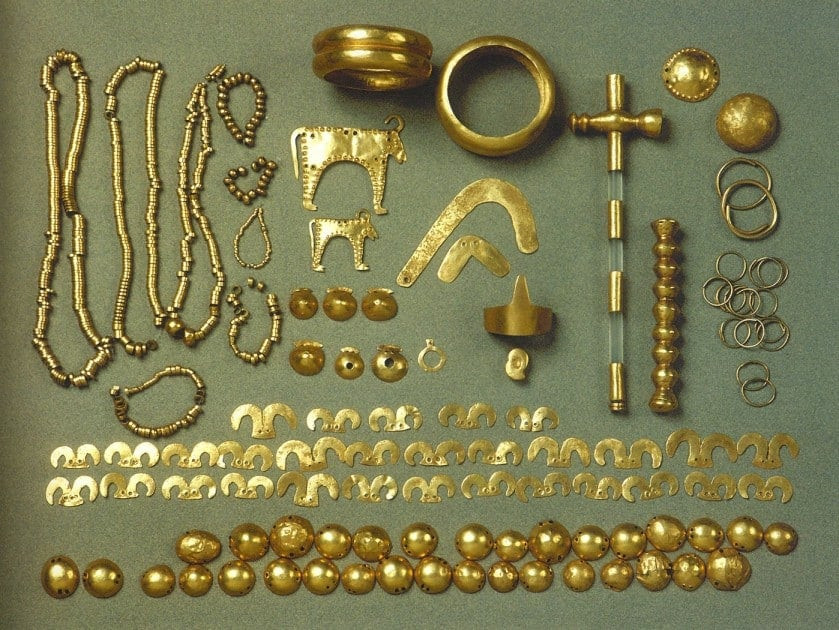
The landmark finding was that Varna contained the oldest known worked gold. Additionally, it provided some of the earliest evidence of a hierarchical social order in prehistoric Europe, illustrating a concentration of wealth and power long before the advent of famed ancient kingdoms.

A Burial Ground Marked by Stark Inequality
According to Smithsonian Magazine, digs from 1972 to 1991 revealed almost 300 graves, with other sources noting 294. Regardless of minor numerical variations, it is clear the site is a substantial late fifth millennium B.C. cemetery, with a significant part yet unexplored.
The wealth disparity was striking. Most burials contained sparse items—perhaps a bead, a flint blade, or a bone bracelet. Approximately 20% held small gold artifacts. However, just four graves contained nearly 75% of the gold discovered. As Vladimir Slavchev observed, “The cemetery shows big differences between people, some with lots of grave goods, some with very few.”
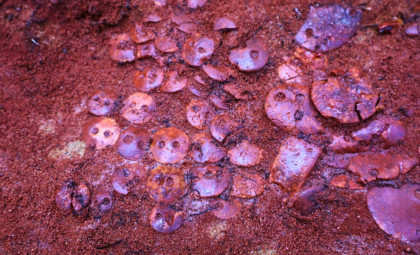
The most opulent grave, Grave 43, stands as an iconic representation of ancient Europe. The individual interred there was adorned with gold bangles, necklaces, pendants, pierced gold discs, a polished axe with a gold-wrapped handle, a second axe beneath it, and a 16-inch flint blade at his side. Estimates suggest over 1.5 kilograms of gold accompanied this burial.
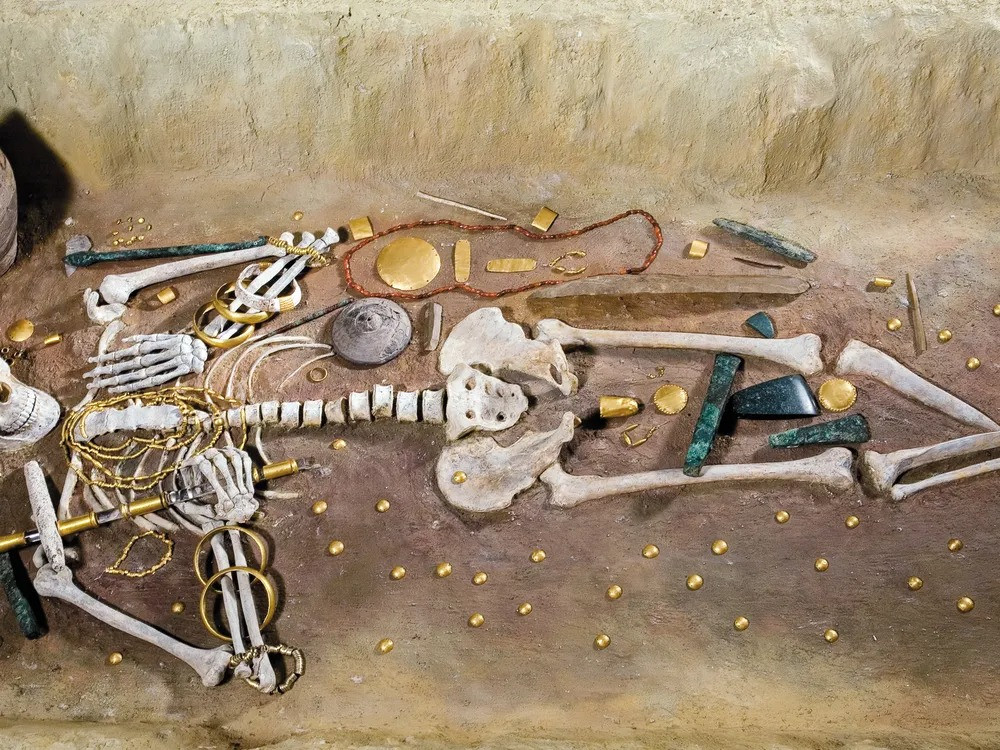
Many of these astonishing finds remain on display at the Varna museum. The collection houses roughly 11 pounds of the total 13 pounds of gold retrieved from the site, and visitors can view a faithful reconstruction of Grave 43 with artifacts arranged as originally discovered. The museum is located at 41 Maria Luisa Boulevard in Varna.
Gold Highlights Trade Networks and Social Organization
The exquisite treasures were not merely local trinkets. High-status burials contained jewelry crafted from Mediterranean Spondylus shells and obsidian blades sourced from distant volcanic regions. The gold likely originated from central Bulgaria, indicating extensive trade routes and resource control beyond the cemetery itself.
Producing these luxury items required significant effort. Mining, transporting, and crafting metals demanded specialized skills and coordinated labor. Svend Hansen explained why metals were prized: “If a metal axe is broken, you can melt it down and produce another axe. Metal is never used up. It can be recycled endlessly.”
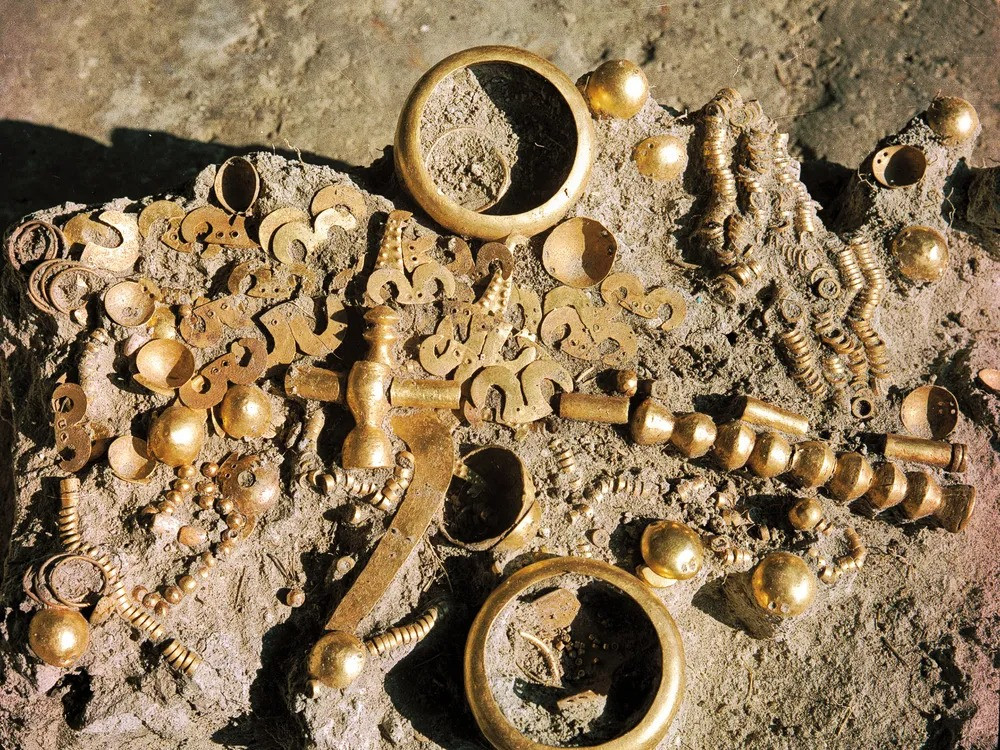
Beyond a simple treasure story, Varna reveals an organized society. Metalworking was practiced here around 4600 B.C., and the concentration of valuables suggests that a select few controlled access to raw materials and crafted goods. The graves signify not only wealth but also complex labor organization and social roles.
Empty Graves That Symbolize Authority
Among Varna’s most intriguing features are its cenotaphs—symbolic burials without human remains. Grave 36 contained gold scepters, small bull figurines, a tiny crown, and a clay mask placed where a head would be.
These empty tombs demonstrate that power could be symbolically conveyed without a body. Status was communicated through objects, placement, and ritual, making the cemetery not only a burial site but a deliberate exhibition of authority.
The discoveries overturned previous ideas about prehistoric southeastern Europe as comprising small, egalitarian farming communities. Slavchev was direct about this change: “It’s clear the society here was male dominated. The richest graves were male; the chiefs were male.”
Famous Site With Much Left Unexplored
Despite its significance, the prehistoric cemetery remains partially unexcavated. Excavations ceased in 1991 to allow for improved methods and thorough publication of earlier finds. Some parts of the site now lie beneath excavation spoil in an industrial zone near community gardens.
The society linked to the Varna gold vanished abruptly around 4000 B.C. Entire settlements along the lower Danube and western Black Sea were abandoned, though there’s no strong evidence of warfare or massacre. Instead, environmental shifts and rising sea levels are considered likely causes. Standing over the site, Slavchev speculated, “Perhaps their fields became swamps. With the changes in climate, maybe people had to change their way of life.”
What endures is a prehistoric cemetery that continues to influence our understanding of ancient gold, early social inequality, and the emergence of organized authority in Europe’s distant past.
- Categories:
- Science



0 comments
Sign in to Comment