
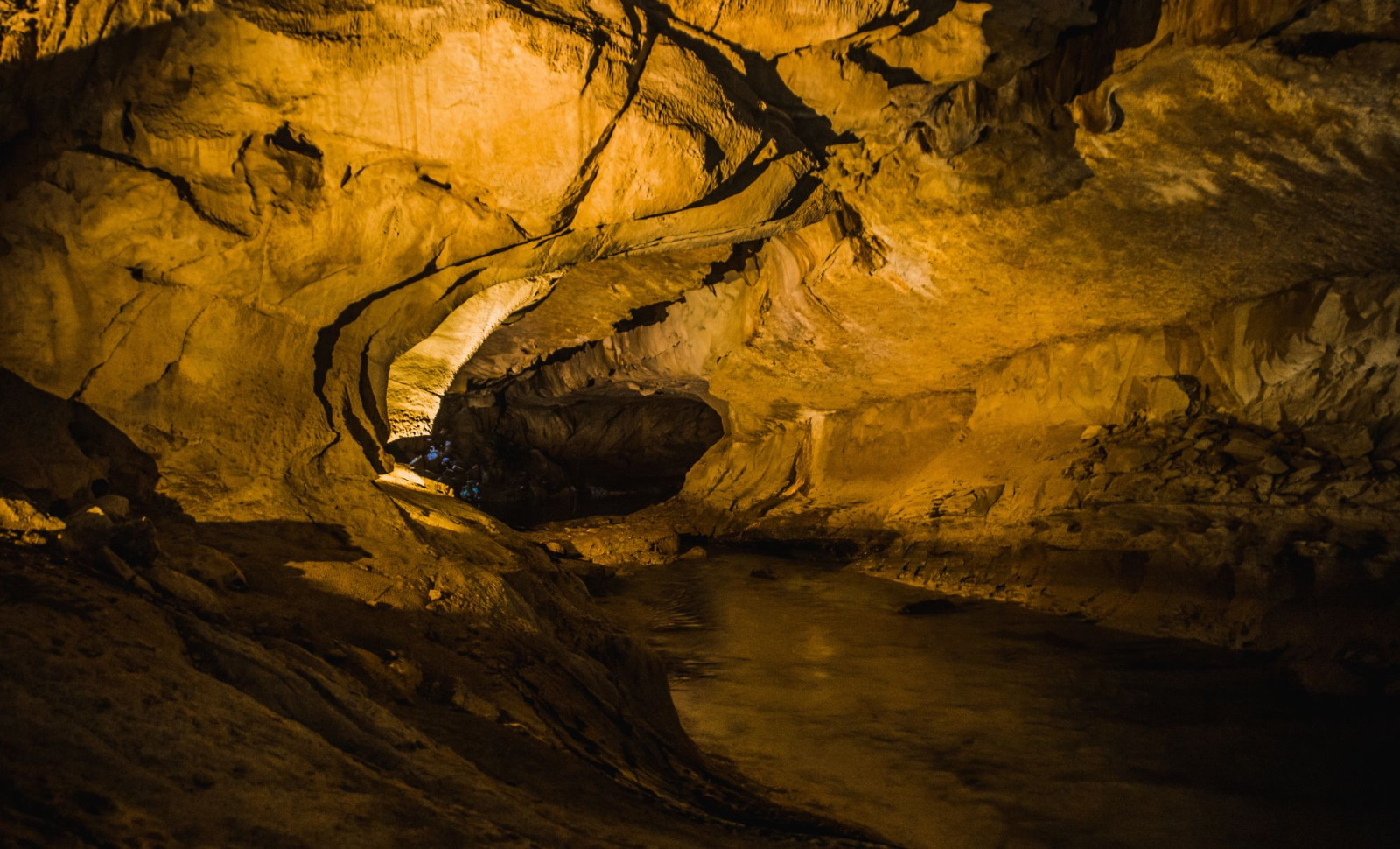
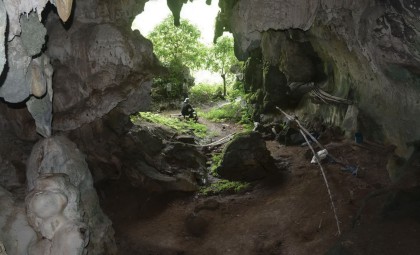
Researchers have identified Africa's oldest confirmed human burial, dating back approximately 78,000 years. Located in the Panga ya Saidi cave on Kenya’s coastline, the remains belong to a child aged between 2.5 and 3 years, providing valuable insights into the early burial rituals and social complexity of Homo sapiens.
This carefully arranged burial marks a significant milestone in tracing the development of human cultural practices. Despite limited evidence of ancient burials across Africa, the discovery at Panga ya Saidi offers new clarity on early mortuary behaviors.
Discovering Ancient Human Practices
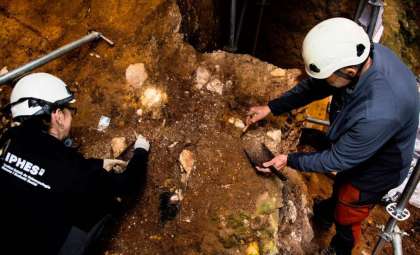
The child’s skeletal remains were first found in 2013, with detailed analyses clarifying their importance by 2017. Dr. Emmanuel Ndiema from the National Museums of Kenya explained that the fragile remains required on-site conservation using plaster before being examined further in labs in Nairobi and Spain. Researchers confirmed that the bones belonged to a young child affectionately named “Mtoto,” meaning "child" in Swahili.

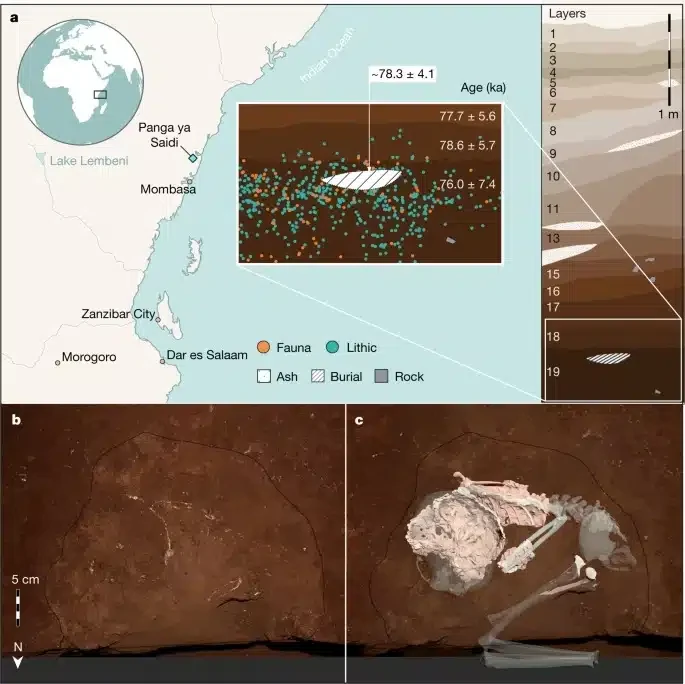
According to a publication in the journal Nature, the burial was found in a shallow circular pit about three meters beneath the cave's surface. The child's body was placed lying on its right side with knees bent toward the chest, suggesting intentional positioning. Professor María Martinón-Torres from the National Research Center on Human Evolution highlighted:
“The articulation of the spine and the ribs was also astonishingly preserved, even conserving the curvature of the thorax cage, suggesting that it was an undisturbed burial and that the decomposition of the body took place right in the pit where the bones were found.”
Milestones in Early Social Behavior
Alongside the burial, researchers uncovered Middle Stone Age tools, a hallmark of Homo sapiens technology that distinguishes it from other ancient human relatives. Professor Nicole Boivin from the Max Planck Institute for the Science of Human History emphasized the site's importance in shedding light on early coastal human cultural expressions.
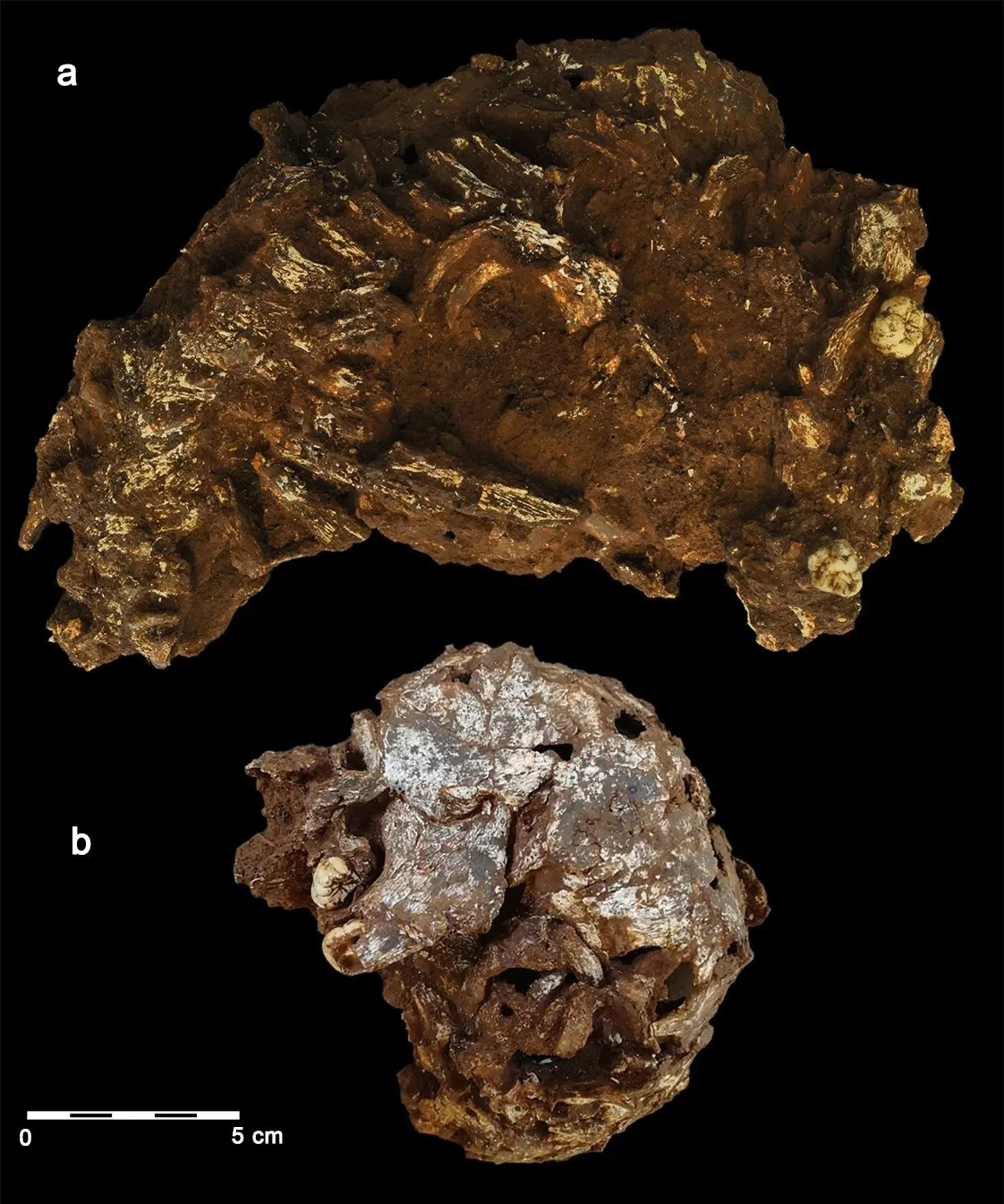
The presence of a child burial, rather than an adult, may indicate unique treatment or status given to young individuals in early human groups, possibly hinting at the use of supportive objects such as pillows during burial rites.
An Uncommon Discovery in African Prehistory
Panga ya Saidi represents one of the rare ancient burial sites on the African continent and is the most ancient currently known. African burials from this era are notably sparse compared to those found in Eurasia, an issue that has long intrigued archaeologists.
While Neanderthal and modern human graves in Eurasia date back up to 120,000 years, evidence of early burial practices in Africa has been scarce. Some experts propose that differing funerary traditions or the limited archaeological coverage may account for this discrepancy.
Professor Michael Petraglia of the Max Planck Institute noted that this discovery shows burial rites were a shared cultural behavior between Homo sapiens and Neanderthals.
“The find opens up questions about the origin and evolution of mortuary practices between two closely related human species, (Homo sapiens and Neanderthal cousins) and the degree to which our behaviours and emotions differ from one another,” he added.
- Categories:
- Science


0 comments
Sign in to Comment